

In Hormuz, Iran only needs to keep ships guessing
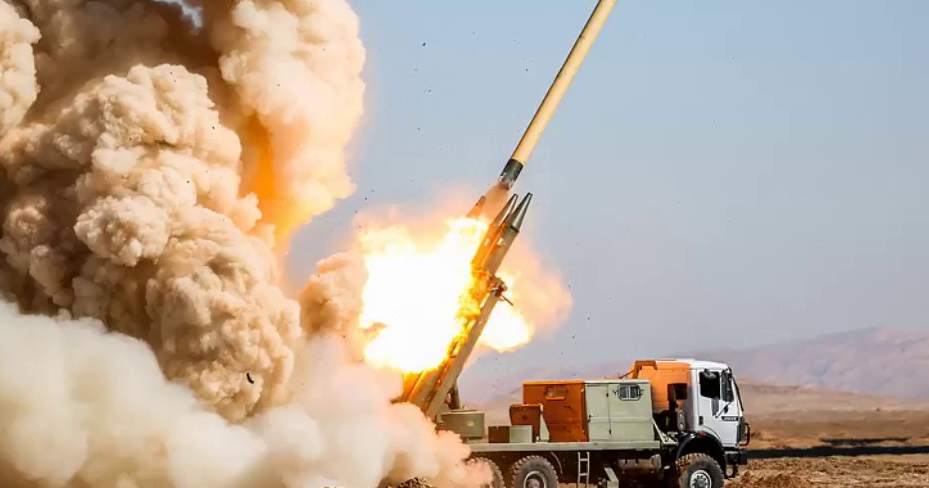
“The mere threat out there, just the threat of these, is enough to deter traffic, certainly commercial traffic,” Votel told Eye for Iran podcast. .
“It has a huge deterrent effect and it puts the burden on us to keep really, really close watch on this area.”
That creates a paradox in the latest battle over Hormuz: Iran may be turning to rocket-launched mines because more powerful options have been degraded, yet Washington must still behave as though the threat could get through.
The latest US-Iran flare-up began after the US military said it detected Iranian forces on Larak Island preparing to launch rockets carrying sea mines into the Strait. US forces struck the launchers before they could fire.
Iran has traditionally been able to deploy naval mines using small boats, submarines or aircraft. Firing them from rockets would allow Iranian forces to place mines at a distance without exposing boats and crews to US forces watching the waterway.
Why Iran may be turning to rockets
Iranian state television reported on the Fajr-5 multiple-launch rocket system as a weapon for mining Hormuz as early as January 2025, and military analysts have said Iran had been testing the concept.
What has changed is the battlefield around it.
Farzin Nadimi, a senior fellow at the Washington Institute and an expert on Iran’s military and asymmetric warfare, told Eye for Iran that Iran’s conventional military capabilities were significantly degraded during the war, followed by attacks on important IRGC Navy infrastructure.
Nadimi said Iran has lost much of its ability to deploy the larger and more dangerous sea mines it could once put into the water through more traditional means.
“They have little choice but using these smaller, less capable rocket-launched mines,” he said, adding that Iran has also repeatedly tried to strike shipping with anti-ship cruise missiles and one-way attack drones, many of which have been intercepted or jammed.
Iran’s apparent new weapon can therefore be read not simply as evidence of innovation, but as adaptation after military losses.
Less destructive does not mean less disruptive
Rocket-launched mines come with significant compromises. Naval mines capable of badly damaging large ships are heavy. Fitting one into a rocket requires a smaller weapon, limiting its destructive power.
Nadimi said Iran’s rocket-delivered versions are significantly smaller than some older naval mines in its arsenal and consequently less capable of inflicting major damage on large tankers.
But a mine’s effectiveness is psychological as much as it is physical: once mines are believed to be in the water, uncertainty over their location can deter ships from entering.
Votel pointed to the history of mine warfare in the Persian Gulf, including US Navy encounters with Iranian mines during the Tanker War of the 1980s.
Commercial vessels and their insurers therefore do not necessarily need evidence that a mine will hit a ship before taking the threat seriously.
Washington’s burden
That uncertainty shifts part of the burden from Iran to the United States.
The US does not simply have to destroy mines once they enter the water. It has to watch the Strait, Iranian coastal positions and potential launch sites closely enough to prevent Tehran from putting them there in the first place.
“It puts a lot of pressure on us to make sure that we have constant surveillance, not only of the waterways themselves and the main transit routes, but really of the locations where these mines or these weapons can come from,” Votel said.
The latest US strike suggests Washington currently has the intelligence, surveillance and reconnaissance capabilities to do that. American forces identified the Iranian launchers and struck them before the mines could be fired.
But Iran does not necessarily have to defeat that surveillance system to impose a cost. Simply retaining the capability forces the US to keep watching and commercial operators to trust that nothing has slipped through.
For Tehran, that creates an asymmetric advantage even after significant military losses: the US must repeatedly demonstrate that Hormuz is safe, while Iran only has to preserve doubt that it might not be.
Degradation or restraint?
There is an important caveat. The smaller scale of Iran’s recent attacks does not necessarily mean Tehran is incapable of doing more.
Nadimi said there are signs Iran is deliberately exercising restraint with some weapons, particularly ballistic missiles, to avoid triggering a larger escalation involving both the United States and Israel.
The rocket-launched mine claim itself also remains contested. Some maritime specialists have questioned whether Iran has operationalized the system as the US describes, while others consider it technically plausible.
Even if the system is operational, however, Iran would not need to mine the Strait extensively for it to have an effect. All Tehran needs is for military planners, ship operators and insurers to believe there is a credible possibility that it could get some mines into the water.
Votel sees that as part of a broader Iranian strategy: “Their intention is to make this painful for us and for those that are supporting the United States.”
Iran may now have fewer options for mining Hormuz than it once did. But if the threat of a mine is enough to make a ship hesitate—and enough to make the US military watch Iran’s coastline around the clock—Tehran can still impose a cost without a mine ever hitting a vessel.