

In 1986, a mysterious gas cloud escaped from Lake Nyos in Cameroon, silently killing people as they slept. An invisible cloud travelled 25 km, wiping out entire villages and killing more than 1,700 people overnight
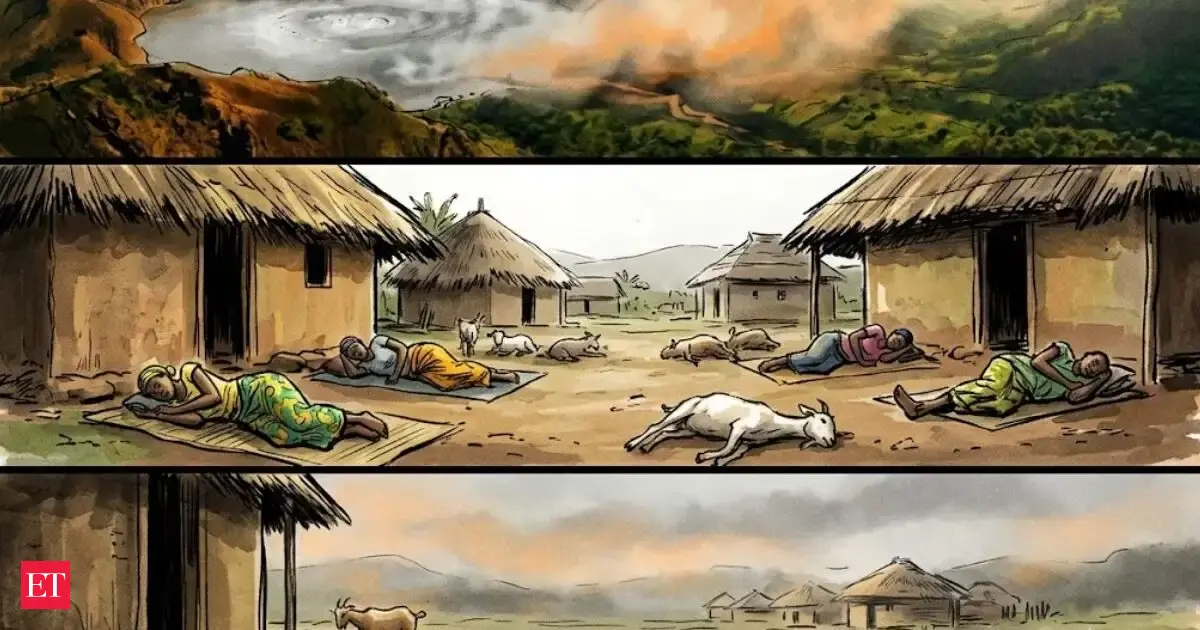
A huge amount of carbon dioxide suddenly escaped from the lake. Unlike smoke or a visible poisonous cloud, carbon dioxide cannot be seen, making the danger almost impossible for people nearby to recognise.
Also read: In 1961, Berliners went to sleep and woke up to a city cut in half. East German troops had put up barbed wire overnight, stopping trains, cars and thousands of people from crossing between East and West Berlin
The gas moved downhill from the lake and into surrounding valleys, where several villages were located. Scientists later found that the cloud travelled as far as about 25 km from Lake Nyos.
Many people were asleep when the gas reached them. The carbon dioxide displaced oxygen in the surrounding air, causing people exposed to high concentrations to lose consciousness and die from asphyxiation.
More than 1,700 people died
The final death toll from the disaster was put at more than 1,700 people. Thousands of livestock also died, along with birds and other animals in the affected area.
NASA describes the event as an invisible cloud of carbon dioxide that raced down the hills around Lake Nyos. The gas killed nearly 1,800 people and about 3,500 livestock.The scale of the deaths was especially shocking because there had been no conventional explosion, fire or obvious warning that could alert people to flee.
For many residents, the first sign that something was wrong came only after people around them had already collapsed.
Why did the gas come out of the lake?
Lake Nyos sits inside a volcanic crater. Deep below its surface, carbon dioxide from magmatic sources had been gradually entering the lake through groundwater and accumulating in its deep waters.
Over time, huge quantities of the gas became dissolved in the water at the bottom of the lake.
Scientists believe an unknown disturbance caused the gas-rich deep water to rise. As pressure decreased closer to the surface, carbon dioxide came out of the water and formed a massive gas cloud.
The exact trigger for the sudden release has been debated, but scientists concluded that the disaster was caused primarily by carbon dioxide stored in the lake rather than a conventional volcanic eruption.
Why was the gas so deadly?
Carbon dioxide itself is not normally thought of as a poisonous gas, but at extremely high concentrations it can kill by replacing oxygen in the air.
It is also heavier than air, meaning a large release can remain close to the ground and move downhill. That helped the gas travel from Lake Nyos into populated areas.
People caught inside the cloud could rapidly become unconscious because there was not enough oxygen available for normal breathing.
This also explains why the disaster was so difficult to detect. There was no obvious colour or smell warning residents that a deadly cloud was approaching.
Lake Nyos had a dangerous history
The 1986 disaster was not the first deadly gas release from a Cameroonian crater lake.
Two years earlier, a similar event at nearby Lake Monoun killed 37 people. That disaster helped scientists recognise that some volcanic lakes could store dangerous quantities of dissolved carbon dioxide.
After Lake Nyos, scientists began investigating other lakes in the region to determine whether they carried similar risks.
Could another Lake Nyos disaster happen?
The tragedy also led to efforts to prevent another massive release.
Scientists developed a system of pipes at Lake Nyos to gradually bring carbon dioxide-rich deep water towards the surface, allowing the gas to escape in a controlled manner rather than accumulating until another catastrophic release occurs.
The aim is to keep reducing the amount of dissolved carbon dioxide stored deep inside the lake and lower the risk of another sudden gas burst.
Lake Nyos remains one of the clearest examples of how a seemingly peaceful natural landscape can hide an extraordinary danger. On one August night in 1986, an invisible gas cloud moved through the surrounding countryside while thousands of people slept, turning a remote lake into the centre of one of Africa’s deadliest natural disasters.
Credit: Source link