

Immigrant families lose food aid as Trump restrictions take hold
WASHINGTON – Lutheran Social Services of the Southwest has been helping legal immigrants in the Phoenix metro assimilate to life in the United States and land on their feet for more than five decades.
The process had been straightforward for decades, said president and CEO Connie Phillips. The rules have been in place since 1980. More than 3 million refugees have been resettled nationwide under the U.S. Refugee Admissions Program.
But President Donald Trump suspended the program on Day 1 of his second term.
Months later, on July 4, 2025, he signed H.R. 1, the “One Big Beautiful Bill Act,” which contains a raft of restrictions on refugees and asylum. These migrants no longer qualify for the Supplemental Nutrition Assistance Program, or SNAP, often called food stamps. The law also curtailed eligibility for other benefits.
“The changes that have occurred are making that process much more difficult,” Phillips said. “The refugees who are here, who came under that system, have lost a lot of those benefits.”
SNAP participation nationwide dropped 10% from when Trump signed the One Big Beautiful Bill through March, according to the Center on Budget and Policy Priorities, which studies policies affecting low-income people. That’s 4 million fewer people receiving food aid, though not all are refugees and asylum seekers.
In Arizona, the estimated drop was 47% over the same period, the biggest of any state.
In addition to refugees and asylum seekers, H.R. 1 ended SNAP eligibility for other immigrants who lack permanent resident status, including survivors of domestic violence and human trafficking.
The law limits eligibility to U.S. citizens; green card holders; certain immigrants from Cuba and Haiti; and immigrants from the Marshall Islands, Micronesia and Palau.
People in the country illegally were already ineligible for federal public benefits, but refugees and asylum seekers have legal protections regardless of their lack of permanent status.
The eligibility cutbacks are part of a broad Trump deterrence strategy.
White House Deputy Chief of Staff Stephen Miller, the architect of Trump’s hardline immigration policies, has asserted that there is widespread abuse of federal safety net programs, claiming that immigrants routinely take advantage of an “honor system” by fraudulently reporting their income to secure benefits.
He has also incorrectly asserted that immigrants face no eligibility requirements or vetting, and receive “unlimited free money forever.”
SNAP and other welfare programs require proof of income below certain levels among the eligibility requirements. The refugee program, USRAP, provides for an extensive vetting process before resettlement agencies like LSS-SW and the International Rescue Committee step in with aid and services aimed at integrating refugees into the United States.
The changes introduced in H.R. 1 have also cut off children of refugees and asylum seekers from free and reduced lunch at school, according to recent reporting by ProPublica.
That flies in the face of assurances from supporters of the law.
“If you have young children at home, your benefits are unaffected by this bill,” Rep. Dusty Johnson, R-S.D., chair of a House Agriculture subcommittee, said at a May committee meeting on SNAP.
But school meal assistance is directly tied to SNAP, with households that qualify for SNAP automatically enrolled.
The pace of the changes has been dizzying for immigrants, immigration lawyers and social service agencies.
“There’s really two issues,” said Dan Berger, an immigration lawyer in Massachusetts and an immigration policy fellow at Cornell University. “One is taking away benefits from people who have them, and the other is taking away the immigration status.”
The administration is also ending certain humanitarian parole programs that came with the same benefits eligibility given to refugees, Berger said.
“The Biden administration set up programs where Ukrainians could come here during the war and then set up protections for them after they were here,” he said. “Same thing with Afghans. And now the Trump administration is trying to shut down those programs.”
Congress extended eligibility to certain Afghan refugees who arrived in 2021, and to Ukrainians who entered the U.S. beginning in April 2022 following Russia’s full-scale invasion of Ukraine, but these humanitarian parole programs were ended in early 2025 by the Trump administration.
Apart from legal hurdles such as H.R. 1, Trump’s efforts to ramp up deportations and crack down on illegal immigration have made it scary to seek public benefits, said Valerie Lacarte, a senior policy analyst for the nonpartisan Migration Policy Institute.
She cited efforts to create a federal registry of noncitizens and to end birthright citizenship, under an executive order the Supreme Court is expected to rule on in coming days.
“That would create a chilling effect on people accessing or requesting these services whether they are eligible or not,” Lacarte said.
The “public charge rule” is also a major deterrent. That longstanding element of U.S. immigration law allows authorities to deny admission to anyone deemed likely to need government benefits in the future.
While some form of the public charge rule had been in place since the Immigration Act of 1891, a 1999 version excluded “non-cash” benefits such as SNAP.
Trump erased that exception in 2019, during his first term. Using food stamps and certain other public benefits for more than 12 months in a 36-month period could cost an immigrant the possibility of ever obtaining a green card. The change had the intended effect; a 2020 report by the nonpartisan Urban Institute estimated that food stamp sign-ups dropped nearly 10%.
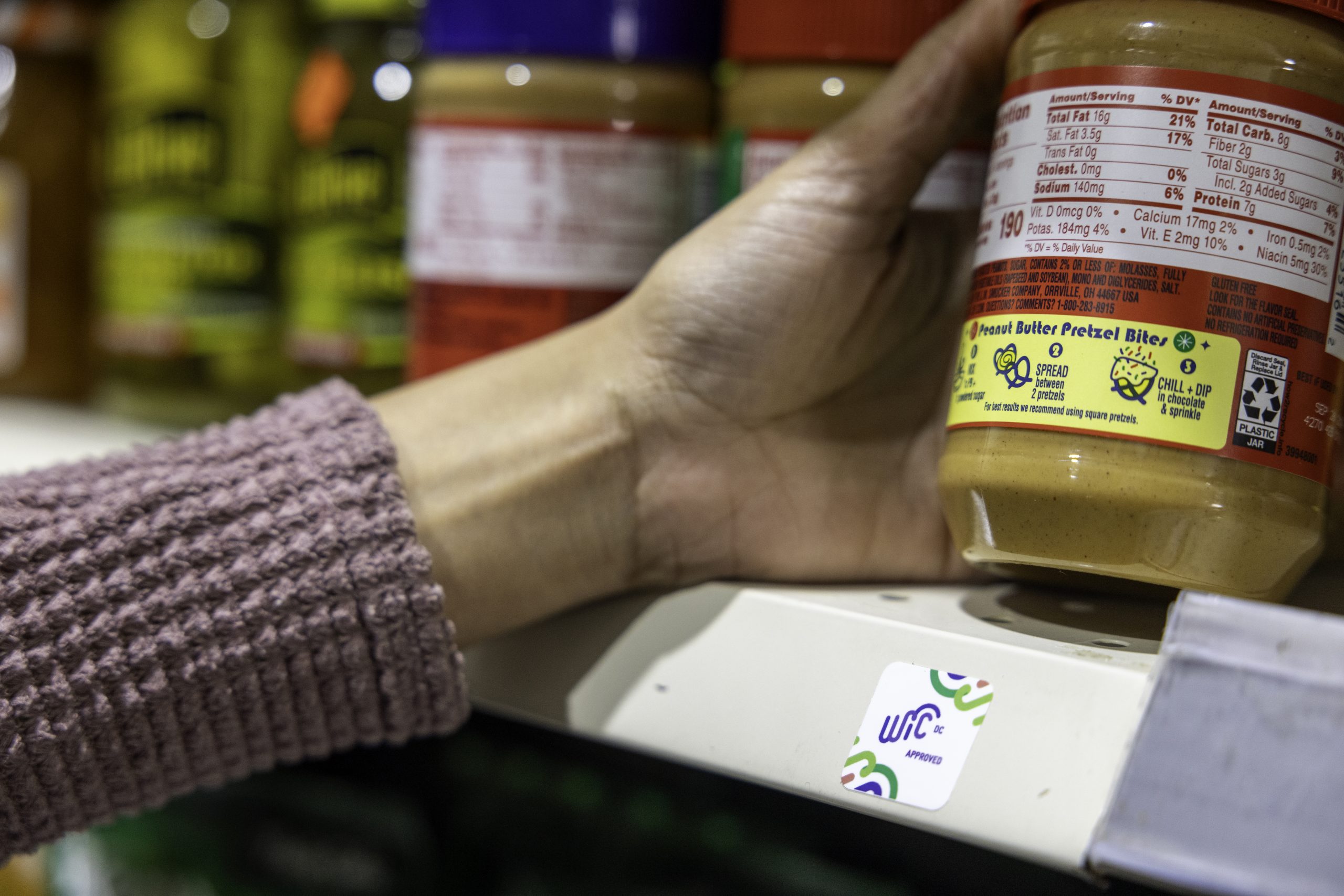
President Joe Biden changed the rule back to the 1999 version. Once again, immigrants otherwise eligible for SNAP; nutrition aid for Women, Infants, and Children (WIC); and the Children’s Health Insurance Program (CHIP) would no longer be penalized in the immigration process.
H.R. 1 didn’t alter the public charge rule. Still, even noncitizens who are eligible for public benefits are reluctant to apply for fear of losing green card eligibility, according to Lacarte and others.
In Arizona, around 13% of the population is foreign-born, according to Census data. Noncitizens account for about 7% of the population.
Newly arriving migrants such as refugees and asylum seekers are a relatively small subset but require an outsized share of services provided by resettlement agencies like LSS-SW and the IRC.
LSS-SW mainly works with refugee resettlement, though it also provides legal aid services for green card holders. Phillips said the agency has seen cases of green card holders inappropriately cut off from benefits they qualify for, like SNAP.
“Some of our folks … are telling us that they’re receiving letters that say that they are no longer eligible, and the reason says immigration status,” she said.
The Arizona Department of Economic Security “has really made an attempt to get their error rate down,” Phillips said, but staffing shortages have allowed these errors to fester. “These folks are just sort of getting lost in the shuffle.”
Leon Rodriguez, who served as director of U.S. Citizenship and Immigration Services under President Barack Obama, noted that the Trump administration is seeking to end Temporary Protected Status status for immigrants from 17 countries, including Venezuela, El Salvador, Ukraine and Honduras, which would also end work authorization.
On Thursday, the Supreme Court upheld the administration’s decision to terminate TPS for people from Haiti and Syria.
“That in turn affects all other kinds of things. … As far as drivers licences, state-level public benefits eligibility, security clearances, all those could in some way be negatively affected,” Rodriguez said.
Phillips said LSS-SW is working with food banks and other community partners to feed refugees in need, but they are having difficulty closing the gaps.
“It’s not adequate because they’re hungry and they’re not getting enough food,” she said. “They’re not getting any kind of financial subsidy. They’re all people who are working. It’s just that they’re working low-wage jobs,” she said.