

ICC advances first Libya trial over Mitiga prison abuses
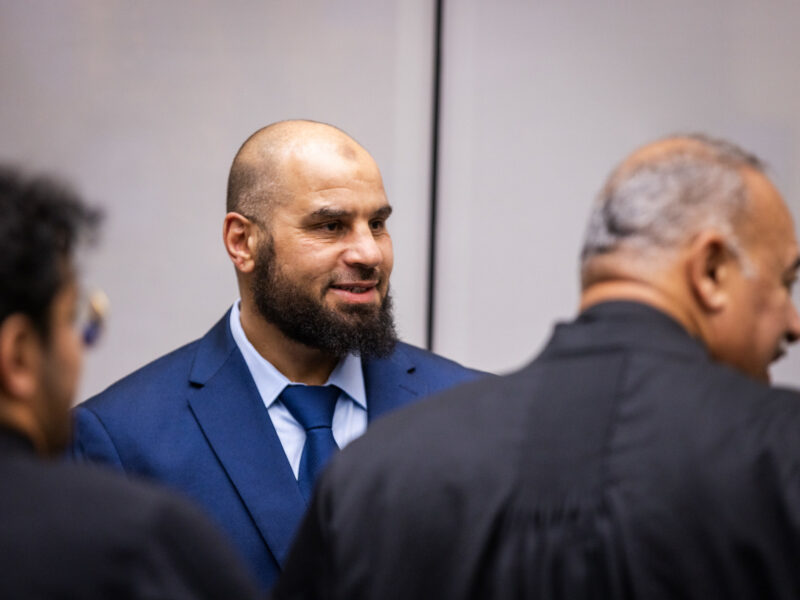
Judges found sufficient evidence to send Khaled Mohamed Ali El Hishri to trial on 17 charges linked to abuses at Tripoli’s Mitiga Prison.
THE HAGUE, Netherlands (CN) — Fifteen years after the International Criminal Court launched its Libya investigation, the man prosecutors accuse of helping run one of the country’s most feared prisons is finally heading to trial.
A three-judge panel unanimously confirmed all 17 war crimes and crimes against humanity charges against Khaled Mohamed Ali El Hishri, finding prosecutors presented enough evidence to send him to trial. His lawyers argue the case rests on a false portrayal of RADA — a military police unit formed in Libya’s capital of Tripoli — as an outlaw militia and that the ICC has no authority to prosecute crimes linked to Libya’s post-revolution security forces.
After Moammar Gadhafi’s fall in 2011, Libya fractured between rival governments and competing armed groups. During that turmoil, RADA took control of Mitiga Prison in Tripoli, where thousands of detainees were subjected to systematic abuse. El Hishri served as one of the prison’s senior officials and supervised the section holding women and young children.
The charges include torture, rape and other sexual violence, murder, enslavement and persecution. Judges found the abuse was neither isolated nor random, but carried out through an organized and institutionalized system that controlled detainees from arrest through imprisonment.
On the enslavement charge, they wrote: “On the basis of the above, and considering the cumulative effect of all the relevant factors, particularly in the specific context of a systematic and institutionalized practice, the Chamber is satisfied that the Mitiga perpetrators exercised powers attaching to the right of ownership over detainees, and that they did so with the required intent and knowledge.”
The decision does not determine guilt. It clears the way for a full trial, where prosecutors must prove the charges beyond a reasonable doubt.
Judges relied on evidence presented during a three-day hearing in May, written submissions from both sides and lawyers for victims, and statements from 63 witnesses, including 47 former detainees. They found sufficient grounds to believe El Hishri worked with other members of RADA, which controlled Mitiga during years of political turmoil, and supervised the section where women and young children were held.
Libya never joined the Hague-based court, but the U.N. Security Council referred the situation to the ICC in 2011 after Moammar Gadhafi’s crackdown on protesters spiraled into civil war and a NATO-backed campaign that toppled his government. The investigation then spent years stalled by missing suspects, political disputes and jurisdictional fights. El Hishri became its first suspect to appear before ICC judges after German authorities arrested him in 2025 and transferred him to The Hague later that year.
The International Criminal Court, established in 2002 as the world’s first permanent war crimes court, normally hears cases involving its member states. Libya reached the court only after the U.N. Security Council referred the conflict in 2011. The United States is not a member and has recently escalated pressure on the court by imposing sanctions on ICC judges over their calls to investigate Israeli war crimes.
The prosecutor’s office welcomed Thursday’s ruling, calling it “an important milestone” that opens the first ICC trial arising from the Libya investigation and brings victims “a step closer” to justice. Deputy Prosecutor Nazhat Shameem Khan said the office was ready to proceed promptly.
Lawyers for El Hishri and representatives for victims did not immediately respond to requests for comment.
A trial chamber will now take over the proceedings and decide the next steps. Neither side has an automatic right to appeal the confirmation decision, though both may ask the pretrial judges for permission.
Courthouse News reporter Eunseo Hong is based in the Netherlands.
Subscribe to our free newsletters
Our weekly newsletter Closing Arguments offers the latest about ongoing
trials, major litigation and rulings in courthouses around the U.S. and the world,
while the monthly Under the Lights dishes the legal dirt from Hollywood,
sports, Big Tech and the arts.
Credit: Source link