

Hungary Formally Classifies Russia a ‘Threat’ in UN Document
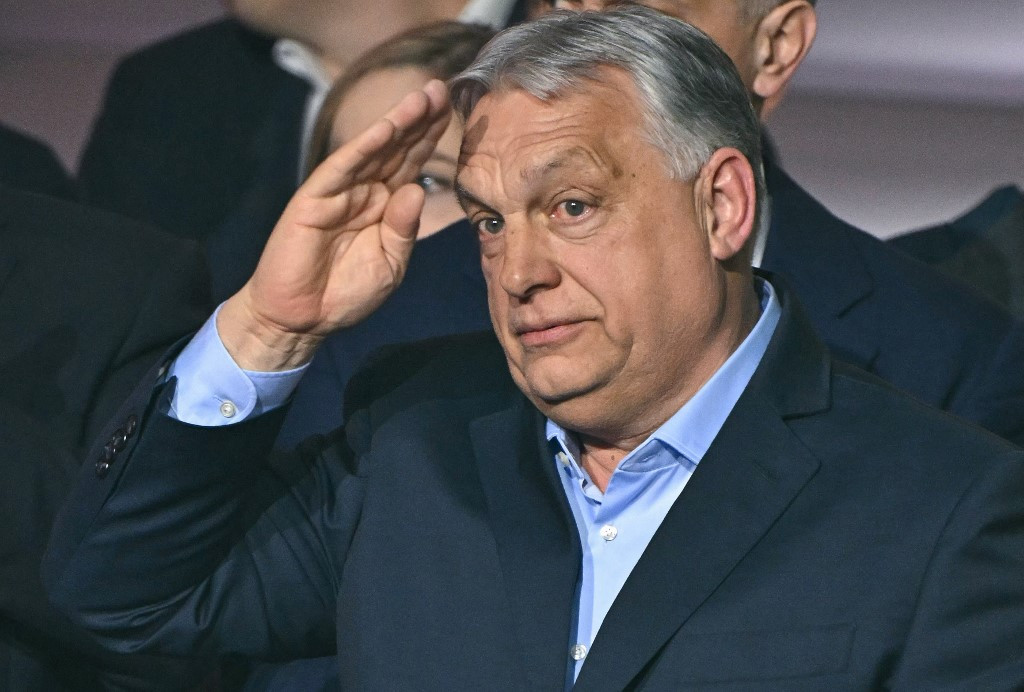
Hungary has formally designated Russia as a “threat,” signaling a decisive shift from the Kremlin-aligned foreign policy pursued under the tenure of former Prime Minister Viktor Orbán.
The document, signed by Prime Minister Péter Magyar, was published in the official Magyar Közlöny gazette on Tuesday, Aug. 25. It sets out guidelines for the Hungarian delegation heading to the United Nations (UN) General Assembly in September, according to Der Spiegel.
JOIN US ON TELEGRAM
Follow our coverage of the war on the @Kyivpost_official.
“Hungary condemns Russian military aggression and fully supports Ukraine’s sovereignty and its territorial integrity within the internationally recognized borders,” the document states.
“Russia’s behaviour is a threat to Hungary, Europe, and the global order.”
Diplomatic shift from the Orbán-era policy
Orbán, widely viewed in Europe as a loyal ally of Russian President Vladimir Putin, had repeatedly blocked EU sanctions against Russia and campaigned against support for Ukraine.
With the new document, Budapest explicitly recognizes Ukraine’s right to defend its sovereignty against Russia’s full-scale invasion, now in its fifth year. The government also says it backs efforts toward a “sustainable peace and long-term security guarantees” for Kyiv.
Signs of the shift emerging months later
The UN document formalizes a pivot that had already become visible in May, when Hungary summoned Russia’s ambassador in a rare protest over the drone strikes on western Ukraine’s Zakarpattia region – a home to an ethnic Hungarian minority.
Other Topics of Interest
Ratcliffe Visits Moscow
The director of the CIA went to Moscow on an unexpected visit to pour cold water on a rapidly overheating engine driving the world to all-out war.
Hungarian Foreign Minister Anita Orbán said Budapest had delivered a clear message to Moscow, according to a Bloomberg report on May 15.
“I repeated that the Hungarian government deeply condemns the Russian attack and we expect an immediate halt to attacks against civilians,” she said, adding that the strikes were “completely unacceptable” for Hungary.
Just a month later, Magyar announced the formalization of a “historic agreement” with Ukraine on June 13, covering the educational, cultural, and political rights of the ethnic Hungarian community in the same region, with Kyiv committed to incorporating these rights into its EU Minority Action Plan.
EU accession remains blocked
The agreement is directly tied to Ukraine’s EU accession process, as both the European Commission and the European Council actively monitor Kyiv’s compliance.
Magyar previously warned that if Ukraine fails to uphold its obligations regarding minority rights, further progress in its EU accession process could be blocked.
Despite his government actively working on dismantling the diplomatic approach that both defined Orbán’s tenure and isolated Hungary among its EU partners, Budapest has continued to obstruct Kyiv’s path toward EU membership.
On July 22, Hungary again refused to approve the opening of EU accession clusters 2 and 3, scheduling the next date for Sept. 1. Magyar argued that speeding up the process would not be fair to the candidates in the Western Balkans.
Both clusters, “Internal Market” and “Competitiveness and Inclusive Growth,” focus on economic integration.
During a meeting of the Council of the EU Working Party on Enlargement (COELA) around the same time, Hungary agreed to support the opening of cluster 3 for Moldova alone, refusing to back the same step for Ukraine. However, most EU member states rejected this differentiated approach.
By blocking the joint letter to the European Council and Commission outlining the EU’s common position on opening five remaining clusters in late June, Hungary became the sole objector among all 27 member states.