

How the UAE Built an Empire of Kleptocrats
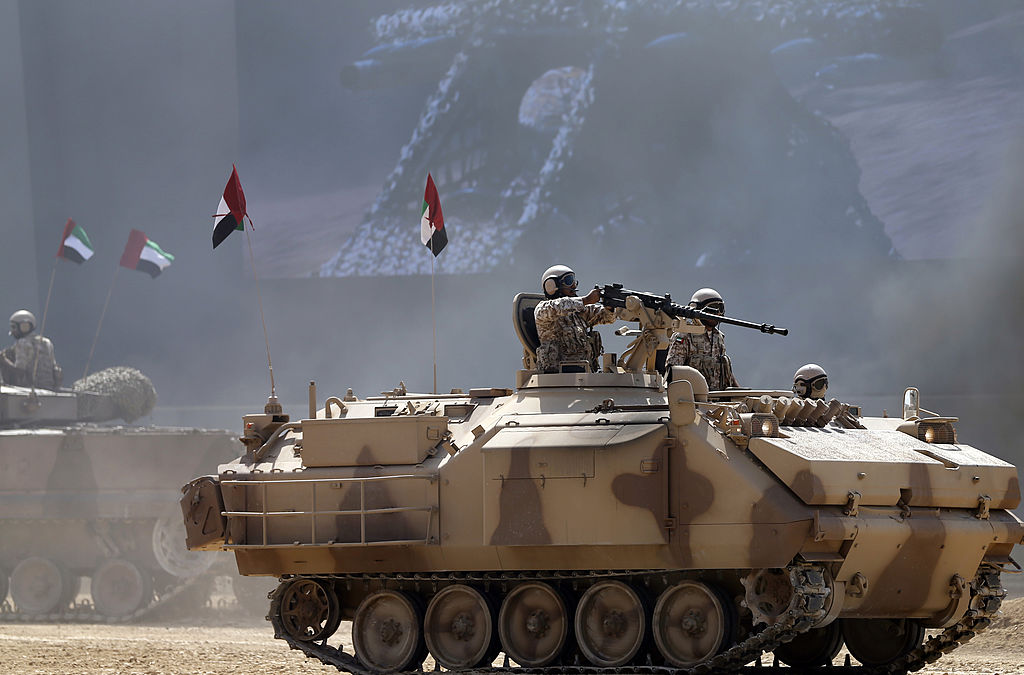
With the Arab Spring in tatters, the final step was to carve out a new order. For all its audacity, the UAE is just another player in the global capitalist order that rewards extraction, militarization, and political dependency. The UAE’s textbook imperial rivalry with Saudi Arabia and bitter ideological clash with Qatar, Türkiye, and Iran has fractured the region.
Each rising power has shaped its imperial identity and network by backing local allies and tearing countries apart before eventually reaching a fractured status quo. America, Europe, Israel, Russia, and China alternately join in or wag their finger based on context. For all their disagreements, these squabbling oligarchies have jointly created zones of perpetual insecurity where only profiteers and mercenaries thrive.
Dominating the Red Sea’s Bab-el-Mandeb choke point (like the Gulf’s Strait of Hormuz), Yemen is the monarchies’ most immediate imperial frontier. In March 2015, Saudi Arabia rallied the Gulf states in a doomed attempt to defeat the Iran-backed Islamist Houthis. With British and American support, the coalition initiated a full blockade that plunged Yemen into famine while thousands of air strikes systematically destroyed Yemeni society and killed or wounded almost 20,000 civilians.
Under cover of this catastrophe, the UAE began seizing key southern ports and energy infrastructure for itself. In 2017, it created the secessionist Southern Transitional Council (STC) to guard its interests in a proxy conflict with the Saudi-backed government. Though Saudi air strikes effectively destroyed the STC in early 2026, for a decade this Emirati fiefdom ran on repressive militias, professional assassins, UAE-trained mercenaries, and a covert torture network complete with US military interrogators.
Control of Yemen’s southern coast accelerated Emirati encroachment into Africa, where it has followed the Cold War playbook of fueling conflict and extracting resources. The UAE spent years building a chain of military-logistical hubs in Yemen, Djibouti, Eritrea, Puntland, and Somaliland to control the vital Red Sea corridor. These facilities anchor the UAE as it trains and equips embattled governments from Somalia to the Sahel and Mozambique to Congo. Most famously, when Tigrayan rebels marched on Ethiopia’s capital in 2021, the UAE rushed drones through Djibouti that turned the tide for the government.
In return, indebted elites offer sweeping military and economic concessions enabling further intervention and extraction. In 2023, the UAE and Ethiopia signed seventeen deals benefitting virtually every Emirati state corporation. The UAE is now the fourth-largest source of capital in Africa and the premier destination for Nigerian, Angolan, and South Sudanese kleptocrats laundering money and evading prosecution. Few Africans will ever benefit from the minerals siphoned off to Dubai, the “City of Gold,” or the weapons bought from Abu Dhabi, the region’s new gunrunner. The two pillars of Emirati power in Africa, plunder and militarization, betray its polished image as a benevolent investor and security partner in this “last frontier of capitalism.”
Comments are closed.