

How Morocco Can Emerge as a Resilient Supply Chain Hub
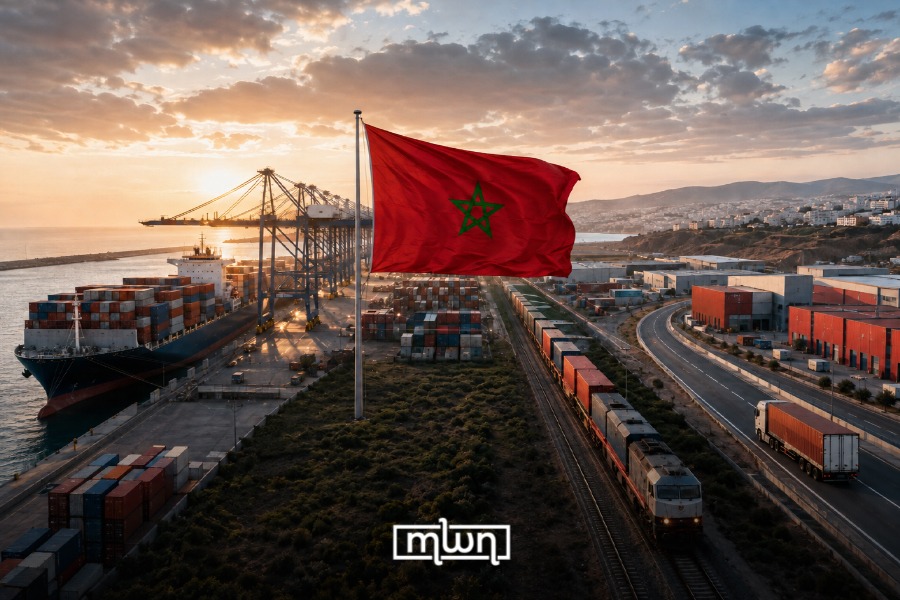
At a time when global supply chains are being reshaped by geopolitical tensions, few regions illustrate this transformation more clearly than the Middle East. Ongoing conflicts and instability have disrupted traditional trade corridors, increased risk premiums, and forced multinational companies to rethink their logistics and sourcing strategies. In this context, Morocco stands at a strategic inflection point, one that could redefine its role in global trade.
Rather than viewing instability as a distant crisis, Morocco has an opportunity to position itself as part of the solution: a stable, reliable, and competitive hub connecting Europe, Africa, and beyond.
A strategic geography reinforced by stability
Morocco’s geographic advantage is not new, but its value has never been more evident. Situated at the crossroads of major maritime routes and just 14 kilometers from Europe, the country offers a rare combination: proximity to key markets without exposure to the geopolitical risks that affect parts of the Middle East.
While traditional logistics hubs in the region face uncertainty, Morocco provides predictability. Political stability, consistent economic reforms, and long-term infrastructure planning have built a foundation of trust that global investors increasingly prioritize.
Infrastructure that matches global expectations
Over the past two decades, Morocco has invested heavily in world-class logistics infrastructure. The development of major port complexes, industrial zones, and transport networks has transformed the country into a serious contender in global supply chains.
Facilities like Tanger Med have already demonstrated Morocco’s capacity to handle high volumes efficiently, serving as a gateway for trade between continents. In a time when companies are diversifying routes to mitigate risk, such infrastructure becomes not just an asset, but a strategic necessity.
The rise of nearshoring and regionalization
One of the most significant consequences of Middle Eastern instability is the acceleration of nearshoring. Companies are increasingly shifting production closer to end markets to reduce exposure to disruptions.
Morocco is uniquely positioned to benefit from this trend. Its competitive labor costs, improving industrial capabilities, and trade agreements with both Europe and African markets create an attractive ecosystem for manufacturers seeking alternatives to more volatile regions.
Sectors such as automotive, aerospace, textiles, and renewable energy are already witnessing increased interest. With the right policies, this momentum can be amplified into long-term structural growth.
Energy and sustainability as differentiators
Another key dimension is energy. As conflicts impact energy supply chains in the Middle East, Morocco’s investments in renewable energy offer a compelling alternative. The country’s leadership in solar and wind energy not only enhances energy security but also aligns with the sustainability goals of global corporations.
In a world where supply chains are judged not only on efficiency but also on environmental impact, Morocco’s green transition becomes a competitive advantage.
Challenges to address
However, opportunity does not guarantee success. To fully capitalize on this moment, Morocco must address several structural challenges:
- Further streamline administrative processes and reduce bureaucratic friction
- Enhance workforce skills to match evolving industrial demands
- Strengthen regional integration within Africa to expand market access
- Continue improving logistics efficiency and digitalization
These are not new priorities, but the urgency has increased. Global supply chains are being redesigned now, not in the distant future.
A defining moment
History rarely offers clear windows of opportunity. Today, Morocco faces one.
As companies reassess risk, diversify sourcing, and seek stability, Morocco has the potential to transition from a regional player to a central pillar in global supply chains. The shift will not happen automatically; it requires strategic vision, coordinated policy, and sustained investment.
Yet the foundations are already in place.
In a world shaped by uncertainty, resilience becomes the most valuable currency. Morocco has the tools to offer it, and, in doing so, to transform instability elsewhere into opportunity at home.
Credit: Source link