

How Extreme Heat Waves Impact Roads and Train Service
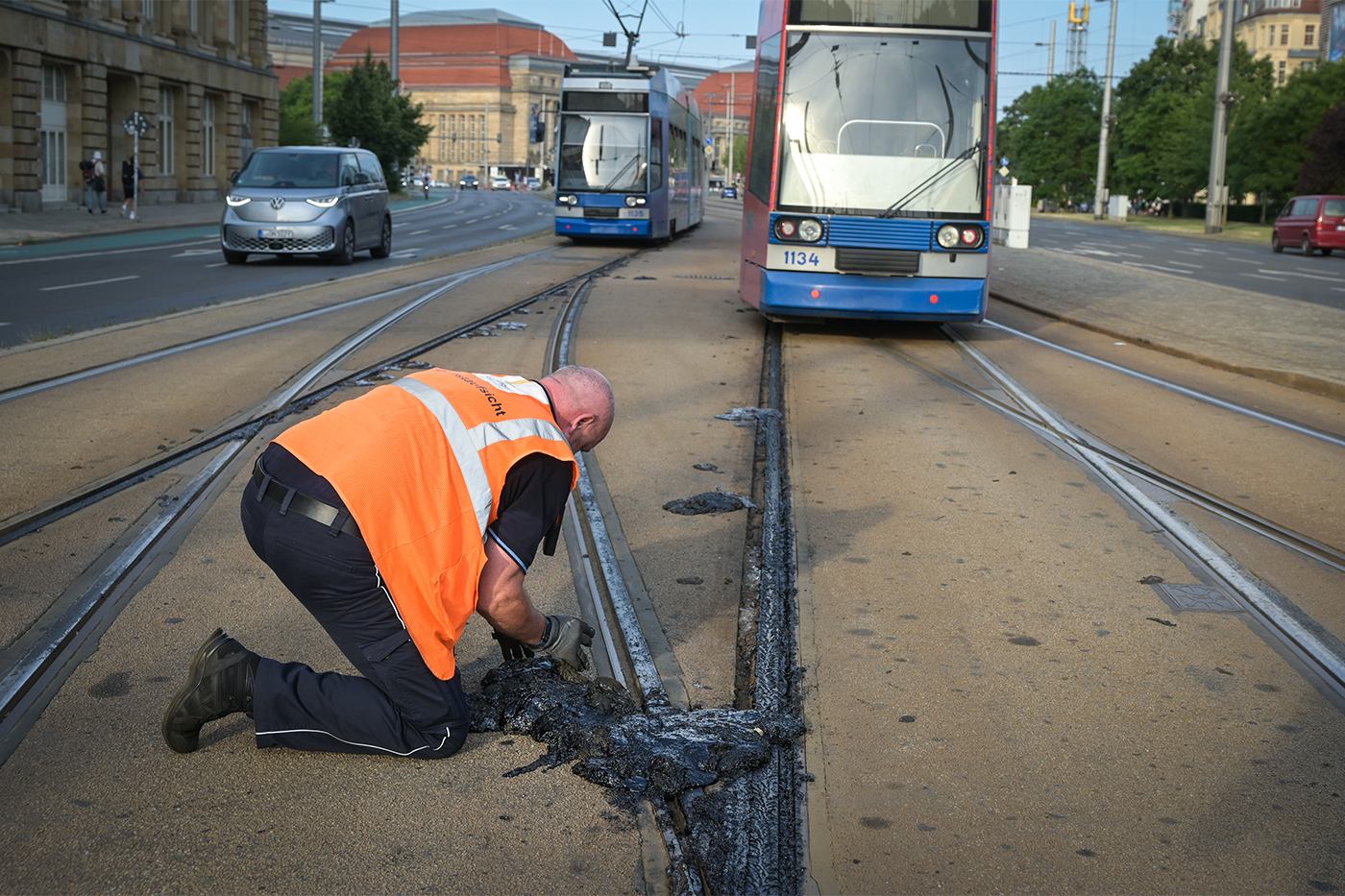
As a heat wave grips Europe, lingering high temperatures expose the vulnerability of buildings and infrastructure.
Roads in Germany buckled. Trains were canceled in France. People are grappling with how to cool down the buildings that were designed to trap heat in cooler climates.
Meanwhile, large portions of the United States are set to experience their own heat wave with triple-digit temperatures over the July 4 holiday weekend. Can its infrastructure withstand this extreme heat?
Buildings and infrastructure are designed with materials that can handle certain temperature ranges, said Nancy Varney, associate teaching professor in Northeastern University’s Civil and Environmental Engineering Department. The susceptibility depends on how much exposure they face.
Take bridges, for example. Directly exposed to the elements, they are generally built with strong materials such as steel and concrete that expand with heat and contract with cold temperatures, Varney said. To account for these movements, expansion joints are incorporated into the design.
If temperatures start to exceed what the infrastructure was built to handle, as the world faces increasing and extended spats of high heat, it may cause failures or disruptions.
“We base this on what we’ve seen in design guides and what we could expect,” Varney said of how infrastructure is designed and built. “But as things continue to change, it’s keeping us on our toes.”
Public transportation may take longer to run because of the heat wave, for instance. Since train tracks are fixed, heat can cause them to buckle or warp. The Massachusetts Bay Transportation Authority in the Boston area has warned that some trains may run slower to account for heat-related stress on the tracks and that overhead power lines may sag in the hot temperatures.
Extreme heat can also burden power grids with greater demand, hospitals caring for more people with heat-related illnesses or water systems with use and evaporation, said Auroop Ganguly, a professor of civil and environmental engineering and director of the Sustainability and Data Sciences Lab.
“Excessive heat waves lasting over days may stress the critical infrastructure and key resources if these heat conditions go significantly beyond design parameters,” he said.

A heat wave refers to a “long period of hot days that usually includes a lack of cooling at night,” said Brian Helmuth, a professor in Northeastern University’s Department of Marine and Environmental Sciences and School of Public Policy and Urban Affairs.
A heat dome, he said, is a “high-pressure system that parks itself and blocks cooler air masses that otherwise would lead to cooling. It also creates clear skies that amplify the heating effect.”
“If a heat wave is like a person having a fever, a heat dome is one of the many reasons that could have caused the fever,” added Ganguly.
While a generic term, a heat wave in the northeastern U.S. typically means three or more days of 90 degrees Fahrenheit or hotter, said Boston-based National Weather Service meteorologist Andy Nash. Thursday will be the hottest for the region, topping out at 100 degrees, he said.
This heat wave is expected to hit the eastern third of the U.S. from Wednesday through Sunday, with a heat dome centered Thursday over Virginia and Kentucky, Nash said. There might be days when the impacted areas are as hot, if not hotter, than the southwestern U.S.
Design elements exist to keep buildings cool and counteract extreme heat, Ganguly said. This includes heat-resistant materials and “green” roofs, where the tops of buildings are covered with plants to reduce the urban heat island effect. White roofs that reflect sunlight are also used, Varney noted. But a key difference between the U.S. and Europe is the widespread use of air conditioning.
Climate change may inspire experts to redesign how infrastructure is built to withstand more extreme temperatures, Varney said. But it’s a balance with cost.
For now, some officials are suggesting that Europeans implement quicker, cost-efficient fixes like hanging curtains outside windows to block the sun.
When designing to withstand certain elements, Varney said, “We have to limit the extent of our scope because otherwise things would be crazy expensive and we’d all be driving around in tanks and having bunkers for houses.”