

How does the 2026 Colombian presidential election work?

Heard about the 2026 Colombian presidential election first round this weekend? Confused about what exactly is going on? Our guide clues you in on how it all works and why the bars and borders are shut
Tomorrow sees the first round of the 2026 Colombian presidential election. It’s been a long race which has turned particularly bitter in the final week. The candidates are largely campaigning on little more than vibes and charisma, with the centre absent.
While it’s been spiky, the country remains relatively safe on election weekends. You might well see some protests or celebrations on Sunday evening, there might be people on soapboxes in the streets in some areas, but there is unlikely to be any major disturbances in large urban conurbations. The story may well be very different in isolated rural zones, as is often the case in Colombia.
Colombia shuts down a lot over election weekend, with bars closing for ley seca and borders closing as well. There will be an increased police and military presence throughout the country, with particular focus on keeping key transport routes open.
Yesterday we looked at the candidates, how they might fare and what it would mean for the second round. Today we’re turning our attention to how things actually work in the 2026 Colombian presidential election on Sunday, including ley seca times and border closures.
How does the Colombian electoral system work?
Every Colombian over the age of majority (18) and with a correctly registered cédula ciudandanía can vote. In return, each voter gets a half day off work. Non-citizens are not eligible to vote in national elections, but holders of resident visas will be able to vote in next year’s local elections.
Oversight is carried out by the CNE (Consejo Nacional Electoral). In order to do this over the vast territory and number of stations, over 800,000 citizens are selected to be vote-counters. This is similar to jury duty in other countries and is compensated with a day off as well as a compulsory day of training a couple of weeks beforehand.
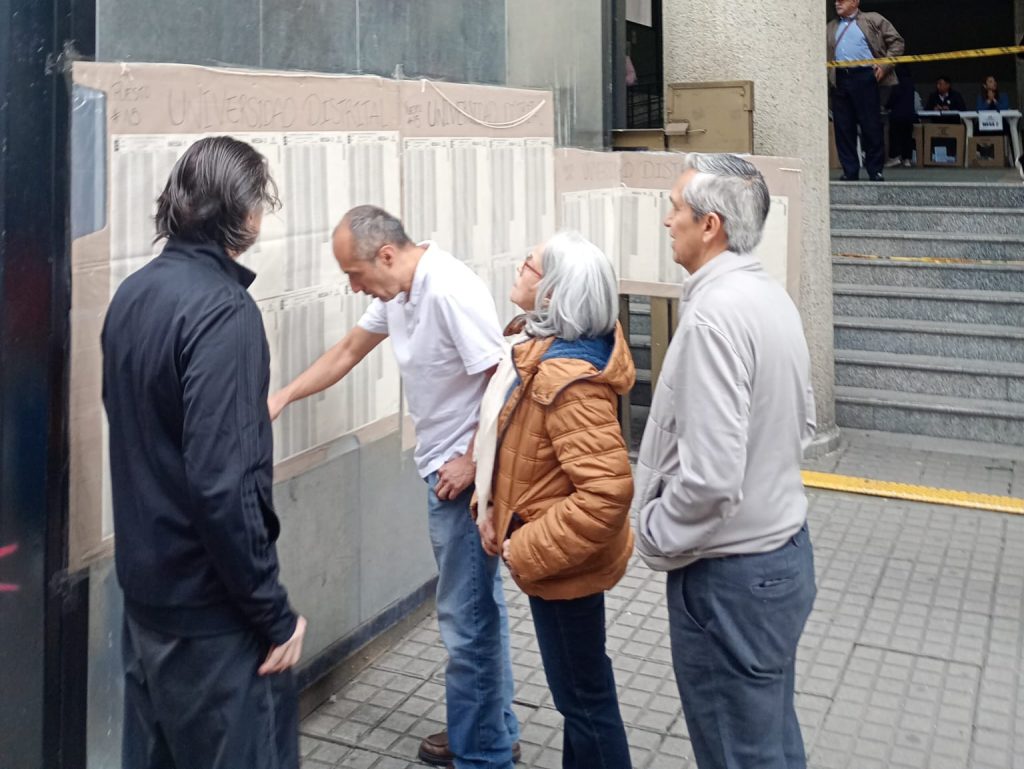
As the electorate is growing, there are now some 13,000 voting sites across the country, most with multiple voting tables. Colombians have to vote where their cédula is registered, so don’t be surprised to see some people trekking to other cities if they forgot to update their registration.
The polls are open from 8am until 4pm and counting is usually very fast with the results being clear before sundown. Land and fluvial borders will be closed for Colombian nationals tomorrow morning, although foreigners can cross. Airports will not be affected, so don’t worry if you are arriving on a flight.
Bogotá has entered ley seca earlier than usual, meaning no alcohol sales in bars, restaurants or shops from 6pm Friday night to Monday midday. That applies for everyone, so no representation or boozing for foreign residents, unless you do it at home. Ciclovía will also be cancelled for ease of access to polling stations.
What’s the background to the 2026 Colombian presidential election?
The run-up to the 2026 Colombian presidential election has seen a lot of criticism of the system, almost all of it coming from the national government. President Gustavo Petro has been front and centre on this issue, repeatedly questioning the neutrality of the elections.
Petro’s concerns rest on the fact that Thomas Greg and Sons handle the software used in the election system, a firm that he’s clashed with repeatedly, especially over Colombian passport printing. He says that the systems are opaque and he has not received answers from the CNE or Registraduria over various concerns he has. However, both groups, along with Colombia’s neutral election observers MOE have been clear about the processes.
Online, there are many posts claiming that a key part of the alleged fraud will be in the reports made by the jurados. This echoes previous elections, where there was a flurry of images purporting to show electoral forms (E-14) that had been altered. With AI entering the scenario, expect more of this after the first round, especially if de la Espriella or Cepeda do badly.
Of course, Petro is only claiming that electoral fraud exists against him, not in the multiple occasions in which he’s won at the voting urns. This is a well established populist tactic – calling elections into doubt before they happen. It’s likely to rally his base and provide an excuse if results are bad.
There is little credibility to most of the vote rigging claims. Colombia does indeed have some serious problems around corruption and influence buying, but this tends to be concentrated in rural zones in the periphery of the country. It’s also worth noting that these seats return candidates from across the political spectrum.
A lot of electoral impropriety is very hard to prove – the machines that promise to deliver blocks of votes are well-versed in legal limits and plausible deniability. Offering someone some free gifts in return for ‘support’, for example, is widespread and while dubious hard to prove in court.

It’s particularly noticeable that alliances between political actors in order to deliver voting blocs is both very common and very hard to stop. That’s where Nicolás Petro appeared to be operating and it is not clear quite who is exactly in bed with who at this point.
It goes without saying that political attacks on the CNE are particularly unhelpful, especially in what is still a very charged political atmosphere nationwide. The assassination of presidential pre-candidate Miguel Uribe last year was a shock to a country that has a long history of political violence.
Concerns remain over both electoral safety and fraud in much of the country, with over 200 municipios at high risk of fraud and/or violence. 39 of those are classed as very high risk and only 167 at very low risk, mainly in the Andino region.
There have been rumblings from Washington about the veracity of the 2026 Colombian presidential elections as well, with Bogotá-born Senator Bernie Moreno in the country as an observer. He can’t vote, having renounced his citizenship. The difference here is that they think Petro is going to rig the elections in his favour.
Petro himself has been rebuked by the Electoral Commission and others for participating in the 2026 Colombian presidential election. He’s repeatedly made comments that are at best close to the line of violating the constitutional neutrality of his office.
Not only that, but a third of his cabinet have joined in, also being rebuked by the CNE. There’s over 140 public servants under investigation. Iván Cepeda himself has come under fire for a rally in Montería on Monday after campaigns constitutionally have to end. He claims it was a private event, just attended by hundreds of local people.
Who’s in the 2026 Colombian presidential election?
Over time, the field has been whittled down to thirteen candidates on the official voting card. In reality, though, only three are at the races: Iván Cepeda, Abelardo de la Espriella and Paloma Valencia in order of current voting intention. Together, they account for around 80-90% of polling at the moment.
The left has been concentrated behind Cepeda, while Paloma Valencia has snaffled the centre-right position. Abelardo is the anti-establishment maverick. All the centrist candidates are languishing in the doldrums, with failed Bogotá mayor Claudia López and eternal candidate Sergio Fajardo the best of the bunch but both polling in low single figures.
There’s also the curious option of voto en blanco. Different from a spoiled vote, which is simply disregarded, this is an active protest. If it ranks highest in any race, then a rerun of the election must take place within a month with entirely new candidates and/or party lists.
Iván Cepeda is absolutely nailed on for the second round, almost certainly in first place. Who joins him is a slightly more open question. At the moment, Abelardo has the momentum and is riding high in the polls. However, polling isn’t infallible and Paloma could sneak into second place.
At best, many voters will be voting for their least-worst option in the second round. In recent years, Colombians have often cast negative votes rather than for a candidate they really support and this year is likely to be the same. Whoever wins, it will almost certainly be a loveless victory, despite their inevitable claims of popular support.