

How Danny Jordaan won SAFA elections, slams rival’s smear campaign
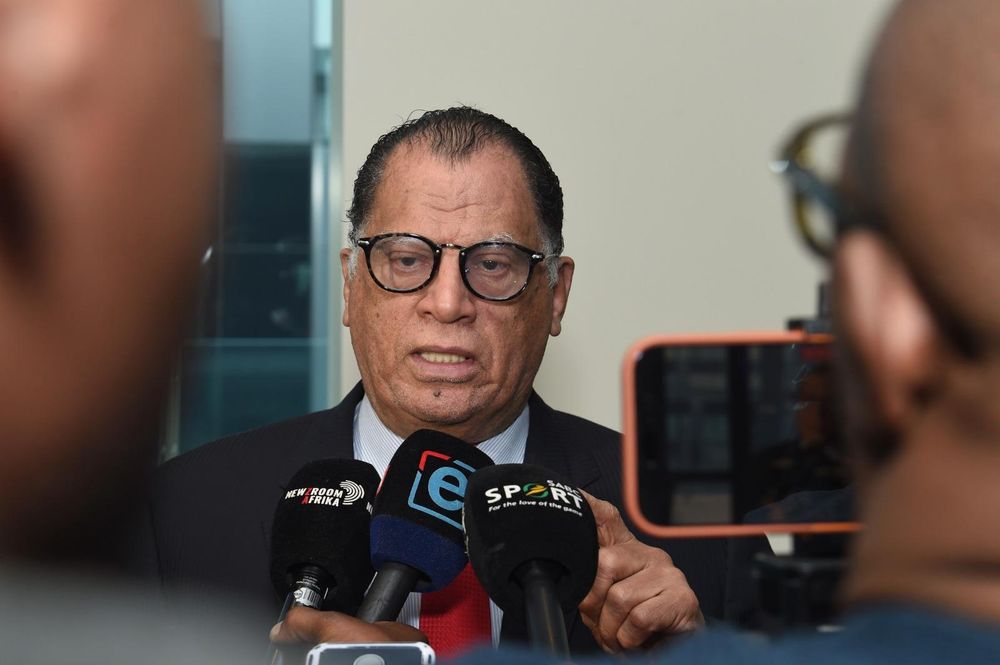
Re-elected SAFA president Danny Jordaan has claimed that his return to office was fair and square, while taking a swipe at his competitor for running a “smear campaign”.
Jordaan will continue as the SAFA boss for the next four years after receiving 157 votes, defeating challenger Sandile Zungu to retain the hottest seat in South African football.
His re-election was not without controversy. On the eve of the vote, it emerged that four of SAFA’s 52 regions were barred from voting, reportedly due to being aligned with Zungu’s camp. Additionally, the South African Men’s Local Football Association (SAMLFA) was disqualified from voting as an associate member amid reports that the decision stemmed from their public endorsement of Zungu’s campaign.
Tension heightened when SAFA released a statement alleging death and intimidation threats against several members in an effort to halt the elective congress at Vodacom World in Midrand. After tightening security on the day, the elections proceeded.
However, the voting process drew fresh scrutiny. Out of 379 total ballots printed, Jordaan received 157 votes and Zungu secured 82, bringing the total cast to 239. With reports indicating that no ballots were spoilt, questions were raised regarding the whereabouts of the 139 uncast votes.
Addressing ballot discrepancy
Governance committee chairperson Victor Mogajane addressed the discrepancy, explaining: “The unused 139 were allocated as extras before the members could cast their votes in the event that there are spoilt ballots.”
Reviewing the day’s events, Jordaan maintained that the elections committee — comprising qualified personnel experienced in running national elections — ran a watertight and transparent process.
“There was an attempt to derail the elections,” Jordaan said regarding the reported threats. “When it became clear that they weren’t going to win the elections, they tried to derail them. And that was the wrong model.
“So, we had to try and focus on what is good for South African football. We cannot have threats to derail any of our activities. The meeting went ahead. We had an election. At the end, I think we are happy with the outcome of the elections, through a democratic process, which was run by the people who are experienced to run the country’s elections.”
With this victory, Jordaan will secure an unprecedented fourth term, bringing his tenure to 16 years in power by 2030. During the previous elections, he had indicated it would be his final term. Addressing his extended stay, he noted that he does not appoint or nominate himself.
“First of all, I don’t appoint myself – even if you think that way,” Jordaan stated. “SAFA is a democratic organisation. Tomorrow (the NEC members) can have a vote of no confidence against me, and I am out.
“I can decide that I want to go, and in our discussion they say, ‘No, give us more time because we want a proper transition.’ They can say we can’t have someone who comes in and starts from day one. So you must really ask them why am I still here.”
‘Smear campaign’ against Jordaan
Since taking office in 2013, Jordaan faced what was arguably his toughest challenge yet in Zungu, especially as several members of his National Executive Committee (NEC) — including outgoing vice-president Bennet Bailey and SAMLFA — publicly endorsed his competitor.
However, Jordaan dismissed Zungu’s bid, claiming his rival relied on a “smear campaign” to discredit him and the administration’s track record.
“When you run for an election, you must present your case, and your case must be better than mine,” Jordaan said. “People are the judges. Therefore, they decide this is better than that, and therefore I support this.
“However, that’s not the case. The belief is if I can smear the association and individuals, that will strengthen my case and I can win. It’s very unfortunate because after the elections, those things are not said anymore.”
Crédito: Link de origem