

How China Is Stealing America’s AI
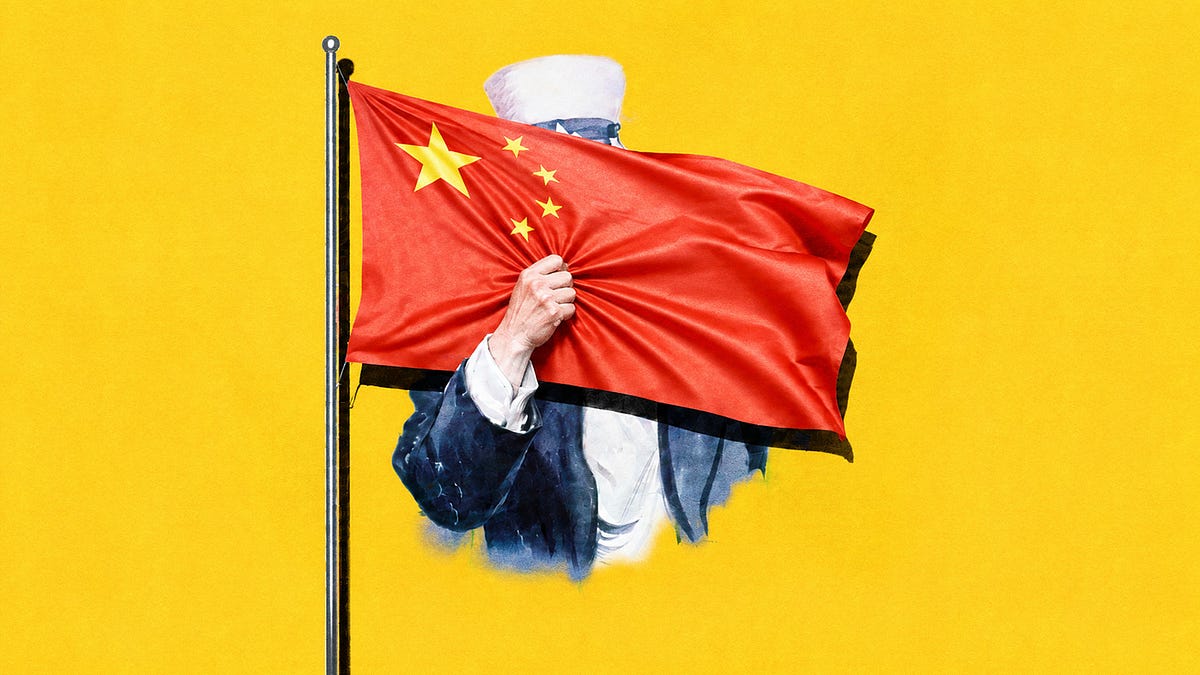
American companies will spend roughly $700 billion this year on the physical build-out of artificial intelligence: data centers, chips, and computing power. Every dollar is a bet on American capitalism—that the advances those facilities help produce will earn enough to fund the next breakthrough.
The advent of Chinese open-weight models is undermining that bet, not just by ordinary competition, but by theft. (Open-weight means its code is freely downloadable and customizable, unlike its proprietary U.S. rivals.) Chinese AI models like DeepSeek, Moonshot’s Kimi K3, and Alibaba Cloud’s Qwen barely registered in American C-suites before last year. They now run inside Airbnb, Coinbase, DoorDash, and many others.
China’s prowess is attributable in part to real ingenuity. It also owes much to a technique called distillation, in which a state-of-the-art American model is asked millions of questions, its answers are recorded, and a new model is trained on them—inheriting much of the original’s capability without needing anything like the research and investment that produced it. Done with permission, it’s an acceptable research practice. Apple pays Google to distill the latter’s Gemini model and make a smarter Siri. University labs use the technique to study how models work.