

House Approves CBL’s Proposal to Print L$79B | News
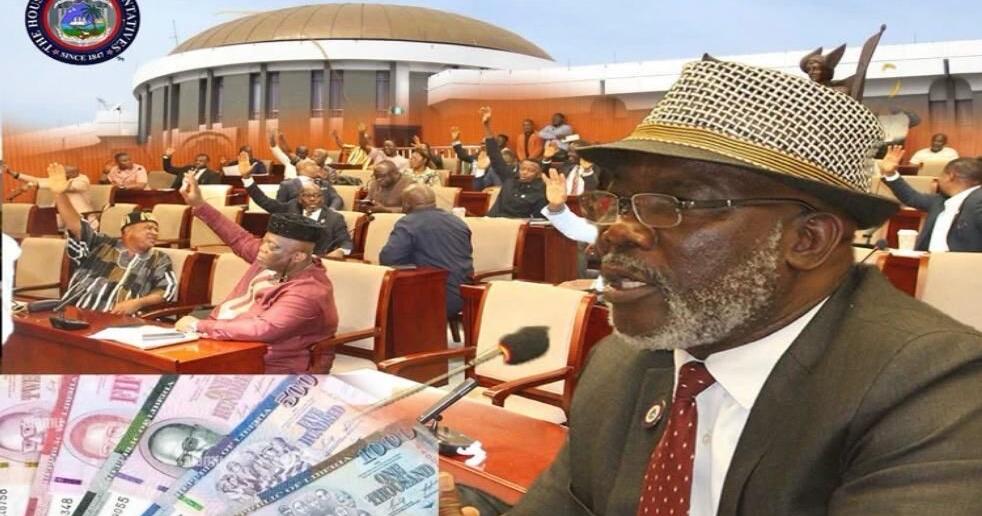
The House of Representatives has authorized the Central Bank of Liberia (CBL) to print up to L$79 billion in new Liberian dollar banknotes, in what lawmakers describe as a major step toward replacing deteriorated currency and easing the country’s persistent shortage of usable cash.
The decision was made on Thursday during the House’s 18th Day Sitting after lawmakers adopted a report from the Committee on Banking, Currency and Insurance.
The approval follows weeks of public hearings and consultations involving the Executive Branch, the Ministry of Finance and Development Planning, technical experts, private sector representatives, and ordinary citizens.
According to the Committee, the bulk of the proposed banknotes will be used to replace mutilated, torn, and heavily worn bills that have become a daily frustration for traders, taxi drivers, businesses, and consumers across Liberia. The objective, the Committee said, is to restore confidence in the national currency, improve the quality of banknotes in circulation, and ensure a reliable cash supply throughout the country.
Rather than approving the printing in phases, the House opted for a single, comprehensive authorization. Committee members argued that the approach is more practical and cost-effective.
“This eliminates the need to return to the Legislature repeatedly,” the report noted. “It provides certainty to the Central Bank, international currency printers, and the Executive, while allowing the Bank to determine the timing and quantity of printing based on actual demand.”
Officials said the strategy will reduce procurement delays, lower production and shipping costs, and provide the CBL with the flexibility to respond to currency demand without waiting for another legislative approval cycle. Under the arrangement, the Bank will manage the sequencing of production, shipment, storage, and the eventual introduction of the new banknotes into circulation.
“The actual release of new banknotes will be undertaken by the Central Bank of Liberia in accordance with prevailing macroeconomic conditions, replacement requirements, currency demand, and prudent monetary policy,” the Committee emphasized.
Mindful of public skepticism surrounding previous currency printing exercises, the Committee attached strict conditions to the authorization.
First, the approval covers only the printing and replacement of existing currency and does not authorize an expansion of the money supply. Second, any new banknotes released into circulation must comply with the CBL Act and existing monetary policy guidelines.
To ensure transparency and accountability, the Central Bank will be required to submit quarterly implementation reports to the Legislature. The House Committee on Banking, Currency and Insurance will also maintain oversight throughout the implementation process.
The report stressed one key point: authorization to print does not equate to authorization to inject additional money into the economy.
“Newly printed notes may remain in secure vaults until they are needed to replace damaged currency already in circulation,” the Committee stated.
Lawmakers said the deteriorating condition of Liberian dollar banknotes has adversely affected commercial activities, with many businesses refusing badly damaged bills, while commercial banks continue to spend significant resources sorting and destroying unfit currency. They argued that introducing cleaner banknotes will improve the integrity of financial transactions and strengthen the country’s payment system.
The Committee also found that granting full authorization at this stage would improve planning for production, insurance, transportation, and storage. Piecemeal approvals, it warned, would increase costs and create unnecessary operational bottlenecks.
The decision followed extensive deliberations that balanced technical advice with public concerns. Committee members said they carefully considered inflation risks, fiscal policy implications, and the CBL’s statutory responsibility to maintain an adequate supply of clean, secure, and serviceable currency.
Following debate on the floor, members of the House voted in favor of the resolution, which has now been transmitted to the Liberian Senate for concurrence, as required by the Constitution.
If the Senate concurs, the Central Bank will immediately begin the procurement process with approved international currency printers. The Bank will then oversee production schedules and determine the appropriate timing for releasing the new banknotes into circulation.
For now, lawmakers say the authorization reflects responsible legislative oversight while preserving the Central Bank’s operational independence in managing the country’s monetary policy.
Credit: Source link