

Holding the Line: A Tribute to Hamid Khalafallah
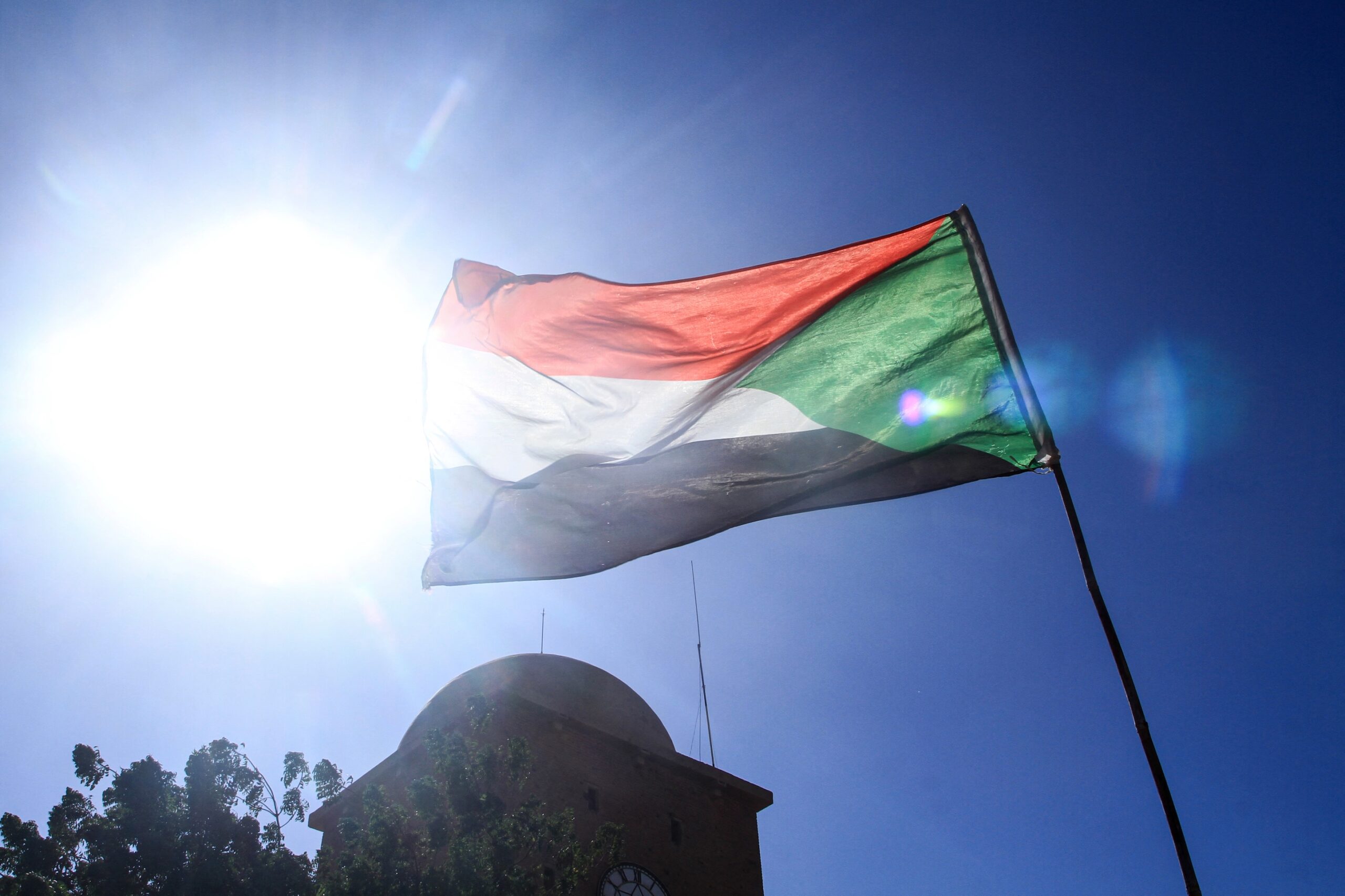
This tribute is an attempt to remember and honor Sudanese researcher, analyst, and dear friend Hamid Khalafallah, while struggling with a loss I still do not know how to make sense of. Any word feels too little for a loss this massive.
What does it mean for all of us when such a force of life, care, and kindness leaves our world? How do we reckon with an absence so heavy that it changes the shape of everything around it?
“To my beloved Sudan, The land in which most of my life’s pain and hardships originated, yet the ultimate source of my pride, hope and happiness.” — Hamid Khalafallah, 2019.
Hamid was sharp in his politics, incredibly generous, and deeply loved. He was a rarity whose presence made a troubled world feel more bearable. With Hamid, it felt like there was someone holding the line with you, someone reminding you that warmth, simply “being here” and lending a hand in the midst of collapse was not separate from organizing. He showed that caring for one another was not a withdrawal from politics but one of its deepest and most radical forms.
Hamid and I met when we were both part of the 2022–2023 nonresidential fellowship program at The Tahrir Institute for Middle East Policy (TIMEP). At TIMEP, Hamid and I quickly became friends, even though we had not met in person. We were both writing from places that policy spaces too often flatten into crises or oddities to be managed. What connected us was the insistence that any policy conversation had to begin with the people surviving in the shadows. We regularly spoke about helplessness as a political condition that had to be thought through. We were trying to understand how people continue to organize, build, and imagine when the structures around them offer so little in return. With Hamid, these conversations felt like a way of staying accountable to the people our work claimed to be about. And Hamid was always there to help me think through the work I was trying to put into the world, be that political commentary or webinars I was participating in—he was always there.
I always return to Hamid’s joy and smile because it offered a glimpse into a world that had not yet taken everything from us. It was a joy that existed alongside the weight of the realities he cared so deeply about—his loved ones, Sudan, and the communities he worked with and for. It did not deny the gravity of the world around him, but it refused to disappear from any room or conversation we shared.
This may seem like a small thing to say about someone whose work was intellectually and politically revolutionary and groundbreaking, but it is not minor at all. His smile was part of the way he moved and lived. He could sit with the grief of Sudan, with the devastation of a revolution cut short, with displacement and flagrant international failure, and still offer warmth to the people around him, even those miles apart from him like me. Solidarity was Hamid’s non-negotiable when it came to both political work and friendship.
Hamid’s commitment to Sudan sharpened the way he stood with Palestine, Lebanon, Egypt’s political prisoners, and people across the region
His warmth was not separate from his politics; it was how he practiced solidarity. Hamid’s commitment to Sudan sharpened the way he stood with Palestine, Lebanon, Egypt’s political prisoners, and people across the region. I felt this not only in public spaces, but in the fact that I write this as a Lebanese friend whom he kept checking on, even as Sudan was going through unspeakable horrors. He would always remind me that “joy will come,” and that things will not always be this grim. I remember when, during our TIMEP fellowship, fellows came together around a letter calling for the release of Alaa Abdel Fattah. Hamid responded enthusiastically, seeing Alaa’s imprisonment as part of a regional reality that we must collectively fight. I saw it again in the way he spoke about Beirut after visiting it, enamored with the city’s life and solidarities made possible even amid so much collapse. And I saw it in his participation in spaces such as the ACSS conference session in Beirut, where he insisted that Sudan be understood through the regional and global forces that had made its people’s struggle so urgent.
To Hamid’s family and close friends around the world: I know that no words I say or language I use can come close to the size of what you have lost. You lost his voice, his kindness and selflessness, his affection, his messages, and his funny and odd habits.
There is the world in which Hamid was somewhere on this earth, writing, working incredibly hard, while fighting for a different future for Sudan and refusing the country to be forgotten from policy discussions. And then there is today’s world, the one after him.
To grieve Hamid is to remember how hard he worked for Sudan. It means remembering his name, learning from his analysis, pushing for the demands he had for Sudan, and supporting Sudanese talent and knowledge. Hamid’s political work was not decorative, it was about solidarity. To grieve him is to remember the sharpness of his thought, the courage of his commitments, and the extraordinary clarity with which he insisted that Sudan was not a tragedy to be observed from afar, but a people, a revolution, a history, and a future being violently betrayed by its leaders and the world.
To understand what Hamid gave us, we have to understand that people’s movements are not sustained by outrage alone. These movements endure because some people keep working through grief, fatigue, and the knowledge that the world may look away. Hamid did that for Sudan.
Hamid fought the terms through which Sudan was being explained to the world
Hamid fought the terms through which Sudan was being explained to the world. He did not accept having war be reduced to another crisis to be managed through humanitarian concern alone. For Hamid, the war was a counterrevolutionary assault on the democratic aspirations Sudanese people had built since 2018; a war against the possibility of civilian rule and against the political imagination carried by those who kept organizing. He warned of the dangers of fragmentation, parallel governments, and foreign powers who spoke of peace while failing to pressure the forces sustaining the war. That was the level at which Hamid worked, by spelling out the machinery of war, without claiming it was the whole story. He kept returning us to the people whose struggle made another Sudan imaginable.
In this sense, Hamid was one of Sudan’s worker-intellectuals. His political and intellectual contribution moved across academia, policy circles, friends, and loved ones seamlessly. He was part of what sociologist Alan Sears calls the infrastructure of dissent, being the means through which movements analyze, communicate, remember, organize, sustain themselves, and build the collective capacity to act—to do something. But Hamid did this in a way that was deeply his own and it was mind blowing every single time. He could enter policy spaces without allowing their discourses to flatten Sudan or turn Sudanese society into an object of emotionless expertise. He could speak with precision, wittiness, while planning for the day after. The work he carried was never meant to end with him.
Hamid spent his professional life trying to stop the world from looking away from Sudan. He asked us to understand Sudan, to engage it seriously, to recognize Sudanese people as political thinkers and makers of their own future. He asked us to see that beneath every headline about war was a counter-history of love and an unfinished revolution. And now that he is gone, we can no longer look away. Hamid’s work was a labor of love first and foremost, carried with a warmth that should have made the world pause. So now we must create the rupture he asked of us and deserved.
We must speak from the shoreline of this grief, from the knowledge that some people are made to fight for futures they may never get to be fully part of. We must speak because Hamid did so tirelessly. We must speak because Sudan’s war has not ended, because its people are still here, because the revolution is not finished, and because the future he fought for is still not our present. What comes next is a test of our love and admiration for Hamid, who as Jawhara Kanu put it, was the friend who never wavered.
Hossein Cheaito is a former Nonresident Fellow at TIMEP focusing on governance and economic development in Lebanon. He is a PhD candidate in Sociology at the Geneva Graduate Institute, where his research focuses on the intersections of debt, gender, and sexuality in Lebanon.
Credit: Source link