

Highway to Hell: Ukraine’s Logistics Lockdown, Taiwan’s Littoral Command and China’s Evolving Nuclear Capability. The Big Five, 31 May edition.
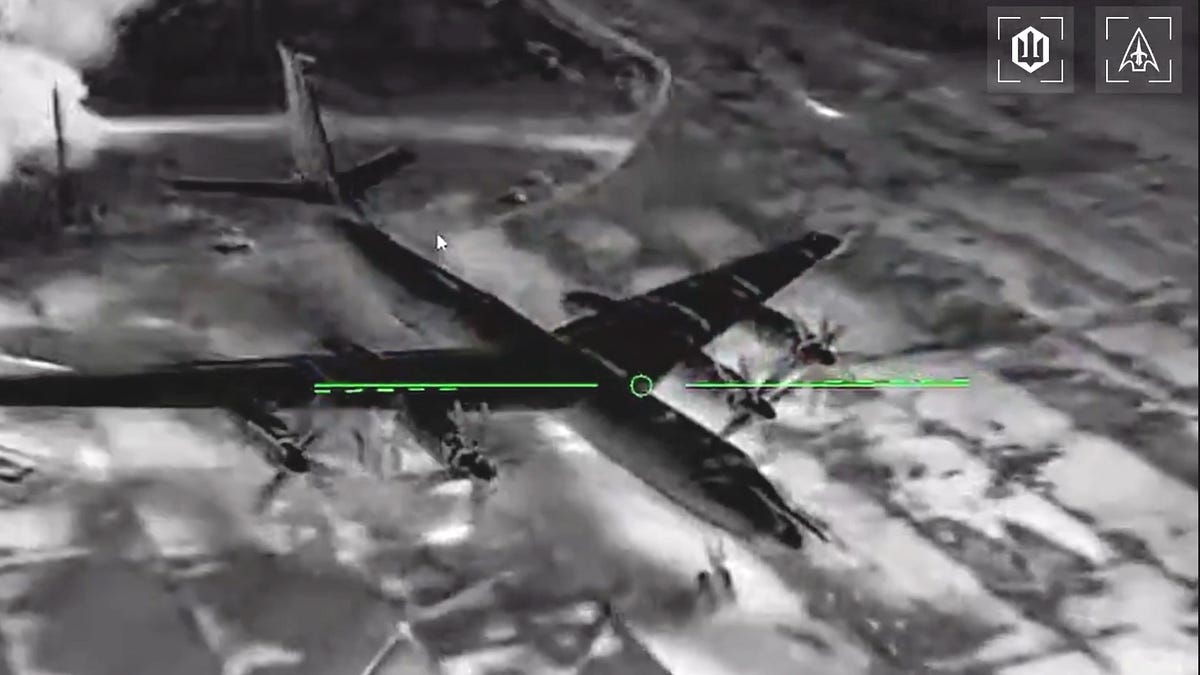
We are rightfully bringing the war back to where it came from. Russia could have ended its aggression long ago but instead chose to prolong and continue it. President Zelenskyy, 30 May 2026
It has been another fascinating week to observe the practice, and evolving theories, of modern war.
In Ukraine, the strategic and operational landscape shifted in ways that show the strategic initiative is slipping away from Russia. A Ukrainian drone campaign against Russian logistics along the southern land bridge to Crimea has entered a new phase of scale and ambition, formalised by Kyiv into what Defence Minister Mykhailo Fedorov has labelled a “logistics lockdown.”
On the evening of 29-30 May, Ukrainian forces struck the aviation facilities and port at Taganrog, destroying two Tupolev Tu-142 maritime patrol aircraft and an Iskander launcher in one of the most significant single strikes of the war. On the diplomatic front, President Zelenskyy convened a high-level strategic session on 30 May to consolidate Ukraine’s posture as US-mediated talks stall and European partners step up.
In the Pacific, Taiwan formally stands up its new Littoral Combat Command on 1 July 2026, an organisational reform that integrates anti-ship missiles, coastal radar, and unmanned systems under a single command for the first time. China appears to have constructed more than 80 launch pads and hardened bunkers near its ICBM silo fields in Xinjiang, revealing the scale of Beijing’s second-strike nuclear modernisation.
And we await a resolution to the war in Iran.
Welcome to this week’s edition of The Big Five.
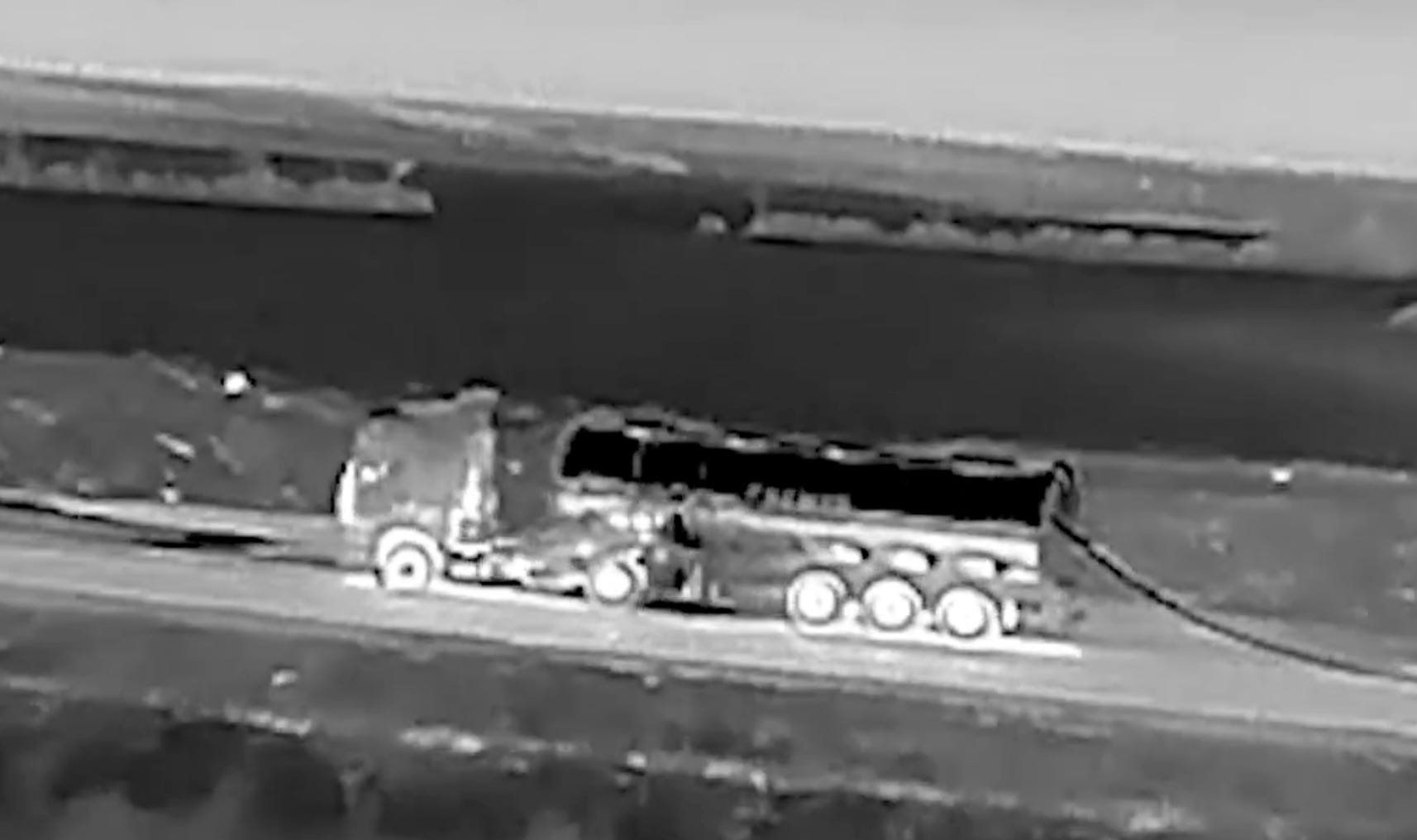
The Logistics Lockdown: Targeting Russia’s Southern Land Bridge. The most significant development of the past week in Ukraine has not taken place along the front line. It has unfolded 100 to 200 kilometres behind it, along the highways that connect Russia’s occupied south to Crimea and, through that peninsula, to Russia. What has brought this issue to the fore was Ukrainian Defence Minister Fedorov on 27 May formalising what had previously been a covert campaign into a declared strategic programme, announcing a $113 million initiative he called the “Logistical Lockdown.” The programme is designed to massively scale up mid-range drone strikes against Russian supply networks deep behind the front line, with the stated objective of depriving Russian forces of the ability to conduct active assault operations.
This approach is hardly new. In western doctrine it is known as Interdiction. The concept of destroying second and third echelon forces, their logistics and C2, was a key aspect of the Cold War era Air-Land Battle developed by the U.S. military. Then, long-range ground fires (such as MLRS) and air force aircraft were central capabilities. Now, drones – for ISR, strike and battle damage assessment – are the key effector for interdiction, or as it is now known, mid-range strike.
The campaign is targeting the R-280 highway, also known as the M-14 and renamed by Russian occupation authorities as the “Novorossiya” route. This road runs from Rostov-on-Don in Russia, through occupied Mariupol, Berdyansk, and Melitopol, and into Crimea. It is Russia’s primary land line of communication to the peninsula. It has only grown in importance since the Kerch Bridge has been progressively degraded by Ukrainian strikes. As the Centre for European Policy Analysis has noted, Russia has invested around $11.8 billion between 2024 and 2026 on roads, railways, ports, and industrial projects across occupied southern Ukraine because it sought geographical dispersion and redundancy to protect its logistics from Ukrainian interdiction. The current Ukrainian mid-range strike campaign is slowly degrading that concept.
But it is not only logistics routes that are the targets of this campaign. Russian headquarters, training camps, air defence, ammunition and fuel storage and other military infrastructure up to 100 kilometres behind the front line are targets. The strikes this week on Russia’s 3rd Army training ground in occupied Luhansk, and 36th Army training ground in occupied Zaporizhzhia, are examples of the broader scope of this campaign.
The Ukrainian instrument that is central to this campaign is a growing family of Ukrainian middle-strike drones. This includes fixed-wing systems designed to bridge the gap between short-range first-person-view strike drones and the deep-strike platforms used to hit targets inside Russia itself. On 26 May, Ukraine’s 412th Nemesis Brigade of the Unmanned Systems Forces disclosed details of a domestically produced drone called the MORRIGAN, which it described as having operated repeatedly in Crimea and against Russian air defence and logistics assets along the Mariupol-to-Crimea corridor. The AI-assisted Hornet drone, reported previously to be capable of autonomous strikes up to 100 miles or more behind the front line, has also been central to the campaign.
The scale of destruction documented by open-source analysts is considerable. By 30 May, the monitoring group Oko Gorahad documented at least 86 burned trucks and fuel tankers on the M-14 and H-20 highways over the preceding three weeks. An analyst cited by CEPA placed the total of destroyed trucks far from the front line at more than 125, most destroyed during May. The Defence Intelligence of Ukraine reported that its drone operators had established fire control over sections of the highway linking Berdiansk, Melitopol, and Dzhankoi, using RAM-type UAVs (a loitering precision munition) and other domestically produced strike systems to hit fuel tankers, military vehicles, and logistics hubs up to 150 kilometres behind the front.
For an in-depth review of this campaign, see the long thread posted on 30 May by Clement Molin here.
The strategic logic of this campaign is simple. Almost all Russian logistics for the southern front and Crimea are land-based. Russia’s investment in the Azov Ring was intended to provide redundancy, but that network’s very success at concentrating supply flows has created chokepoints. Ukraine, by directing this campaign at the highways themselves, is seeking a form of operational-level interdiction that previous attempts were not able to achieve.
The middle-strike campaign fills an operational gap between tactical defensive and counter-attack operations and the long-range, deep strike activities of the Ukrainian military. By conducting all three forms of operations concurrently, they place increasing pressure on Russian forces, degrade their offensive capabilities, and shape the battlespace for future Ukrainian offensive operations in later 2026 and in 2027.
Strategic Strike Extended. Overnight on 29-30 May, Ukraine’s Unmanned Systems Forces conducted a strike against the Taganrog aviation complex and port in Russia’s Rostov Oblast. Commander Robert “Madyar” Brovdi of the Unmanned Systems Forces announced the operation, stating that the 1st Separate Unmanned Systems Centre destroyed two Tupolev Tu-142 long-range maritime patrol aircraft, including a rare Tu-142MR strategic radio-relay variant used to communicate with submarine forces, as well as an Iskander operational-tactical missile launcher, according to United24 Media.
The strike was attributed to the newly established Unmanned Systems Forces Deep Strike Centre. Drone attacks on the Taganrog port simultaneously set fire to a tanker, a fuel storage tank, and an administrative building, with the Rostov region governor confirming fires and two civilian injuries. A separate strike hit an oil depot in Armavir, Krasnodar Krai.
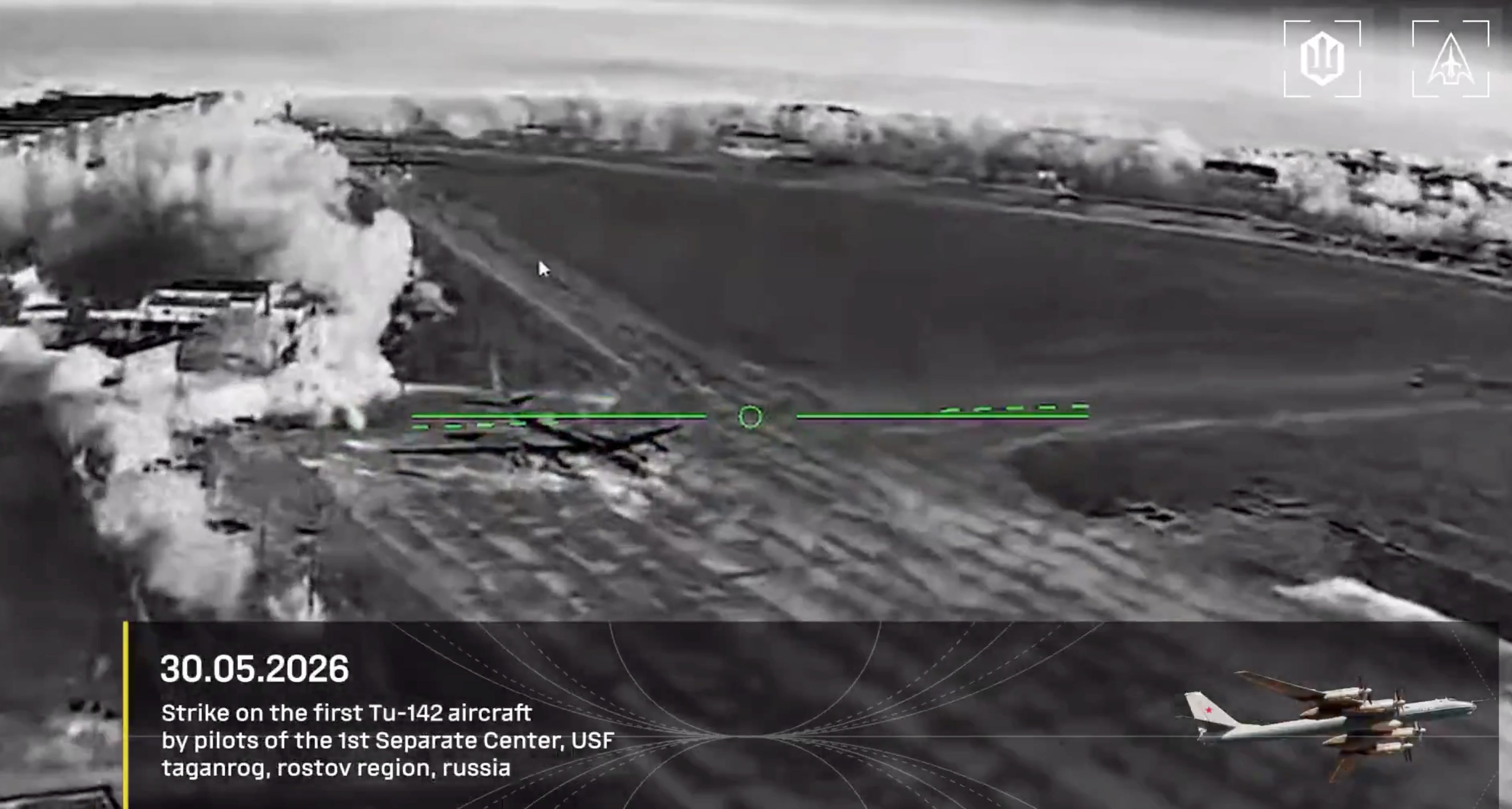
The Taganrog Aviation Plant is one of Russia’s important aviation industrial hubs, and houses the Beriev Aircraft Company, the 325th Aircraft Repair Plant, and facilities supporting the Tu-95MS and Tu-142 families. The reported loss of two Tu-142 aircraft, including the rare MR submarine communications variant, would represent a significant blow to Russian naval aviation. Taganrog has been struck multiple times in recent months; satellite imagery previously showed the destruction of an A-60 laser aircraft and an A-100LL airborne early warning platform at the Beriev plant in late 2025, and the 325th Aircraft Repair Plant was reportedly targeted on 27 May, days before the overnight strike. Ukraine’s President Zelenskyy, noting the simultaneous strike on Armavir some 500 kilometres from the border, wrote that Ukraine was “rightfully bringing the war back to where it came from.”
One wonders how much longer the commander of air defence at Taganrog will keep his job.
The Ground War. Along the front line, the picture remains one of grinding pressure. In the north, Russian forces have continued offensive operations in Sumy Oblast, probing and advancing incrementally through forested terrain using infiltration tactics. Russian offensive operations also continue in northern Kharkiv Oblast, where Ukrainian forces were conducting counterattacks.
The capture of Ukraine’s fortress belt remains the Russian main effort on the ground. While the Russian plan continues to seek an operational double envelopment, Russian ground forces are also attacking from the east to draw Ukrainian forces east and fix them in place. As the maps below demonstrate, Russia has made some progress on this axis since January 2026, but it is not significant and has come at a massive cost in manpower and resources.


The broader picture for the past month, as analysed by the Russia Matters newsletter, shows a deterioration for Russian forces. In the four weeks ending 26 May 2026, Russian forces registered a net loss of 100 square miles of Ukrainian territory, with a net loss of 26 square miles in the preceding four-week period. In the week of 19-26 May, Russia lost 38 square miles. Ukraine’s mid-range drone campaign appears to be exerting effects on Russian operational capacity in the south.
Russia’s Spring Campaign may be taking small parcels of land in different parts of the frontline, but as a cohesive major campaign, it has not generated the tempo or momentum necessary to change the situation on the ground. Further, the Ukrainian resistance on the eastern and southern fronts, and Putin’s pathetic ‘please don’t attack my Victory Day parade’ plea, have had an impact on Russian strategic influence operations. It is probably obvious by now, but Putin’s ’inevitable victory’ narrative seems to now be firmly in the dustbin of history.
President Zelenskyy held a staff meeting in mid-May to analyse intelligence on Russian planning in the Chernihiv-Kyiv direction, stating that Ukraine was “preparing responses to every possible course of enemy action” and that forces in the northern sector would be increased. He also directed the Ministry of Foreign Affairs to prepare additional diplomatic measures regarding Belarus, which Russia might use as a staging ground to expand the war. The concern about a northern axis is not new, but the formal intelligence assessment and public communication of preparations signals Kyiv’s seriousness about the threat.
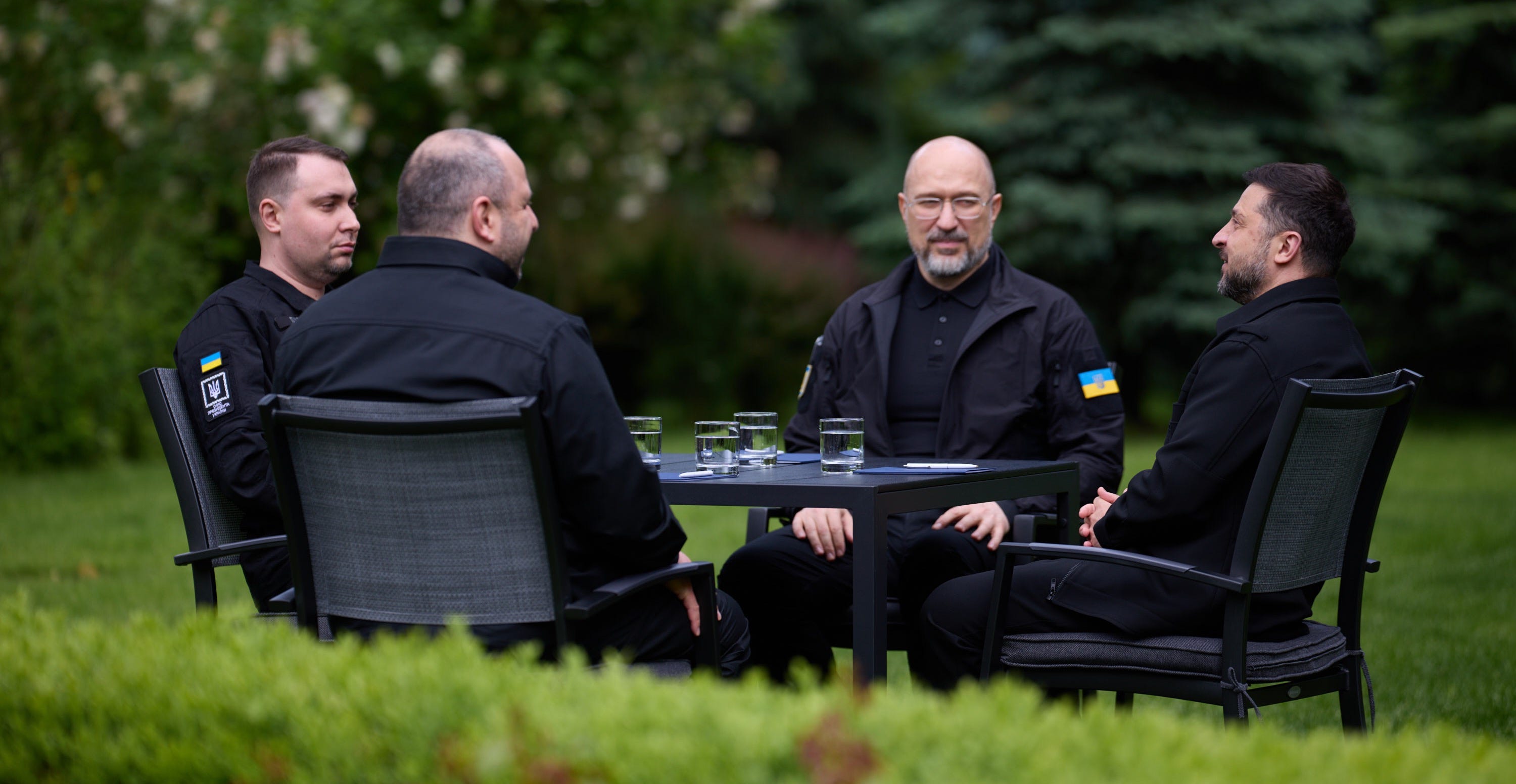
Zelenskyy’s Strategy Session. On 30 May, President Zelenskyy convened what he described as a “special meeting on next steps” with Ukraine’s top defence, intelligence, and government officials. The session, as reported by the Kyiv Postand also the subject of a social media post from the Ukrainian president, included Head of the President’s Office Kyrylo Budanov, National Security and Defence Council Secretary Rustem Umerov, and First Vice Prime Minister and Energy Minister Denys Shmyhal. The meeting’s stated focus was on immediate priorities across international diplomacy, frontline procurement, and humanitarian operations. The session represented an effort to consolidate Ukraine’s strategic posture and assess the implications of a significantdiplomatic recalibration.
This is important because, according to The Economist, Ukraine expects the war to continue for the next two to three years. Reviewing existing strategies and setting the right ones for the way forward is crucial.
The diplomatic context is shaped by growing U.S. disengagement from mediation. The U.S. Secretary of State Marco Rubio has acknowledged a lack of progress in Washington’s brokered talks, stating that “if someone else would like to handle it, they should,” as the Kyiv Independent reported in its coverage of the stalled peace process. The most recent trilateral talks involving Ukraine, Russia, and the United States took place on 16 February, with a follow-up round postponed when US-Israeli strikes on Iran began. Moscow has pushed in negotiations for Ukraine to withdraw from the four oblasts it claimed to annex in 2022, a demand Kyiv has categorically rejected.
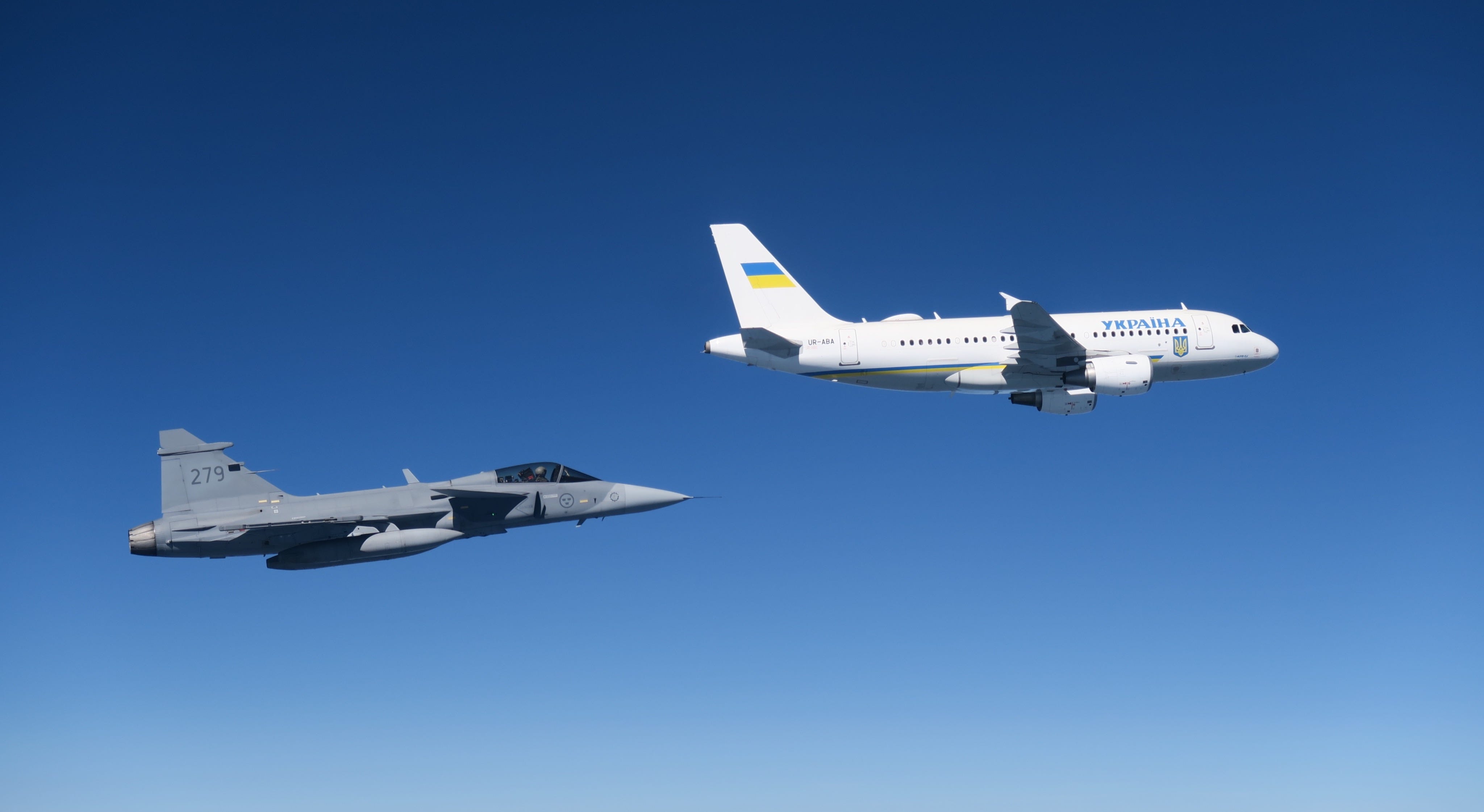
Against this backdrop, European partners are stepping up. In May, NATO Secretary General Mark Rutte confirmed Zelenskyy’s invitation to the NATO summit in Ankara that will be held in July. The Russian drone strike in Romania this week has strengthened the need for European unity. And just this week, Ukraine and Sweden announced the provision of Gripen fighters, including training, support and weapons, for Ukraine’s air force.
Ukraine Assessment
A better appreciation of Ukraine’s campaign against Russia’s southern logistics network, as well as interdiction operations on the eastern front, is the key development of the past week. This is not because Ukraine is demonstrating a new military capability, although that is important. These strikes are a key development because for the first time in this war, Ukraine is executing a synchronised, concurrent series of campaigns against Russia in the close, mid-range and deep battles.
What began as a covert operational experiment has now been formalised into a declared strategic programme. The mid-range strike campaign represents a maturation of Ukrainian drone doctrine. These are sustained, systematic efforts to degrade the operational capacity of Russian forces along the most important ground supply corridor of the war. The strikes hit at the connective tissue between Russia’s strategic industries and the Russian units on the front line. Hitting all three elements of Russia’s warfighting capacity simultaneously is a crucial development in this war.
The ground war remains a brutal slog-fest, with Russian forces failing to achieve operational breakthroughs despite sustained pressure. The monthly territorial figures in May strongly suggest Ukrainian forces have improved their defensive performance compared with earlier in the war. The risk of a Russian effort to open a northern axis through Sumy or toward Chernihiv cannot be dismissed, and Zelenskyy’s public preparation signalling serves both deterrence and domestic communication purposes.
On the diplomatic front, Ukraine’s situation is difficult but not desperate. The stalling of U.S. mediation, and the Trump administration’s distraction with a war in Iran and preparations for more Western Hemisphere operations (Cuba, Greenland?), may relieve the pressure on Kyiv to make territorial concessions it would otherwise be unable to accept politically. The coming NATO summit in Ankara will be a significant test of whether the alliance can articulate a coherent approach to Ukraine’s security in an environment of declining American engagement and where preparations are being made for a post-ceasefire environment that does not yet exist.
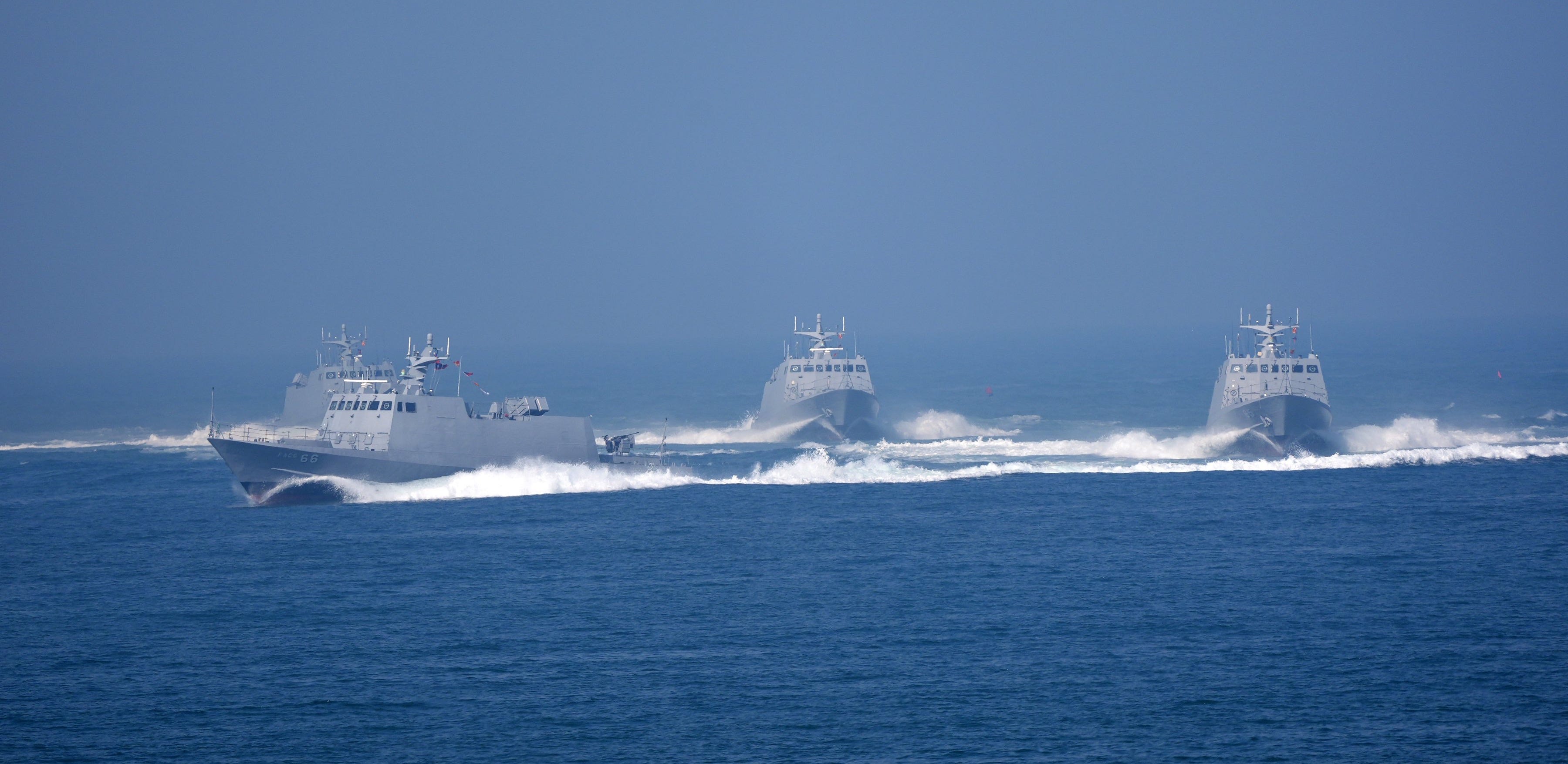
Taiwan’s Littoral Combat Command. On 1 July 2026, Taiwan will formally stand up the Littoral Combat Command (LCC), a structural reform of the Republic of China Navy that integrates anti-ship missile units, coastal and mobile radar, and unmanned systems into a single unified force for the first time. President Lai Ching-te is expected to preside over the establishment ceremony. As Noah Reed and Chris Dayton document in the Taiwan Security Monitor, the LCC’s headquarters will be located along Taiwan’s west coast in Huwei Township, Yunlin County.
Once established, the command will be responsible for the defence of the seas surrounding Taiwan and its outlying islands, inheriting several anti-ship missile and radar positions on the Penghu and Matsu Islands.
The LCC represents a doctrinal and organisational shift. Taiwan’s defensive military strategy, which posits a layered, coastal defence approach against a PLA amphibious assault, depends on the integration of anti-ship missiles, coastal surveillance, and unmanned systems into a coherent operational architecture. Previously, these capabilities sat across separate commands, reducing their effectiveness as a coordinated force. The creation of the LCC addresses the command and control gap, bringing together the Hsiung Feng II and III anti-ship missile systems with their associated coastal radar and uncrewed maritime capabilities under a single commander with unified operational authority.
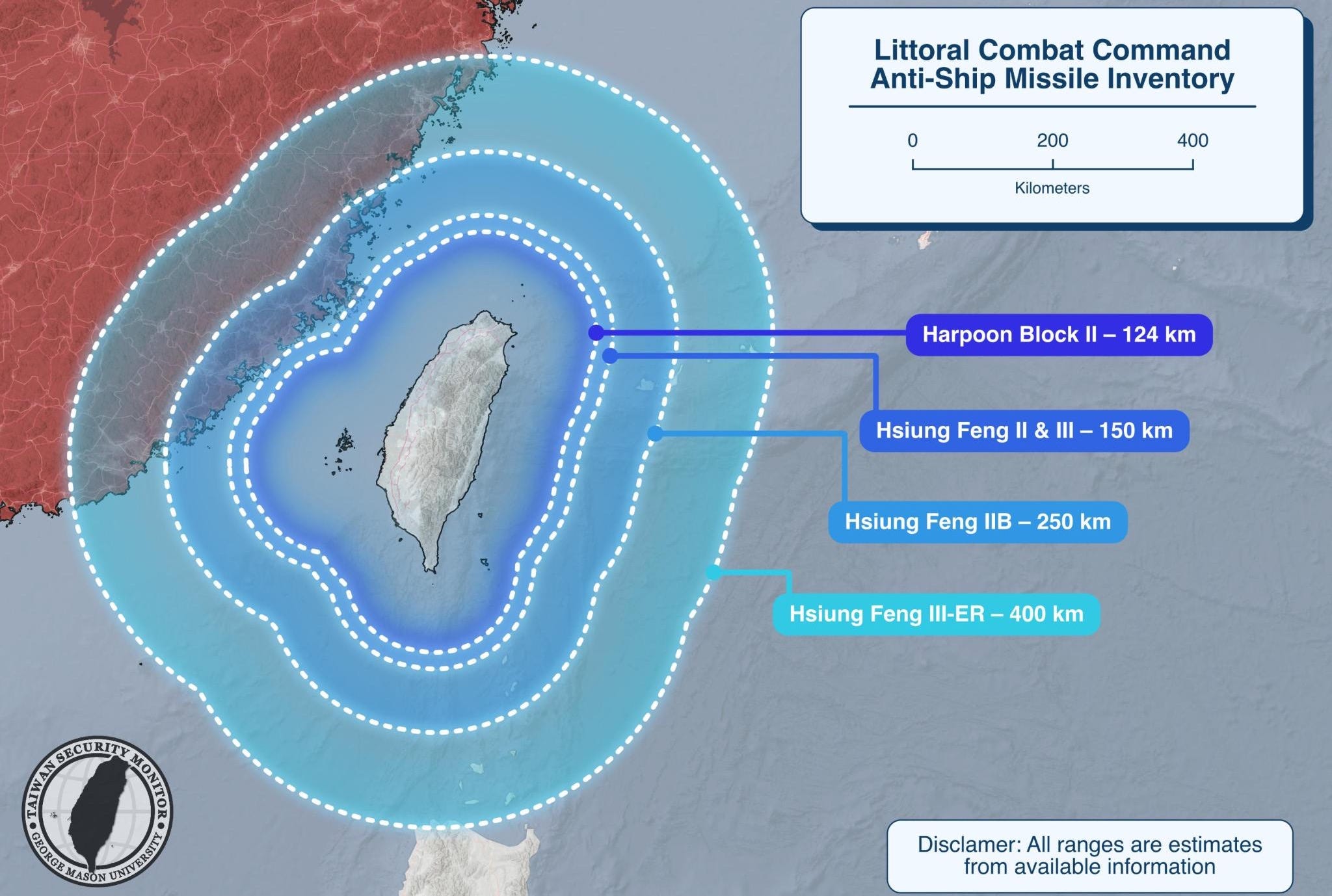
Taiwan is standing up this command at a time when the strategic environment is increasingly demanding. The LCC establishment signals Taipei’s determination to develop indigenous approaches and capabilities that do not depend solely on the continuity of U.S. security guarantees.
Taiwan Defence Budget Approved. Taiwan’s Legislature approved a 2026 special defence procurement budget of more than NT$8.81 billion (US$258.7 million) on 29 May to fund purchases of U.S. weapons. According to the budget, funding will be allocated for M109A7 self-propelled howitzers, High Mobility Artillery Rocket Systems (HIMARS), and anti-armour drones. The other two weapon systems are Javelin anti-tank missiles and TOW 2B anti-tank missiles.
China’s Nuclear Second-Strike Architecture. Reuters has published a major investigative piece documenting the construction of more than 80 concrete launch pads, at least two large octagonal installations, armoured bunkers, and fibre-optic-linked command nodes sprawling across thousands of square kilometres of the Xinjiang desert near China’s existing ICBM silo fields at Hami. The reporting draws on commercial satellite imagery assessed by three independent security analysts.
The security scholars interviewed by Reuters broadly agreed the infrastructure supports China’s nuclear programme, although significant uncertainties remain over which specific weapons will be deployed and whether the octagonal compounds house truck-mounted ballistic missiles or nuclear warhead assembly facilities. Military exercises involving heavy vehicles were documented around the northern octagon as recently as 11 May 2026.
The scale and design logic of the new infrastructure points toward a second-strike hardening programme. China has long maintained a minimum deterrence posture, but the combination of new ICBM silo fields, mobile missile launch pads, and command node construction suggests a deliberate effort to ensure the survivability of its land-based nuclear forces against a US or allied first strike. This assessment comes in a particularly sensitive global nuclear context: the last bilateral strategic arms limitation treaty between the United States and Russia, New START, expired in February 2026 with no replacement in place, and no treaty has ever covered China’s nuclear arsenal.
The Reuters investigation may intensify pressure on Washington and allied capitals to articulate a credible approach to nuclear risk management with China that goes beyond the bilateral US-China crisis communications frameworks agreed in recent years. The strategic implications of a China with a hardened, survivable second-strike capability are significant for deterrence calculations across the Indo-Pacific.
****************
It’s time to explore this week’s recommended readings.
In this week’s Big Five, I have included articles on the war in Iran, China’s cognitive warfare against Japan and its allies and a good piece on the language of war. There is also a interesting report on nuclear command and control and an article that explores America’s contemporary ‘way of war’.
As always, if you only have the time available to read one of my recommendations, the first is my pick of the week.
Happy reading!
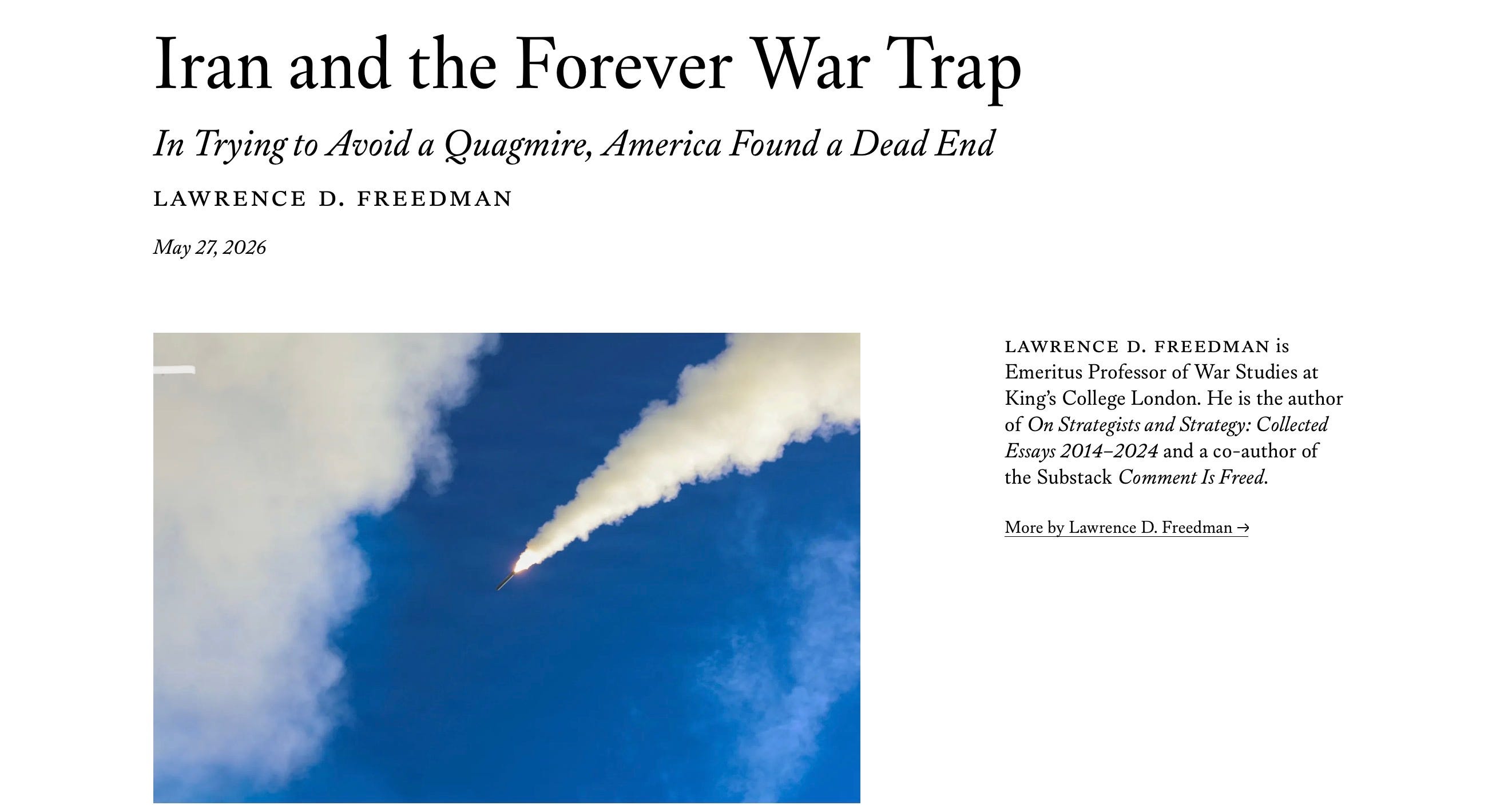
This excellent piece from Dr Lawrence Freedman published in Foreign Affairs examines the Trump administration’s war against Iran, the unexpected resilience of the Iranian regime and its military, and how the war is yet to achieve any of its initial political objectives. As Freedman notes, “the lesson of Ukraine and Iran is that any leader who is offered a plan for a quick and easy victory should first ask, “How can you be so sure?” and then, “What happens if you are wrong?”. It is good advice. You can read the full article here.

This is an interesting piece from The Jamestown Foundation that examines how China has responded to Japanese Prime Minister Takaichi’s push for transformation of Japanese defence strategy. As the author notes, “Beijing has turned to a playbook of cognitive warfare. Its sanctions and media distortion primarily seek psychological effects, and the efficacy of such are hard to quantify.” The full article is available at this link.
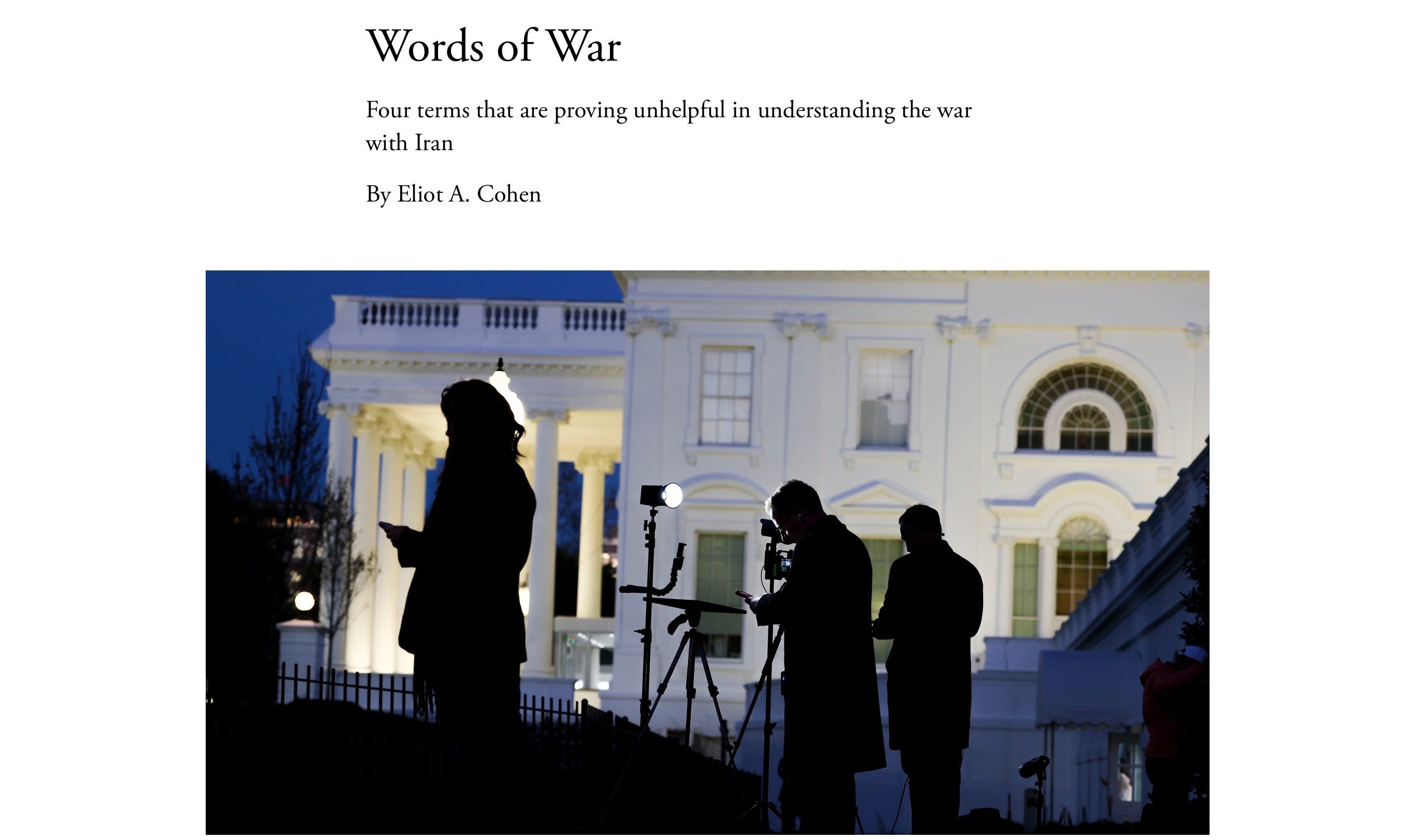
An important piece of advice that the author of this article published by The Atlantic, Eliot Cohen, provides is that “we should be wary of lazy pronouncements, festooned with questionable analogies and tired catchphrases.” He then takes on some of the most commonly used words that are applied to modern conflicts, and asks that strategists and writers re-think the use of terms such as “winning”, “losing” and that old favourite, “quagmire”. In war, as in all other aspects of life, words matter. This is a terrific article that explores why that is so. You can read it here.
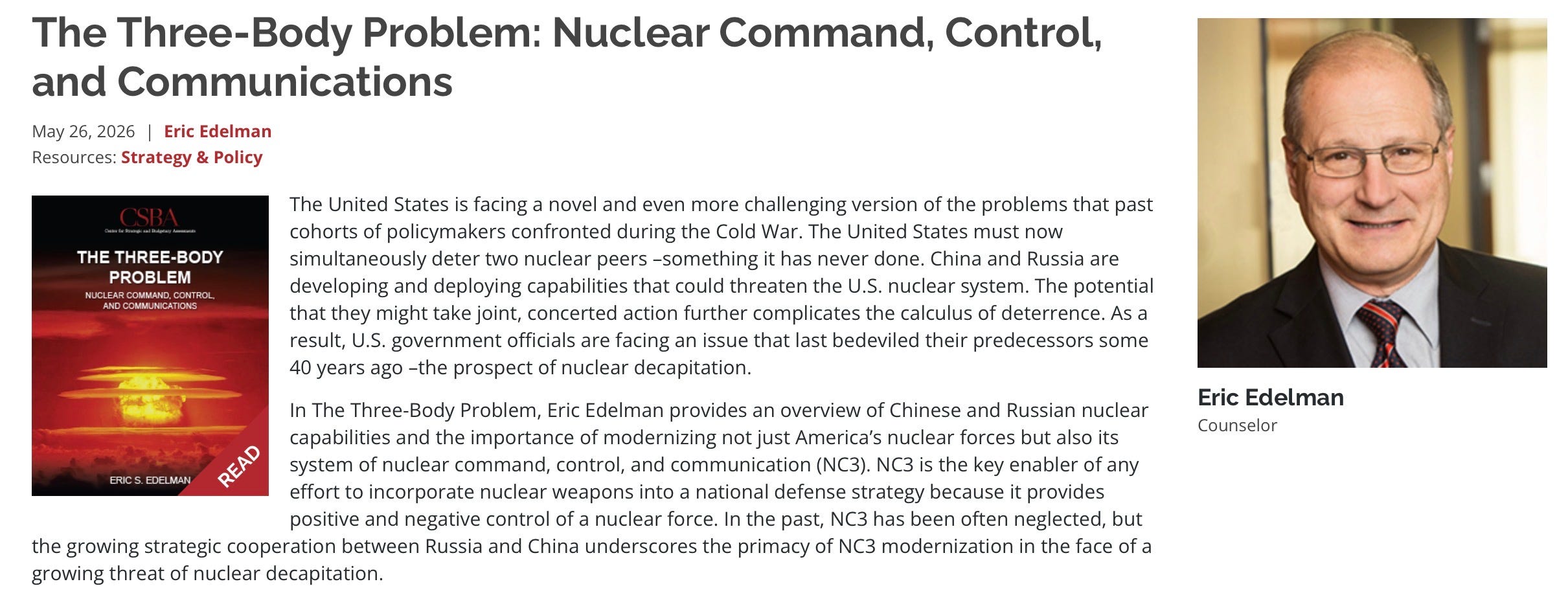
This week, the Center for Strategic and Budgetary Assessments published a new report that examines how the American nuclear command, control and communications endeavour needs to shift from a focus on one major peer competitor to an era where America has two major nuclear power competitors. As the author, Eric Edelman describes it, “the United States is facing a novel and even more challenging version of the problems that past cohorts of policymakers confronted during the Cold War. The United States must now simultaneously deter two nuclear peers –something it has never done.” The full report is available to read at this link.
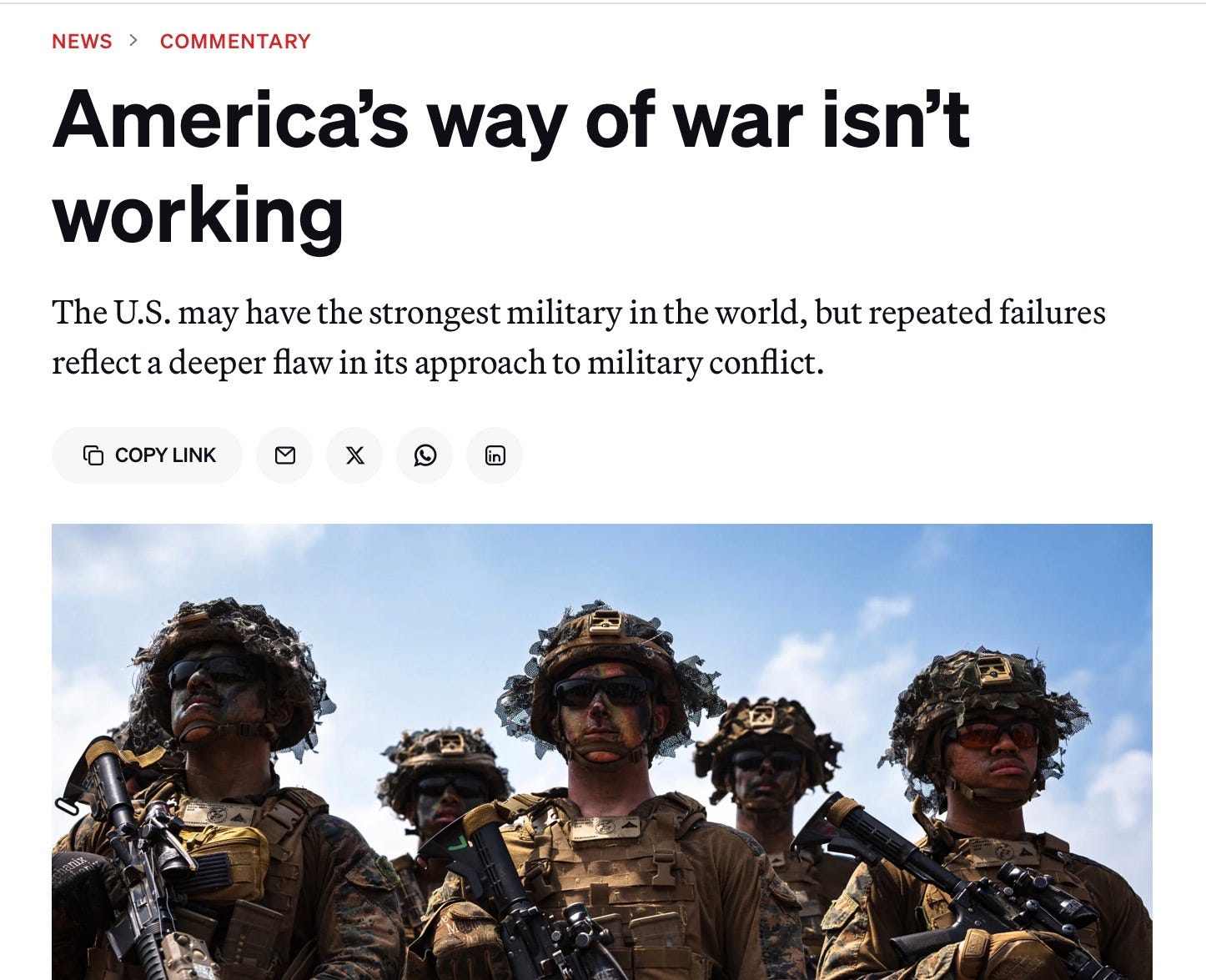
I thought this was a pretty interesting commentary on the contemporary U.S. way of war. Written by Ivo Daadler, a former ambassador to NATO, it is a useful critique of how a generation of U.S. administrations have approached war. His core critique is that “Washington treats war not as a continuation of policy but as the failure of policy — a last resort that is reached when diplomacy collapses, often with no set political outcome in mind. The results are always the same: force deployed with no clear ends, and no answer to a question that should precede every decision to fight — what does winning actually look like?” It is a fascinating piece where the author concludes that “the U.S. keeps losing not because its military is weak but because it keeps choosing its instruments before defining its objectives.” The full piece is available at this link.
Thank you for reading this week’s edition of The Big Five. I hope you enjoy it, and I look forward to bringing you another edition next week.