

Hegseth: Trump has ‘all options’ on table for Cuba; including military action | News
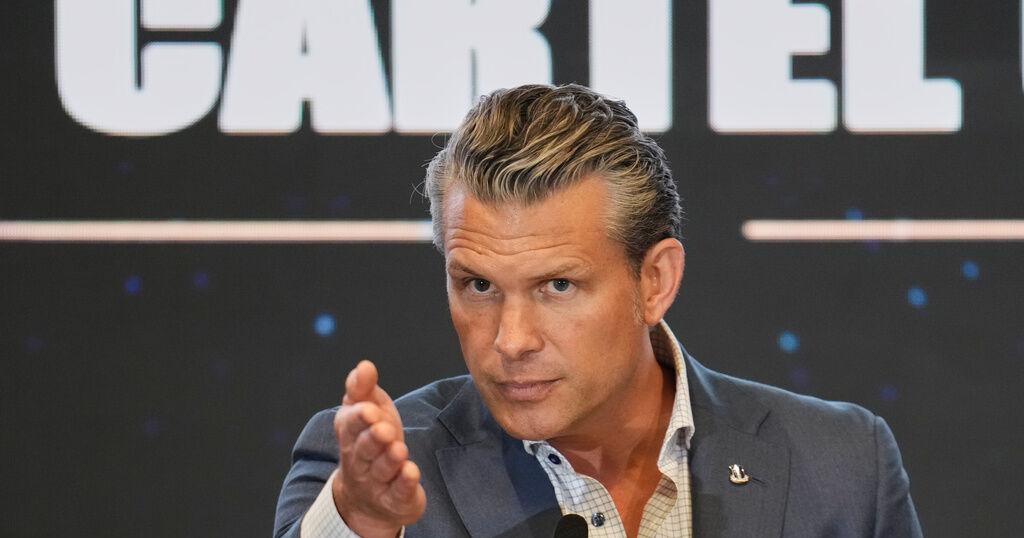
U.S. Secretary of War Pete Hegseth said Thursday that “all options” are on the table regarding the Trump administration’s relations with Cuba, including “military options.”
President Donald Trump has imposed a naval blockade on Cuba, cutting off oil shipments to the island.
The pressure on Cuba’s communist regime has included fuel shortages and widespread power outages and blackouts
The Trump administration wants to see regime changes to the longstanding communist government in Havana.
Hegseth was asked about Cuba Thursday during press availability hosted by the Pentagon in Panama.
“All options are on the table to include military options. And I think Cuba would be wise to pay attention to the willingness of President Trump to assert American strategic prerogatives and there’s certainly no match for the United States of America,” Hegseth said.
In January, U.S. commandos captured and arrested Venezuela President Nicolas Maduro in a raid in Caracas.
Maduro’s Vice President Delcy Rodriguez has been installed as president and has forged warmer relations with the Trump administration and the U.S.
Trump has also taken control of Venezuela’s vast oil reserves returning assets to American energy conglomerates that were previously seized by former Venezuela President Hugo Chavez (Maduro’s socialist predecessor).
Maduro faces drug smuggling charges in the U.S. as well as weapons charges, along with his wife Cilia Flores. The U.S. alleges Maduro oversaw drug trafficking operations tied to his Venezuelan regime.
Hegseth said “foreign influence” in the Western Hemisphere has “been pretty minimals” since Trump’s return to power in 2025.
He points to more pro-American and conservative governments in Latin America and less influence shown by Russia and China.
“They understand where the balance of power lies, especially in this hemisphere, and that certainly pertains to Cuba. So, we’re going to have a lot of options there, and we look forward to it,” Hegseth.
The Keys are approximately 90 miles from Cuba and have longed had social and other connections to the Caribbean island.
The U.S. and Israel’s war with Iran has been more problematic with the Strait of Hormuz, a key waterway for oil, fertilizer and other cargo flows, intermittently curtailed by Iranian attacks and harassment of tankers and ships.
The U.S. and Israel have killed Iran’s Supreme Leader Ayatollah Ali Khamenei and a number of other top leaders of the Islamic regime.
A U.S. naval blockade has restricted Iranian ports, spiraling Iran’s economy.
Still, the Iranian regime has not yet capitulated to Trump’s demands related to its nuclear aspirations and continues to harass cargo ships in the Hormuz Strait and U.S. military bases and allies in the region.
U.S. Secretary of State Marco Rubio, whose parents were born in Cuba and emigrated to the U.S. after the 1958 communist revolution, and U.S. Rep. Carlos A. Gutierrez, a Republican representing the Keys and part of Miami, are strong advocates for regime change in Cuba.
Rubio told conservative podcaster Katie Miller on Tuesday that he expects Cuba to “be on an irreversible path toward a much different future” before the end of Trump’s term.