

Haiti TPS Formally Ends as Courts Lose Power to Protect Any TPS Holders
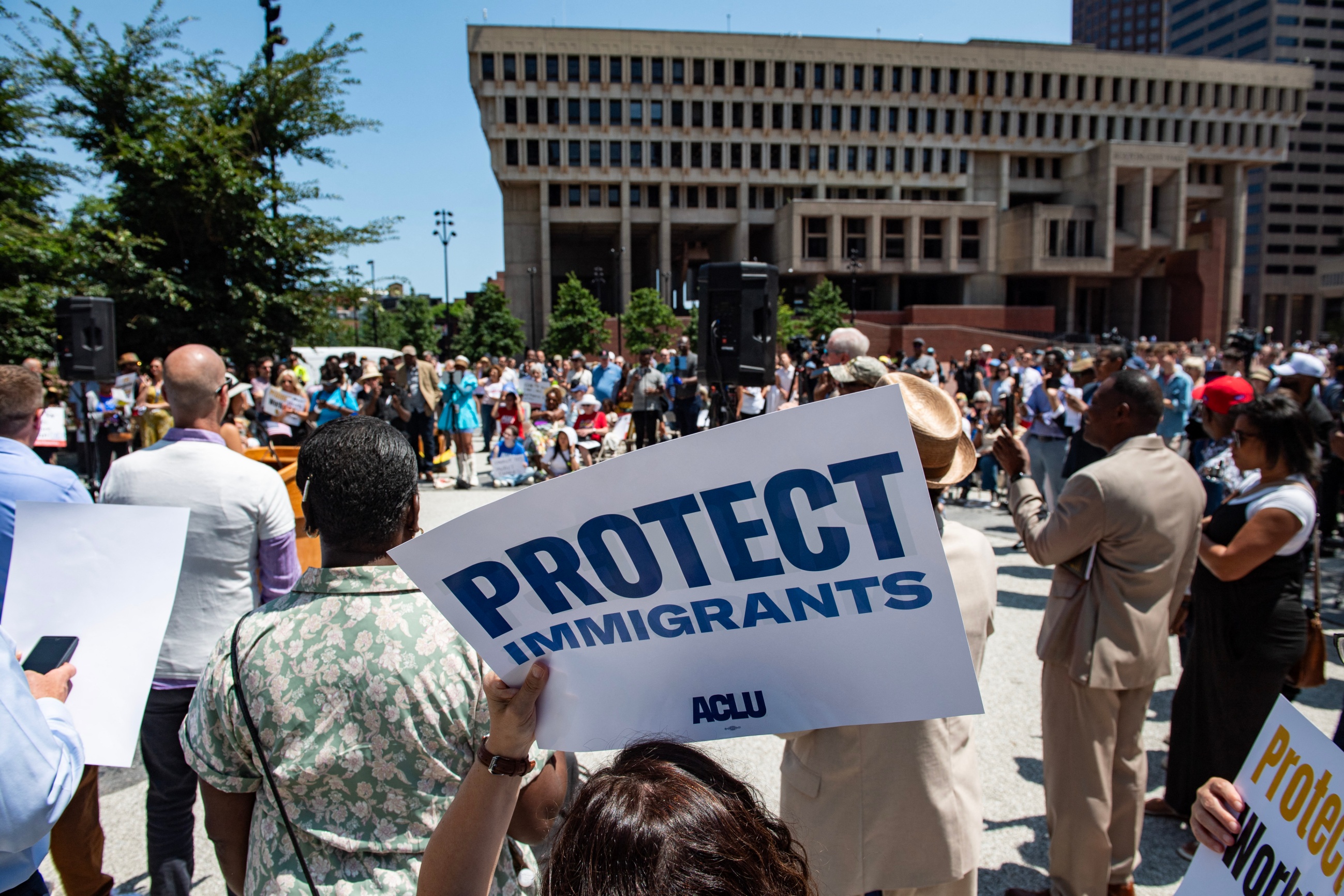
JOSEPH PREZIOSO/AFP via Getty Images
A federal judge confirmed on August 5, 2026, that her earlier order protecting 350,000 Haitian nationals from deportation is “no longer in effect” — a one-sentence ruling that formally closed a 16-year chapter of legal protection and immediately exposed hundreds of thousands of people, many of them healthcare workers, caregivers, and agricultural laborers who have lived in the United States for over a decade, to arrest and removal. The confirmation followed the Supreme Court’s 6-3 ruling in Mullin v. Doe on June 25, 2026, which did something with consequences far beyond Haiti: it stripped federal courts of the authority to review Homeland Security’s decision to terminate Temporary Protected Status for any country, placing the program’s roughly 1.3 million remaining beneficiaries from 17 nations under a single executive official’s unreviewable discretion. Learn more from Erickson Immigration Group.
What Is Temporary Protected Status, and Why Did It Take This Long to End?
Congress created Temporary Protected Status in 1990 as a humanitarian program allowing the Homeland Security Secretary to shield nationals of countries experiencing armed conflict, natural disasters, or extraordinary conditions from deportation, per the USCIS TPS program page. Haiti was first designated in 2011 in response to the catastrophic 2010 earthquake, which killed more than 200,000 people and displaced over 1.5 million, according to program background records. The Biden administration redesignated Haiti in 2021, citing gang violence, political instability, human rights abuses, poverty, and inadequate healthcare — conditions the State Department still uses to justify its highest travel advisory, Level 4 “Do Not Travel,” which remains in effect today per the State Department Haiti advisory.
The program was always legally vulnerable. A provision of the Immigration and Nationality Act, 8 U.S.C. § 1254a(b)(5)(A), explicitly bars “any judicial review” of the Homeland Security Secretary’s decisions on TPS designations, terminations, or extensions, as detailed in the full SCOTUS ruling text. The Obama and Trump administrations each tried to use that provision to foreclose challenges to TPS terminations. Courts repeatedly found procedural gaps that allowed stays to survive. Mullin v. Doe closed those gaps decisively.
In November 2025, then-Secretary of Homeland Security Kristi Noem announced Haiti’s TPS termination, effective February 3, 2026. U.S. District Judge Ana C. Reyes blocked the move one day before it took effect, finding that the administration appeared “substantially likely” to have acted with racial animus toward Haitian immigrants — a conclusion she supported with the administration’s own words, including Trump’s repetition of the Springfield pet-eating hoax and Noem’s documented characterizations of Haitian immigrants. The D.C. Circuit declined to pause Reyes’ stay, and the government appealed to the Supreme Court, per SCOTUSblog case coverage.
What the Supreme Court Decided, and Why Courts Can No Longer Intervene
In a 6-3 ruling authored by Justice Samuel Alito, the Supreme Court held that the INA’s no-review provision bars courts from examining not only the secretary’s ultimate determination but also every predicate step leading to it — including whether the secretary consulted with other agencies as the statute requires, as set out in the full SCOTUS ruling text. The practical effect: a secretary can now terminate TPS without judicial scrutiny of the process, provided she avoids explicit statements the Court will classify as “overtly racial.” The majority found that Trump’s anti-immigrant statements did not constitute sufficient evidence of racial animus under the Arlington Heights motivating-factor test, characterizing them as “political discourse.” A detailed Just Security legal analysis dissects both the majority and the dissent.
The dissent, written by Justice Elena Kagan and joined by Justices Sonia Sotomayor and Ketanji Brown Jackson, rejected the majority’s narrow reading of the INA’s review bar and argued that the racial discrimination evidence was plain to see. Kagan wrote that the president’s statements were so repellent and racially charged that the majority declined to quote them in full, according to the same Just Security legal analysis. Sotomayor warned in her dissent that with deportation to Haiti now a practical consequence, more people would die, per the full SCOTUS ruling text.
Importantly, the racial discrimination claim did not end with Mullin v. Doe. The underlying district court case — Miot v. Trump — remains active. Judge Reyes declined the government’s request to halt discovery, and plaintiffs’ attorneys are continuing to pursue constitutional racial discrimination arguments at the district court level, though the discovery process has been hampered by what lead attorney Geoffrey Pipoly described as an exceptionally aggressive assertion of government privilege, with the Department of Justice producing heavily redacted documents. The Washington Examiner’s August 5 coverage includes Pipoly’s statement that the constitutional claim remains live.
Communities in Fear: The Immediate Human Cost
When the Supreme Court’s mandate issued on July 27, 2026, Employment Authorization Documents held by Haitian TPS beneficiaries were immediately invalidated, as Fox News confirmed in reporting on the August 5 order. Employers are now required to reverify workers who held TPS; those who cannot demonstrate other lawful immigration status cannot legally remain employed.
The chilling effect in communities with large Haitian populations has been immediate and visible. In Salisbury, Maryland — home to a substantial Haitian community, many of whom work in the local poultry and healthcare industries — attendance at the Word of Life Center church dropped by more than half the first Sunday after TPS expiration, according to senior pastor Roosevelt Toussaint. A bridal shower, a yard-sale barbecue, and English-language classes were all canceled. Marie D. Fouché, founder and executive director of Safe Harbor Circles, a nonprofit supporting immigrant communities on Maryland’s Eastern Shore, documented more than a dozen recent immigration arrests in the region, including people with TPS.
“We had a population living legally, raising their kids, paying their bills, and with the decision to end TPS, they were left in limbo,” Fouché said.
Reports spread on social media of ICE agents making arrests at gas stations and outside supermarkets. A 39-year-old Haitian nursing home caregiver in Salisbury, who requested anonymity for fear of deportation, described the new reality plainly. He has worked as a caregiver since arriving in 2020. “When I go out to the street, I’m in fear,” he said.
DHS Secretary Markwayne Mullin, who was confirmed in March 2026 and now oversees the agency — including ICE and USCIS — posted on social media on August 5 that the department was “going after” Haitians with terminated TPS: “These individuals can either self-deport or we’ll arrest you and send you back.” This was confirmed by WHIO TV’s August 5 report.
The Economic Stakes: $6 Billion and 50,000 U.S. Citizen Children
The workforce impact is not abstract. A January 2026 analysis by FWD.us, UndocuBlack Network, and the Haitian Bridge Alliance found that Haitian TPS holders generate an estimated $5.9 billion annually for the U.S. economy and pay more than $1.5 billion in combined federal, state, and local taxes. The FWD.us economic report provides the full breakdown. Approximately 200,000 Haitian TPS holders are in the active U.S. workforce, with the largest concentrations in healthcare and home health care, agriculture and food production, construction, and hospitality. Florida alone — home to roughly 158,000 Haitian TPS holders — receives an estimated $2.6 billion in annual economic output from that workforce and more than $600 million in combined taxes, per the FWD.us state data.
Healthcare faces particular exposure. Madeline Zavodny, a professor of economics at the University of North Florida who has studied the TPS workforce, noted that the sudden removal of experienced home health aides will be felt by the patients who depend on them. “I think it’s going to be very hard for the people to whom they give care to suddenly lose their caregiver, and it’s going to be hard for their employers to replace them,” Zavodny told Marketplace in July 2026. To attract replacement workers, employers will likely need to raise wages, costs that will eventually reach consumers.
Fifty thousand U.S. citizen children have Haitian TPS parents who are part of the workforce. Without their parents’ income, an estimated 25,000 of those children would be pushed into poverty, according to the FWD.us Haiti fact sheet.
Returning to a Country the U.S. Government Won’t Let Americans Visit
The administration’s argument for termination — that conditions in Haiti have improved sufficiently for return — runs directly against the State Department’s own assessment. Haiti has carried a Level 4 “Do Not Travel” advisory, the highest category, continuously throughout the TPS termination proceedings. Armed gangs have consolidated control over significant portions of Port-au-Prince, according to security and humanitarian assessments from early 2026, as documented in the Human Rights Watch 2026 report. Over 1.4 million Haitians have been displaced internally by gang violence, and more than 8,100 people were killed between January and November 2025 alone. The UN Security Council heard in late July 2026 that gang violence “exacts a heavy toll on a beleaguered population” and that “millions of Haitians remain displaced or food insecure,” per the official UN Security Council press release.
The Multinational Gang Suppression Force, which the administration cited as grounds for improvement, began deploying initial contingents in April 2026. Security analysts note the force remains far below its authorized strength and has had limited impact on gang territorial control to date.
“What this administration is doing hurts me so much because it’s inhumane,” said Leila Borrero Krouse, an immigration specialist with CATA, a nonprofit supporting Eastern Shore farmworkers. “It’s just like a hurricane at Category 5 — that’s how bad it is,” said Samson Orneus, a church member who runs WOLC Immigration Services in Salisbury.
What Mullin v. Doe Means for the Other 1.3 Million TPS Holders
The Haiti and Syria cases were not chosen at random as the vehicle for this ruling. They were chosen because, as the Supreme Court’s majority acknowledged, the INA’s no-review provision needed to be definitively enforced. The consequence extends far beyond the 350,000 Haitians now at risk.
As of March 2025, approximately 1.3 million foreign nationals held TPS from 17 designated countries, according to the Congressional Research Service analysis. Those countries include El Salvador, Ukraine, Sudan, Myanmar, Somalia, South Sudan, Yemen, and others — each country with its own history of repeated extensions, community settlement, and economic integration in the United States. Under Mullin v. Doe, the Homeland Security Secretary can now terminate any of those designations, and federal courts cannot review whether she followed the required statutory procedures in doing so.
Legal analysts writing for Just Security noted that the ruling validates a mechanism in which racialized hostility toward an immigrant community can be legally irrelevant so long as the government recasts it as general immigration policy, per the Just Security legal analysis. The next TPS termination — for any country — now arrives at a destination that looks like what Haitians experienced on August 5: a federal judge confirming, in a single sentence, that the last legal protection has been lifted.
Congressional advocates note a narrow legislative alternative. Both chambers have seen TPS extension legislation. The House passed a bill with bipartisan support, including from Republican members representing South Florida. A Senate bill remains pending, but advocates concede that a 60-vote threshold in the Senate makes passage difficult under current conditions, as reported by NBC Miami’s coverage.
What Affected Individuals Should Do Now
For the approximately 350,000 Haitians now without TPS, USCIS has directed those affected to its “Explore My Options” page, but advocates warn that most TPS holders do not qualify for other relief. Pathways that do exist include asylum claims, family-sponsored petitions, or other humanitarian relief — but each is narrow, and each requires immediate action.
Immigration attorneys are urging every affected individual to consult legal counsel now. Some TPS holders may qualify for protection on separate grounds; others may not. The window for action is narrow and enforcement pressure is intensifying.
“They’re not going after the people committing crimes,” said the 39-year-old caregiver in Salisbury, whose nursing home residents depend on him daily. “When I go out to the street, I’m in fear.”
Frequently Asked Questions
What happens to Haitian TPS holders now that the court order has been lifted?
Their Temporary Protected Status has been formally terminated. Employment Authorization Documents were invalidated when the Supreme Court’s mandate issued on July 27, 2026, per Fox News reporting. Without another form of lawful immigration status, Haitian TPS holders are now subject to removal proceedings. Employers are required to reverify workers. Immigration attorneys are recommending immediate legal consultation, as some individuals may qualify for asylum, family-sponsored petitions, or other forms of humanitarian relief — but options are limited and the window for action is narrow.
Can Haitians still fight deportation after the Supreme Court’s ruling?
The constitutional racial discrimination claim in Miot v. Trump continues in the district court — Judge Reyes denied the government’s request to halt discovery, and plaintiffs’ attorneys are pursuing that challenge, as confirmed by Washington Examiner court coverage. However, under Mullin v. Doe, courts can no longer review whether the Homeland Security Secretary followed the INA’s required procedures when terminating TPS. The practical effect is that even if plaintiffs eventually prove racial discrimination motivated the decision, the structural legal check that kept protections in place — judicial review of the administrative process — is permanently gone.
What does the ruling mean for the other 1.3 million TPS holders from other countries?
The Supreme Court’s ruling in Mullin v. Doe removed federal courts’ ability to review TPS termination decisions under the Administrative Procedure Act for all designated countries, not just Haiti and Syria, per TPS program background records. The approximately 1.3 million TPS holders from 17 countries — including El Salvador, Ukraine, Sudan, Myanmar, Somalia, and others — now depend entirely on the Homeland Security Secretary’s discretion. No procedural guarantee in federal court can delay a future termination the way Judge Reyes’ stay delayed Haiti’s for 18 months. The next termination would reach its legal endpoint faster.
Is Haiti actually safe for deportees to return to?
The State Department’s own Level 4 “Do Not Travel” advisory for Haiti, updated in July 2026, says violent crime is rampant, kidnapping is widespread, and armed gangs — several of which the State Department has designated as terrorist organizations — control large portions of Port-au-Prince, per the State Department Haiti advisory. More than 1.4 million Haitians are internally displaced, and food insecurity affects over half the population, according to the Human Rights Watch 2026 report. The same government terminating TPS protection for Haiti is the government advising American citizens not to travel there.