

Guus Kouwenhoven Is Dead | News
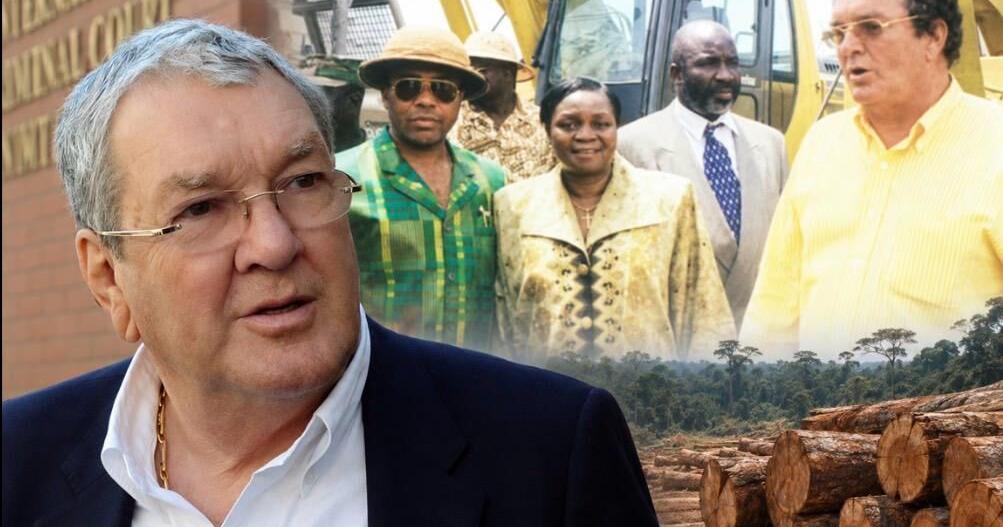
The Dutch businessman whose timber empire became deeply entangled with Charles Taylor’s wartime machinery died on Sunday, September 6, 2026, at the age of 84, according to a statement from his family. He died surrounded by relatives and at peace.
For Liberia, however, Kouwenhoven’s death closes a life story that remains anything but peaceful.
He died a convicted war criminal who never served the 19-year prison sentence imposed on him by a Dutch appeals court in 2017. His conviction for complicity in war crimes and violations of Dutch sanctions had been upheld by the Dutch Supreme Court. Yet after fleeing to South Africa, he spent his final years outside prison while legal efforts to extradite him continued.
His death therefore leaves behind an uncomfortable question for Liberia and the international community: What does justice mean when a person convicted of helping supply the machinery of war dies before serving his sentence?
More importantly, Kouwenhoven’s story is not simply about one foreign businessman.
It is about how the country’s extraordinary natural wealth—particularly its forests—was transformed into a financial and logistical resource for a war machine, how international businesses benefited from that system, and how ordinary Liberians paid the price.
During Liberia’s civil wars, timber was more than a commodity. It was currency for conflict.
Charles Taylor’s rise from rebel leader to president was accompanied by the systematic exploitation of Liberia’s natural resources. When international sanctions increasingly restricted some of his other sources of income, particularly diamonds, timber became an increasingly important source of revenue.
Global Witness documented how Taylor shifted toward Liberia’s forests, with timber becoming what it described as “conflict timber.” By 2003, nearly half of the country’s land had reportedly been allocated as logging concessions, while the logging industry was estimated to account for more than 20 percent of the country’s budget. Global Witness estimated that about US$108 million in logging revenues in 2000 alone did not enter Liberia’s formal budget.
That distinction is critical.
The problem was not simply that trees were being cut down. The deeper issue was who controlled the concessions, where the money went, and what that money purchased.
Weapons. Ammunition. Military logistics. Political patronage. And the capacity to sustain armed conflict.
A United Nations study later summarized the evidence by noting that under Taylor, substantial unofficial revenues from Liberia’s natural resources were invested in war efforts and that timber companies were sometimes directly involved in supplying weapons.
In this system, the forest became an ATM for violence.
Enter Guus Kouwenhoven
Kouwenhoven was ideally positioned to benefit from—and facilitate—that system.
He arrived in Liberia in the late 1980s and eventually became head of the Oriental Timber Corporation (OTC), one of the country’s most powerful logging companies. He also controlled or was associated with other business interests, including the Royal Timber Corporation and Hotel Africa.
OTC became synonymous with Taylor’s timber regime.
Its nickname in Liberia—“Old Taylor’s Children” or “Only Taylor Chops”—captured the perception of its extraordinary proximity to the presidency. At its height, OTC controlled approximately 1.6 million hectares of concessions, making it the dominant force in Liberia’s timber industry.
But Kouwenhoven’s importance went beyond logging.
A United Nations expert panel described him as a “member of President [Charles] Taylor’s inner circle” and linked him to the logistical aspects of arms deals. The UN subsequently placed him on its travel-ban list in 2001.
The relationship was brutally transactional.
Timber went out. Weapons came in.
Global Witness and other investigators reported that OTC’s operations and transport infrastructure were used in connection with weapons shipments. The company also maintained armed security forces that, according to investigators, blurred the line between corporate security and Taylor’s military forces.
Patrick Alley, co-founder of Global Witness, put the relationship particularly starkly in testimony to Britain’s Parliament:
“Funding conflict is one thing, which he did through the timber trade. The ships which brought out the timber brought in the guns; that was a more serious issue.”
That sentence captures the essence of the Kouwenhoven model.
The timber business was not merely operating alongside the war.
It was part of the war economy. The forest paid; Liberians suffered, and the consequences were devastating.
The 14-year conflict killed an estimated 250,000 people and displaced hundreds of thousands more. Infrastructure was destroyed, communities were uprooted, children were recruited into armed groups and a generation grew up amid violence.
The country’s forests also suffered.
Logging concessions were awarded in a political environment where accountability and transparency had collapsed. The commercial exploitation of forests became intertwined with patronage, armed power and the extraction of state resources.
Instead of natural resources financing schools, hospitals, roads and development, Liberia’s wealth helped finance the instruments that destroyed those very institutions.
This is perhaps the most tragic paradox of the Taylor years—a country blessed with timber, diamonds, rubber and other resources became poorer and more devastated as its resources were exploited.
The international consequences were equally severe.
In 2003, the United Nations Security Council imposed a ban on Liberian timber exports after determining that timber revenues were contributing to the conflict. The Council specifically called on Liberia to ensure that timber revenues were not used to fuel conflict but instead benefited the Liberian people through legitimate development.
The sanctions were therefore not simply about trees. They were about war financing.
Ellen Johnson Sirleaf’s blunt assessment
Few Liberian leaders spoke more directly about Kouwenhoven’s role than former President Ellen Johnson Sirleaf.
When she became the first post-war elected president, she inherited a country whose natural-resource sector had been badly discredited by the Taylor era.
In an interview discussing Kouwenhoven, Sirleaf said plainly, “Mr Kouwenhoven, known in Liberia as ‘Mr Guus’, did great harm to our country.”
Her administration’s response to the forestry legacy was dramatic.
In February 2006, only weeks after taking office, Sirleaf cancelled logging contracts and permits issued under previous regimes and ordered the development of new rules for the sector.
The decision reflected an understanding that Liberia could not simply restart the pre-war timber economy.
The country needed to break the connection between natural resources, political power and violence.
Kouwenhoven’s first Dutch conviction in 2006 did not include a war-crimes conviction. He was convicted of violating the UN arms embargo and sentenced to eight years, while being acquitted of war crimes charges.
The response in Liberia was telling. Jackson Spear, then head of the Foundation for International Dignity, argued that the punishment was inadequate:
“Eight years imprisonment for such a criminal is not fair for Liberians.”
He went further, “This man has done so much wrong to Liberians that even a life imprisonment would not have been worthy.”
The case subsequently went through a remarkable legal journey. His conviction was overturned in 2008, but the Dutch Supreme Court ordered a retrial in 2010. In April 2017, the Dutch Court of Appeal ultimately convicted him of complicity in war crimes and violations of sanctions and sentenced him to 19 years. The Dutch Supreme Court upheld the conviction.
It was hailed as a landmark case because it established a powerful principle—those who profit from conflict resources can themselves become criminally responsible for atrocities.
“There’s only a cheque book between your company and the murder of thousands”
Global Witness was one of the organizations that exposed the relationship between Taylor’s regime, logging and arms trafficking.
Patrick Alley described the 2017 conviction as a historic victory but also as a warning to the international business community:
“This verdict sends a clear message to those who profit from war – they can and will be held to account.”
His most powerful formulation was even more direct:
“There’s only a cheque book between your company and the murder of thousands.”
The significance extends beyond Kouwenhoven.
During Taylor’s rule, European timber companies purchased Liberian timber, including timber originating from Kouwenhoven’s operations. Global Witness argued that some companies knew about the relationship between the timber trade, Taylor’s regime and the conflict but escaped criminal accountability.
That creates an enduring justice gap.
Kouwenhoven’s story cannot be separated from Taylor’s.
Taylor was eventually convicted by the Special Court for Sierra Leone in 2012 on all 11 counts against him and sentenced to 50 years in prison. His conviction and sentence were upheld on appeal.
The Special Court found Taylor responsible for aiding and abetting crimes committed by rebel forces in Sierra Leone.
In sentencing Taylor, the Court emphasized the abuse of his presidential authority and state resources, “Mr Taylor held a position of public trust, with inherent authority, which he abused.”
The Court concluded that his support for rebel forces prolonged the conflict and contributed to the destruction of civilian lives.
Former UN Secretary-General Kofi Annan welcomed Taylor’s eventual detention in 2006 as a blow against impunity, “It sends a message … that impunity will not be allowed to stand and the brutal leaders who brutalize their people … will pay a price.”
Taylor eventually went to prison. Kouwenhoven did not.
This is where Kouwenhoven’s death becomes particularly troubling.
The Dutch appeals court convicted him in 2017 and sentenced him to 19 years. The South African Supreme Court of Appeal later confirmed that the conviction and sentence had been upheld by the Dutch Supreme Court and that Dutch authorities were seeking his extradition to serve the sentence. The South African court dismissed his appeal in September 2021.
But he remained in South Africa. And now he is dead. The irony is difficult to ignore.
A judicial system eventually established his criminal responsibility for conduct connected to one of Africa’s most devastating conflicts. Yet the punishment never translated into imprisonment.
This means that Justice was won on paper but never fully implemented in practice. For Liberians who lost relatives, homes, livelihoods and futures during the war, that distinction matters.
There is another uncomfortable dimension.
Kouwenhoven was convicted abroad for conduct connected to the Liberian war, just as Taylor was prosecuted outside Liberia for crimes connected primarily to Sierra Leone.
Liberia itself has yet to conduct a comprehensive domestic criminal reckoning with the architects, commanders, financiers and business beneficiaries of its own civil wars.
That is why Kouwenhoven’s death should not be viewed simply as the obituary of a controversial Dutch businessman.
It should provoke a broader examination of how the nation’s natural wealth was captured, monetized and weaponized—and who ultimately benefited from the destruction.
The country’s forests were treated as collateral for political power. The revenues generated from them helped sustain armed forces. Those armed forces helped prolong conflict.
And the resulting destruction fell overwhelmingly on people who had little or no say in how their country’s resources were being sold.
There is a historical lesson here for contemporary Liberia.
The country still possesses enormous forest resources. Timber remains an important potential source of jobs, exports and rural development. But Liberia’s experience under Taylor demonstrates that natural-resource wealth without transparency, community rights, strong institutions and accountable revenue management can become a source of instability rather than prosperity.
The United Nations’ response in 2003 effectively recognized this principle when it demanded that timber revenues be used for legitimate purposes and for the benefit of Liberians.
The challenge today is therefore not simply to sell timber.
It is to ensure that the Liberian forests serve Liberians rather than political elites, foreign profiteers, armed networks or opaque commercial interests.
Kouwenhoven’s death makes that lesson more urgent.
He died with his conviction intact—but without spending a day of the 19 years in prison that the Dutch court ordered.
Taylor remains imprisoned in Britain, serving his 50-year sentence.
And Liberia is left with the deeper legacy—forests depleted, communities traumatized, institutions weakened and generations forced to live with the consequences of a war economy built partly on the exploitation of the country’s own natural wealth.
Credit: Source link