

Guinea-Bissau committed to exercising people’s right to development: minister
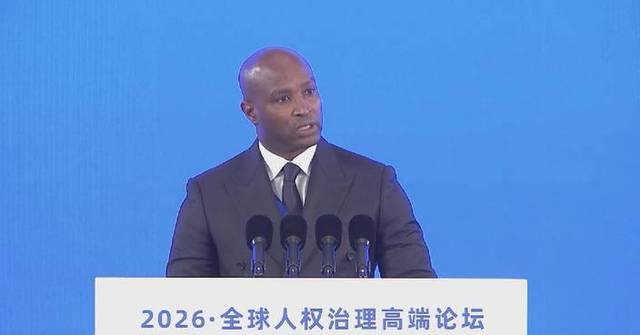
The Republic of Guinea-Bissau remains committed to exercising the right to development, placing human dignity at the heart of development, said Joao Bernardo Vieira, the country’s minister of justice and human rights, in Beijing on Thursday.
Addressing the opening ceremony of the 2026 Forum on Global Human Rights Governance in the Chinese capital, the minister said that although marked progress has been made worldwide in improving people’s livelihoods, severe challenges still remain.
“The international community has made significant progress over the past decades. Millions of people have been lifted out of poverty. Access to education has expanded. And technological advancements have created new opportunities for social and economic transformation. However, profound inequality persists. Many nations continue to face challenges related to poverty, climate vulnerability, limited access to financing, technological gaps and global economic disparities. These obstacles injure the full enjoyment of human rights by millions of people,” said the minister.
Vieira emphasized that Guinea-Bissau has always prioritized the development of human rights.
“The Republic of Guinea-Bissau firmly believes that the right to development must remain at the heart of global human rights discussions. Human rights and development are mutually reinforcing. Sustainable development creates the conditions necessary for the enjoyment of rights, while respect for human rights strengthens peace, stability and prosperity. In our country, we are committed to strengthening democratic institutions, improving access to justice, promoting the rule of law, and advancing policies that place human dignity at the center of national development efforts. At the international level, we advocate for stronger partnerships based on mutual respect, solidarity and shared responsibility,” he said.
The forum, co-hosted by China’s State Council Information Office and Ministry of Foreign Affairs, runs through Friday.
More than 400 invited guests from nearly 100 countries, as well as international and regional organizations, including the United Nations (UN), are attending the event.
The National Human Rights Action Plan of China (2026-2030) was released at Thursday’s opening ceremony, outlining China’s work to protect human rights in the next five years.
Guinea-Bissau committed to exercising people’s right to development: minister
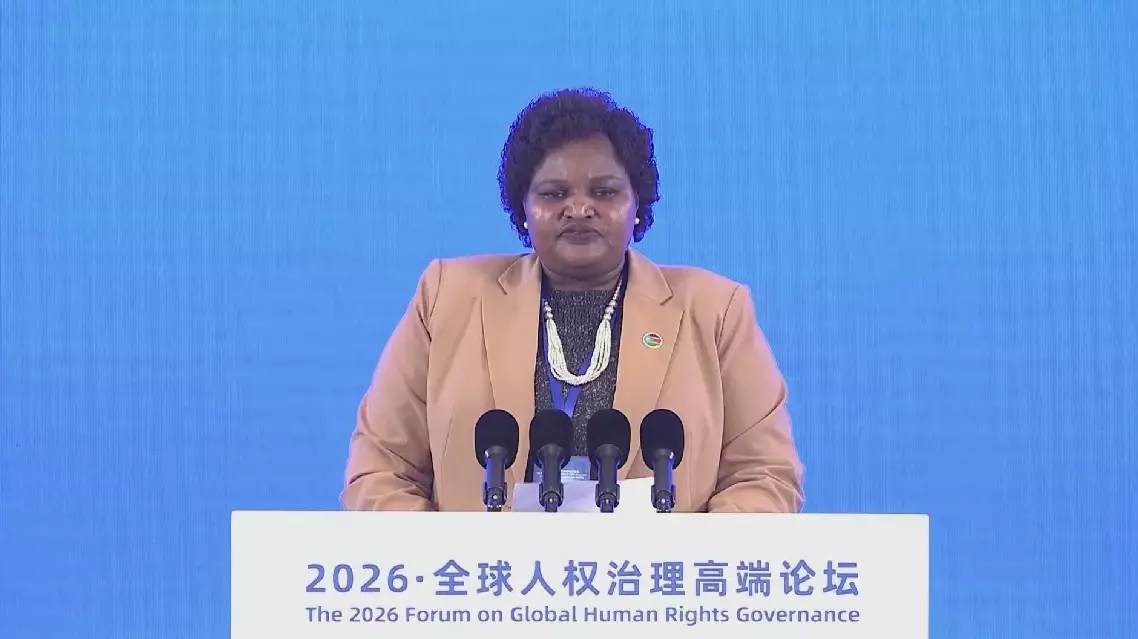
A senior South Sudanese official called for reform to the international system that still has considerable room for improvement when it comes to equality, fairness, and inclusiveness.
Speaking at the 2026 Forum on Global Human Rights Governance on Friday, Agnes Oswaha, Undersecretary of Ministry of Foreign Affairs and International Cooperation of South Sudan, said that inequalities remain a grim reality today and Global South countries bear the brunt of an unevenly structured global system.
“Inequalities within and among nations remain a grim reality that is yet to be addressed. Countries of the Global South are faced with sanctions, the burden of foreign debts, manipulation by external actors, among others,” said Oswaha.
Oswaha denounced the lack of representation for developing countries on the world stage. She said that within the Global South, only China holds a permanent seat on the United Nations Security Council, despite the fact that the vast majority of issues on the council’s agenda directly affect developing nations.
The diplomat also criticized international financial institutions, such as the World Bank and the International Monetary Funds, saying their assistance often come strings attached. She said that these institutions tend to impose excessive and impractical conditions and prescribe policies without considering a country’s economic priorities.
Oswaha argued that today’s most pressing crises cannot be solved through isolated or unilateral means, and urged a wholesale modernization of global bodies.
“The challenges and opportunities of our time, from catastrophic climate change and pandemics, security and conflicts, are global concerns rather than national issues. For us to overcome and progress, we must address them collectively and effectively. We must reform our multilateral institutions, reform them in such a way that can promote the principles of sovereignty, equality, collective action and impartial adherence to international law,” said Oswaha.
She praised China for championing a cause that will reduce gaps and tensions within and among nations, setting the foundation for a world where progress approaches collectively and is achieved fairly.
Oswaha called on the United Nations to overhaul its approach to global crises to better serve the interests of the developing world.
“The United Nations must adapt an approach to the current challenges that is inclusive, holistic, people-centered and action-oriented in order to carry forward the developmental aspirations of all people within the Global South and the world at large. Therefore, South Sudan urges for solidarity, peaceful coexistence, religious tolerance through collective and coordinated action in order to benefit all people,” said Oswaha.
The two-day forum, which opened on Thursday, marks the 40th anniversary of the adoption of the UN Declaration on the Right to Development. It focuses on advancing human rights through development and will foster discussions on global human rights governance issues. Over 400 participants from over 100 countries and international organizations, including the United Nations (UN) were in attendance.
South Sudan diplomat calls for reform to unjust international system
Credit: Source link