

Guinea: Armed groups seize arsenal
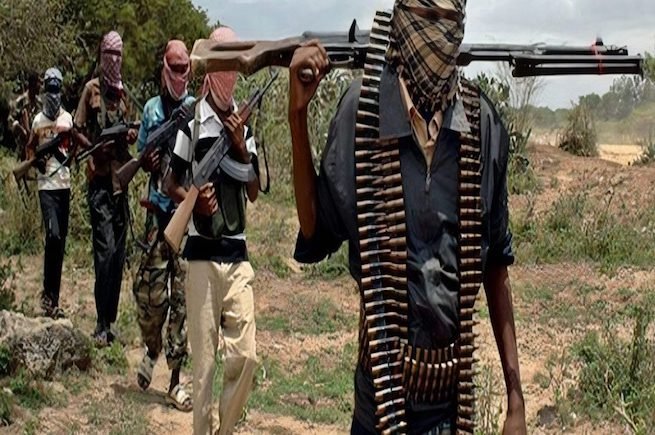
Conakry, Guinea – In a dangerous escalation reflecting the erosion of security in West Africa, Jama’at Nusrat al-Islam wal-Muslimin (JNIM), the official branch of al-Qaeda in the Islamic Maghreb (AQIM), claimed responsibility for a deadly attack on a Beninese military post in the Korga region. This region is located in northern Benin, near the volatile border with Burkina Faso.
The attack, which took place on Thursday, May 7, 2026, resulted, according to the group’s statement, in the deaths of seven Beninese soldiers. A large arsenal was also seized, including heavy machine guns, rocket launchers, and a sophisticated DJI Matrice 30T drone. This clearly indicates the growing technical and operational capabilities of the armed groups.
Redrawing the map of blood: from Mali to the ocean
This attack comes at a sensitive geopolitical juncture, as al-Nusra Front maintains a tight siege on the Malian capital, Bamako. This has given its regional affiliates a morale boost, encouraging them to expand their operations southward.
The Bourga region is a frequent target due to its rugged terrain and proximity to the Pendjari and W-Arly nature reserves. Moreover, these reserves have become safe havens and logistical hubs for jihadists.
Former Mauritanian intelligence officer Ahmed Mbarek told “Sawt Al Emarat” that the attack reflects a shift in the nature of the conflict. It is no longer limited to quick ambushes or sporadic strikes, but rather involves targeting established military positions, seizing equipment, and using it in subsequent operations. Furthermore, this type of operation carries a clear message: an escalation of audacity and an expansion of the group’s operational freedom. This is not surprising, as the euphoria following the operations in Mali has boosted the group’s activity and given the green light to other branches of the organization in the Sahel and the Gulf of Guinea, according to Mbarek.
Hydra spreads in Africa
For his part, Emmanuel Dupuy, head of the European Institute for Security and Foresight Studies, told the Emirates Voice website that the security landscape in Africa is alarming. He also noted the intense competition between Jama’at Nusrat al-Islam wal-Muslimin (JNIM) and ISIS in the Greater Sahara to expand their areas of influence and operations. This is not limited to the Sahel region but extends to neighboring countries as well.
The current terrorist threat has been described as a “hydra” (a mythical, multi-headed creature), stretching geographically from Senegal in the west to Sudan in the east. Furthermore, this threat has extended into Central Africa, where the Allied Democratic Forces (ADF) in the Democratic Republic of Congo have pledged allegiance to ISIS. This places the African continent within the crosshairs of an armed alliance that poses a threat to the continent.
Dupuy cited the simultaneous attacks in the Korga region of northern Benin and Boko Haram attacks against Chadian armed forces as evidence of the gravity of the situation. He argues that this timing demonstrates that the terrorist threat is no longer confined to the “border triangle” (between Mali, Niger, and Burkina Faso), but has expanded to encompass much wider geographical areas, reflecting increasing interconnectedness and coordination among transnational armed groups.
Targeting the Gulf of Guinea
Field reports also indicate that the movement is no longer confined to the coastal hinterland, but is clearly expanding towards the southern borders, particularly the border regions with the Gulf of Guinea countries. Moreover, this movement does not appear to be random, but rather linked to exploitable security gaps and local networks that facilitate movement and infiltration, according to Ambarak.
Dupuy explains that all countries bordering the Gulf of Guinea have become prime targets for armed groups over the past four years. Furthermore, the terrorist threat is no longer confined to the central parts of the Sahel region. A clear expansion of terrorist operations has been observed in the western and eastern Sahel, indicating a significant geographical spread of the conflict.
Coordination crisis and new alliances
Dupuy asserted that the “disintegration” plaguing the Economic Community of West African States (ECOWAS) has rendered it incapable of confronting this growing threat. In contrast, the Sahel Alliance (comprising Mali, Niger, and Burkina Faso), established two years ago, is striving to create a joint military force of 5,000 troops to combat terrorism collaboratively. However, it has thus far made little progress against terrorist groups. Indeed, the situation has deteriorated further with the siege of Mali’s capital, Bamako, by the Group for the Support of Islam and Muslims (GSIM).
Mali is one of several Sahel countries that have suffered repeated attacks by various jihadist groups that have been active in the region for some time. These groups, which are closely monitoring developments in Mali, are likely to be encouraged to destabilize other countries, particularly Burkina Faso, Niger, and Nigeria.
According to the 2026 Global Terrorism Index, the Sahel region currently accounts for “one-fifth of all armed group attacks worldwide and 51% of all fatalities.”
He also mentioned previous initiatives such as the G5 Sahel and Operations Barkhane and Takuba, which aimed to mobilize the armed forces of the five Sahel countries (Mali, Burkina Faso, Niger, Chad, and Mauritania) with support from other countries such as Côte d’Ivoire, Senegal, Benin, Ghana, Togo, and Nigeria. He also noted concerns that the region stretching from Senegal to Sudan could become a breeding ground for armed groups affiliated with al-Qaeda or ISIS.
“Overall, it can be said that the scene is heading towards a slow but steady expansion,” concludes Ambarak. “Mali remains the center of gravity, but the pressure within it is pushing the parties to expand rather than contract. As this path continues, it is no longer sufficient to talk about a local threat within the Sahel, but rather about a gradual reshaping of a wider security space that extends towards West Africa and the Sahel, with all the implications that this has for regional stability in the coming years.”
Credit: Source link