

Gov’t Debt Burden Drops to 54%, Set for Further Decline | News
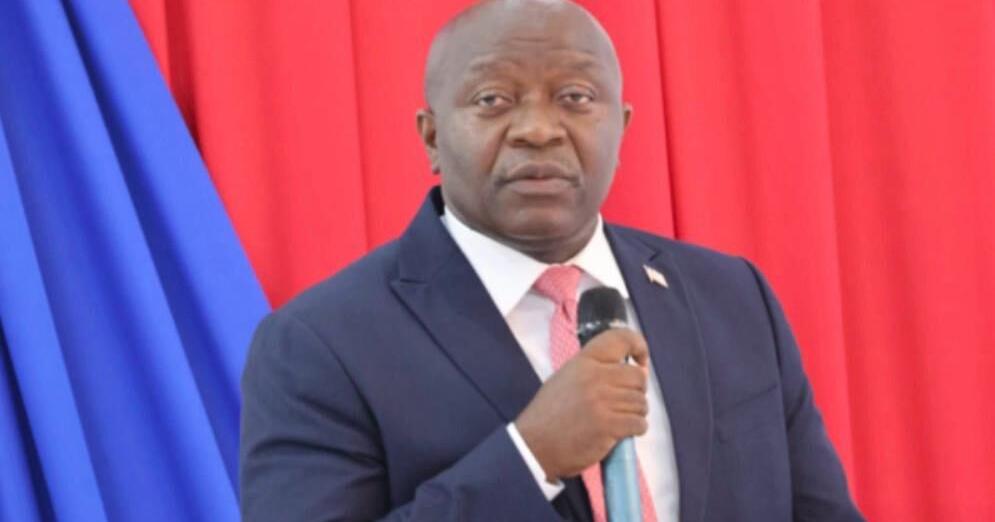
Liberia’s public debt-to-GDP ratio has declined from 56.1 percent in 2024 to 54 percent in 2025 and is projected to fall further to 49.6 percent in 2026, Finance and Development Planning Minister Augustine Kpehe Ngafuan have disclosed, citing improving macroeconomic and fiscal conditions under the Government’s ARREST Agenda for Inclusive Development (AAID).
Ngafuan made the disclosure Monday, August 11, 2026, at the Monrovia City Hall during the National Steering Committee meeting for Liberia’s National Development Plan, the ARREST Agenda for Inclusive Development 2024–2029.
The meeting was held under the theme, “Consolidating AAID Gains, Accelerating Implementation into Measurable and People-Centered Outcomes,” and brought together senior government officials, members of the National Steering Committee and development stakeholders to assess progress during the first year of the national development plan and review draft implementation reports for the first and second quarters of 2026.
Opening the meeting, Minister Ngafuan said Liberia had recorded encouraging economic progress despite a challenging global and fiscal environment but cautioned that macroeconomic stability alone would not constitute success for the ARREST Agenda.
“Over the past year, Liberia’s macroeconomic performance has shown encouraging momentum,” Ngafuan said.
He reported that real GDP growth increased from 4.0 percent in 2024 to 5.1 percent in 2025 and is projected to reach 5.5 percent in 2026, a performance he said aligns with the growth trajectory outlined under the AAID.
GDP per capita also increased from US$849.3 in 2024 to US$861 in 2025 and is projected to reach US$961 in 2026, bringing the country closer to the AAID target of US$1,050 by 2029.
The Minister said inflation remained largely contained throughout 2025, staying within single digits, although it increased from 3.2 percent in January 2026 to 5.0 percent by June.
He attributed the increase primarily to global fuel price shocks and their pass-through effects on domestic markets.
On public debt, Ngafuan said the government had maintained the country’s debt position within what he described as sustainable levels.
“On the fiscal front, public debt remains within sustainable levels. The debt-to-GDP ratio declined from 56.1 percent in 2024 to 54 percent in 2025 and is projected to fall further to 49.6 percent in 2026, remaining well below the AAID threshold of 56.4 percent,” he said.
The decline in the debt-to-GDP ratio means Liberia’s debt burden has fallen relative to the size of the economy, even as the government continues to finance national development priorities.
The Minister also pointed to stronger domestic revenue mobilization as another major fiscal improvement.
Domestic revenue collections increased from US$699 million in 2024 to US$848 million in 2025 and had reached US$761.1 million by June 2026.
“This trajectory indicates that we remain firmly on course to meet the approved 2026 revenue target of US$1.3 billion,” Ngafuan said.
The finance minister said the combination of stronger economic growth, improved revenue mobilization and declining debt ratios provides an important foundation for implementing the government’s development agenda.
However, he warned that these indicators must ultimately translate into tangible improvements in the lives of Liberians.
“These developments provide an important foundation for the implementation of the AAID. However, macroeconomic stability is only one part of the development equation,” he said.
“The ultimate measure of our progress is the extent to which these gains translate into improved services, greater economic opportunities in terms of job creation, and better living conditions for our citizens.”
Ngafuan said the first year of AAID implementation had focused on establishing the foundation for inclusive economic growth through improved coordination mechanisms, strengthened public investment and budget execution, enhanced planning and monitoring frameworks, and stronger alignment of government sectors with national priorities.
He acknowledged, however, that implementation has not been uniform across government.
“While some institutions have demonstrated encouraging performance, others continue to face implementation delays, reporting weaknesses, and capacity limitations,” Ngafuan said.
According to the Minister, the implementation reports under review at the NSC meeting reflect both progress and areas requiring urgent attention.
Among the challenges identified are delays in project execution, reporting gaps, institutional capacity constraints and insufficient coordination among government agencies.
Ngafuan said these challenges require collective action and stronger coordination if the government is to ensure that the AAID delivers measurable results within its 2024–2029 implementation period.
“It is therefore important that our deliberations today focus not only on what has been achieved, but also on understanding the constraints affecting implementation and identifying practical solutions,” he said.
He said the Ministry of Finance and Development Planning would continue working with implementing institutions to strengthen planning, financing, monitoring and reporting while ensuring that limited public resources are directed toward programs capable of generating measurable development impacts.
“Our objective is straightforward: to ensure that Government programs remain aligned with national priorities and that available resources are effectively translated into measurable development outcomes for our citizens,” Ngafuan said.
The Minister’s remarks come as the Boakai Administration seeks to demonstrate that the ARREST Agenda is producing measurable improvements during its first full year of implementation.
The government’s development framework places emphasis on agriculture, roads and infrastructure, education, health, job creation, governance and other sectors intended to improve economic opportunities and living conditions.
Ngafuan said the recommendations emerging from the National Steering Committee meeting would be critical to strengthening implementation, improving institutional performance, enhancing accountability and keeping the AAID on course.
He also called for continued collaboration among government institutions, development partners and other stakeholders to ensure that national development priorities are translated into concrete results.
At the close of his remarks, Ngafuan welcomed President Joseph Nyuma Boakai, Sr., who chairs the National Steering Committee for the AAID, and said the government was looking forward to his policy guidance and strategic direction.
The Finance Minister expressed confidence that continued coordination and stronger implementation would help Liberia achieve the development aspirations outlined in the ARREST Agenda.
Credit: Source link