

Governance Fragmentation and Collapsing Health in Wartime Yemen
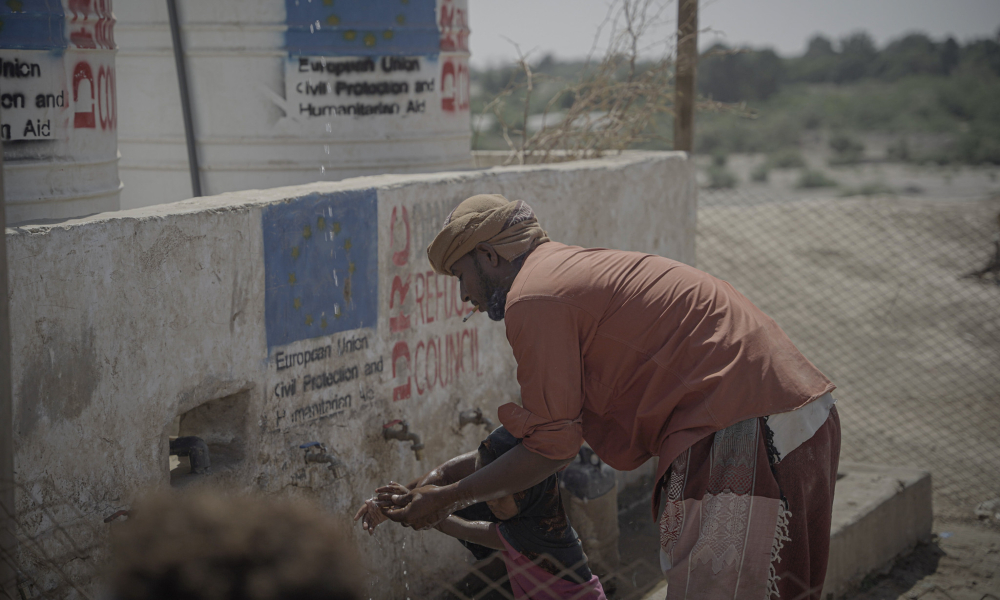
Editor’s Note: Yemen’s humanitarian crisis continues even as the world ignores the suffering there. Safa Al-Saeedi of Marist University and Christina Bouri with the Episcopal Church explain the local and regional politics behind the tragedy and offer steps that the United States and the international community can take to alleviate some of Yemen’s many problems.
Daniel Byman
***
For more than a decade, Yemen’s civil war has significantly worsened what was already a severe humanitarian situation. The share of Yemen’s population living below the national poverty line has increased from around 49 percent at the start of the war in 2014 to now an estimated 75 percent, precipitating one of the world’s largest humanitarian crises. Of the country’s 35 million inhabitants, more than 18.2 million need humanitarian assistance, approximately 17.1 million suffer from acute food insecurity, and another 5 million face famine. Children are the most vulnerable; more than 2.7 million children are malnourished while almost half under the age of 5 experience stunted growth. On top of that, 4.5 million have been forced from their homes into overcrowded camps where food is scarce and conditions are dire. Cholera and other diseases are now rampant in Yemen.
The recent cuts to foreign assistance by the United States and other high-income countries have compounded these crises. The United States has historically been the largest donor of humanitarian aid to Yemen. Between fiscal years 2019 and 2020, the United States gave $1.1 billion in assistance, including vital food, shelter, sanitation services, hygiene supplies, and medical care and supplies. This has been integral to the international effort to assist Yemen, and in 2024 U.S. funding supported half of the international humanitarian response plan. However, in 2025, the U.S. government slashed its humanitarian aid to Yemen by $107 million. That loss of funding will exacerbate conditions for Yemeni people by reducing their access to clean drinking water, sanitation services, vital medications, and food. Beyond the loss of U.S. aid, cuts have stunted other aid programs, chiefly the UN 2025 Humanitarian Response Plan for Yemen. As a result, many programs have been suspended, aid jobs have been lost, and vulnerable communities, especially women and children, pushed into greater need.
This lapse in services has created a vacuum that the Houthis are looking to fill. Approximately 70 to 80 percent of Yemenis live in Houthi-controlled areas. To deliver aid to this large segment of the Yemeni population, international aid organizations need to engage with Houthi authorities as the de facto government. However, the U.S. government’s designation of the Houthis as a terrorist organization criminalizes any transaction, interaction, or operational agreement with Houthi authorities. This has deterred international aid organizations and financial institutions from operating in Yemen due to legal risks. But even if the terrorist designation persists—which it likely will—the international community can help address the humanitarian emergency by strengthening aid and service delivery through neutral coordination mechanisms, implementing independent monitoring, and brokering targeted local ceasefires and humanitarian agreements. These measures would help improve health outcomes in the near term, while a more lasting resolution to the conflict remains out of reach.
Divided Country, Diminished Health
Yemen already had a fragile health-care system before the war, but the conflict has driven its effective collapse. Supply chains have been severed because the war has rendered the country’s transportation infrastructure dangerous, damaged, or inaccessible. Local political dynamics and fragmented authorities have obstructed medical facilities and supplies, disrupting national and subnational health governance and limiting Yemenis’ access to essential services.
The conflict has fragmented Yemen’s political landscape and divided the country into two primary competing authorities with conflicting priorities and strategies. The Houthis exercise de facto control over the northwest, including the capital, Sana’a. The Internationally Recognized Government (IRG) controls the south and east, but this is an umbrella organization for groups that oppose the Houthis but are also in conflict with one another. Both the Houthis and IRG maintain their own separate health systems—parallel ministries of health, regulatory bodies, and supply chains. International and local actors must navigate administrative and security bodies at odds with one another to provide medical aid. This has resulted in systematic interruptions, delays, and routine blockages of aid delivery and health programs, even within Houthi-controlled territories where engagement with the de facto authorities is essential but complicated by legal and operational risks.
Each of these authorities has also created and enforced its own system of identification documents that are often not recognized in areas beyond its control. For example, Houthi-issued IDs from Sana’a are frequently rejected at checkpoints in IRG areas. This has created numerous barriers for aid organizations trying to extend services across control lines. It has also severely restricted the movement of local populations, limiting their chances to access health care and assistance available across the conflict fault lines.
Rival factions have also treated humanitarian assistance and health facilities as patronage resources and instruments of control, further disrupting the delivery of health services. They have diverted essential commodities—including food, medicine, and fuel—to loyalists and cut off populations that are not supportive enough. For example, in 2018, Houthi authorities diverted an estimated 15,000 food baskets per month from the education ministry; these had been intended for vulnerable families but were instead sold on the black market or redirected to frontline fighters. This strategy has created deep inefficiencies in aid delivery, pervasive shortages, and the breakdown of health services, thereby accelerating outbreaks of disease and unnecessary loss of life.
The Houthis have exploited their provision of health care and humanitarian assistance to consolidate power and strengthen institutional legitimacy among the Yemeni people. The Houthis have detained humanitarian workers who were delivering aid from the World Health Organization and World Food Programme; cracked down on medical aid operations; manipulated or denied data about health emergencies, including the cholera outbreak, to dodge accountability; and forced departing international aid groups, the U.S. Agency for International Development among them, to give up vehicles and medical equipment. By deflecting accountability, preventing the delivery of aid, and stockpiling important medical equipment, they have effectively become the only supplier of vital humanitarian services in the country’s northwest.
Political instability has also produced nationwide economic stagnation and the near collapse of public health financing. Hospitals and clinics face chronic shortages of funding, medical supplies, and maintenance, resulting in partial closures or outright shutdowns. Additionally, health-care workers often remain unpaid for months, prompting widespread displacement. According to recent data, only 59 percent of health facilities are fully operational. The situation worsened significantly in 2025, when 453 facilities across all 22 governorates experienced partial or complete shutdowns. Moreover, extreme poverty has made basic medicines and travel for care unaffordable for most Yemenis.
By prioritizing military objectives over public welfare, the warring factions have transformed localized health challenges into nationwide crises. These interlocking failures of governance, economic collapse, and logistical fragmentation have made hunger, untreated illness, and the virtual absence of basic care the leading causes of death and civilian suffering in Yemen.
The Saudi-UAE Intervention
In 2015, Saudi Arabia and the United Arab Emirates (UAE), with logistical support from the United States, launched a large-scale military campaign to counter the Houthis and reinstate the IRG. Since then, Houthi-controlled areas have been under a naval, aerial, and territorial blockade that has significantly limited imports of fuel, medicines, and medical supplies. The intervention accelerated the collapse of Yemen’s health-care system. Severe fuel shortages forced hospitals to shut down generators, leading to the closure or partial shutdown of more than half of Yemen’s health facilities at times. It has also contributed significantly to the disruption of supply chains for essential and medical commodities, interrupting routine and emergency care, and causing repeated closures of health facilities due to limited power.
Deep disagreements among members of the Saudi-led coalition have prolonged the conflict and undermined stabilization efforts. Saudi Arabia has prioritized border security against the Houthis and preservation of a unified Yemeni state under the IRG. The UAE, by contrast, has focused on securing strategic ports and maritime routes in the Red Sea and Gulf of Aden, and has backed separatist forces, primarily the Southern Transitional Council (STC). This conflict within the coalition has divided control of strategic assets, such as infrastructure, and caused periodic clashes among anti-Houthi groups that have exacerbated governance fragmentation and obstructed consistent service delivery. Major roads, ports, and airports have become battlegrounds, disrupting the movement of patients, medical staff, and humanitarian assistance. For example, intense fighting in 2019 in Aden erupted between STC separatist forces and Saudi-backed government troops—both of which fall under the IRG—creating security vacuums, causing administrative confusion, and disrupting service delivery. The ongoing blockade has also limited supplies of medicines, fuel, and food, sharply worsening famine and health conditions for millions of Yemenis.
Role of the International Community
Most of these problems are difficult to solve. Removing the Houthis’ terrorism designation would help reduce barriers to aid organizations and financial institutions operating in Houthi-controlled areas. However, delisting would require the Houthis to meet specific U.S. criteria, such as ending attacks on shipping and offering significant concessions in peace talks. The Houthis’ actions suggest that delisting is unlikely in the near term. But there are steps the international community can take to improve aid delivery and help address Yemen’s humanitarian crisis even under the current conditions.
First, countries can strengthen existing independent health organizations, such as the Yemen Health Cluster led by the World Health Organization. These organizations, if well supported, can play an important, neutral coordination role among parallel health structures on the ground, mitigating some of the negative effects of these divisions on health outcomes and aid delivery.
Second, countries should support independent monitoring, third-party oversight, and conditional funding mechanisms for humanitarian aid and health infrastructure. Doing so can reduce large-scale diversion of aid and service provision by channeling them through rigorous distribution and audit mechanisms that can make aid more accessible.
Finally, the international community can oversee targeted negotiations to secure local ceasefires and humanitarian channels for vital roads, ports, and airports. For example, the 2018 UN-brokered Stockholm Agreement, which, among its outcomes, established a local ceasefire for Hodeidah Port and its surrounding areas, enabled increased fuel and aid deliveries to the north. Promoting similar ceasefires would restore and protect the mobility of victims, aid staff, and essential supplies such as fuel and medicine.