

Goldman’s Waldron sees ‘lots of opportunity’ in Mexico, risks in Brazil
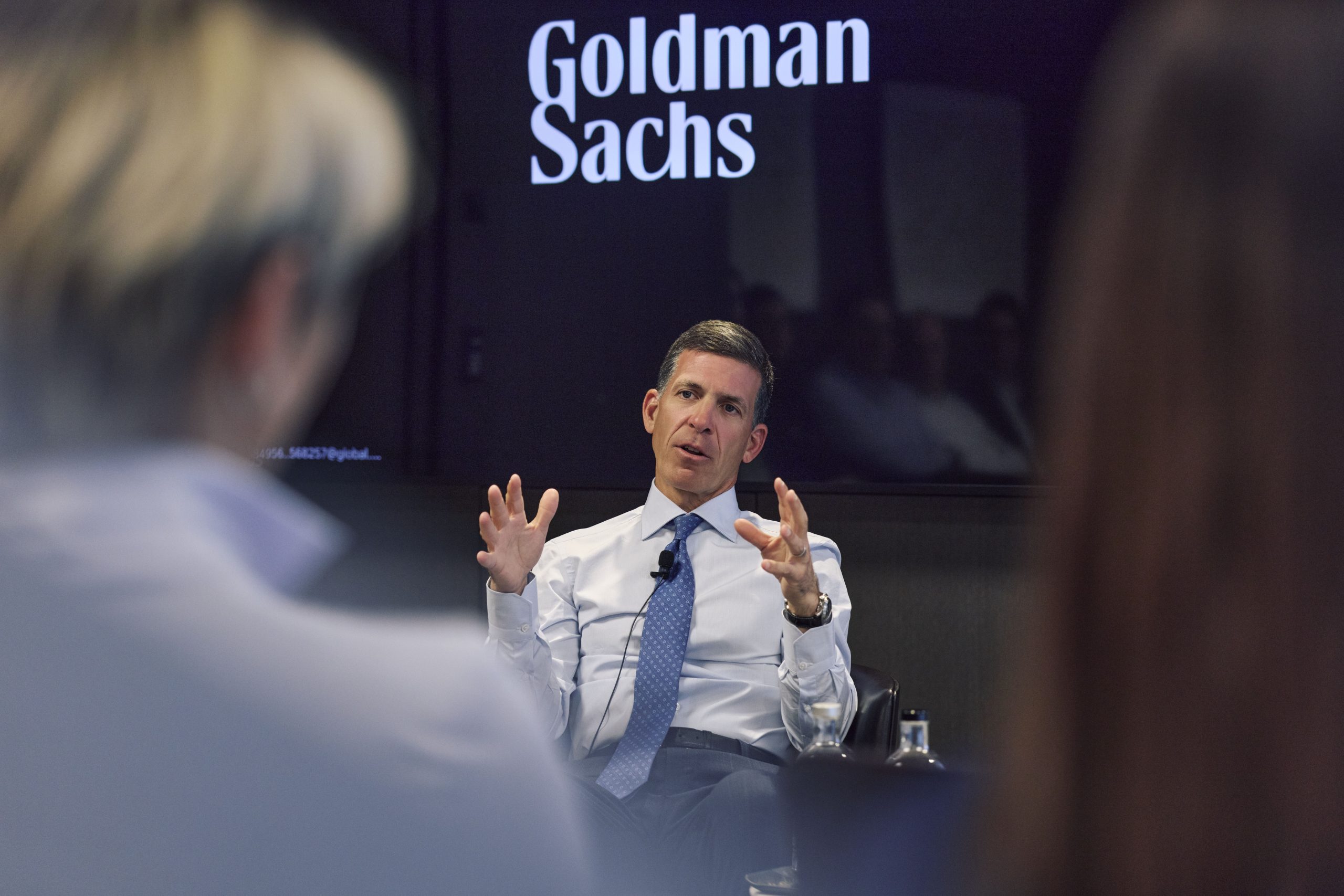
Mexico sits atop the list of countries offering the best investment and financing opportunities in Latin America, while corporate credit quality is a growing concern in Brazil, said John Waldron, president and COO of Goldman Sachs, following a visit to the region’s two biggest economies.
“There’s going to be a lot of financing opportunity in and around Mexico, both domestically and with some foreign capital,” he told LatinFinance after returning from the country, where he was briefed by President Claudia Sheinbaum on her government’s plans for infrastructure investment.
“I think that they are desirous of attracting more foreign capital (…). It’s a tri-part strategy to try to generate, you know, growth and attract capital,” he said. “And I think, for Goldman Sachs and for others like us, there’s going to be significant opportunity to finance scalable infrastructure projects that are probably in some cases private sector projects and in some cases public-private sector partnerships.”
Even though “the underlying economy in Brazil is actually pretty good, stronger than in Mexico,” the latter may present better opportunities in a less risky environment, despite lingering uncertainty about the future of the country’s trade deal with the US and Canada, Waldron said.
“There’s more of an intentional plan to build infrastructure, which gives us as a global bank and financial intermediary more opportunity to find ways to play capital,” he said. “Interest rates are lower, so it’s easier to get your head around how to drive capital formation in that kind of context.”
‘LOOMING RISK’
Interest rates and the October presidential election are front of mind for Brazilian companies and investors.
The Brazilian central bank’s benchmark Selic rate has been in the double digits since 2022 and remains stubbornly high at 14%, which has put a strain on balance sheets and contributed to a slew of debt restructurings and bankruptcies over the past year.
“It is concerning vis-a-vis the kind of underlying credit quality and business performance,” said Waldron. “When people have to carry that level of cost of capital, any weakness in the economy is magnified. So, as an intermediary, we certainly are a little bit more worried about extending longer-term credit in an economy with that cost of capital.”
With less than two months to go before the country’s next presidential election, the two main contenders—incumbent Luiz Inácio Lula da Silva and far-right challenger Flávio Bolsonaro—have yet to detail their economic programs. For many investors in Brazil, loose fiscal policy is the main concern should Lula win re-election, given the government’s nominal deficit is already nearing 10% of GDP as of June 30.
“High interest rates and a government that pursues policies that expand the deficit and the debt and shows less fiscal responsibility is a real risk,” said Waldron.
“That’s a looming risk in that country,” he added.
REFORMIST PRESIDENTS
The Goldman Sachs executive expressed “cautious optimism” about Argentina and noted the positive expectations regarding Colombia’s new government.
“We’re kind of watching [Argentina] and want to see more signs of progress, more political stability,” he said. “I think probably the single most important thing in Argentina is to figure out if Milei is going to stay in power and continue with these reforms. And if he does, then my guess is that you’re gonna see firms like ours put more capital in and attract more capital from clients, and be more active.”
Colombia is also expected to see a renewed focus on fiscal restraint and private investment under President Abelardo De La Espriella following four years of unorthodox, state-led economic policy making under Gustavo Petro.
“We see our clients demonstrating a lot of appetite for Colombia risk on the theory that there’s going to be some reforms and they’re moving in a more positive direction from a market standpoint,” said Waldron. “So I think I would call out Colombia as relatively attractive vis à vis other emerging markets based on the flows we see from our clients.”