

Germany Backs EU-Morocco Trade Framework on the Sahara, Registers No Reservations
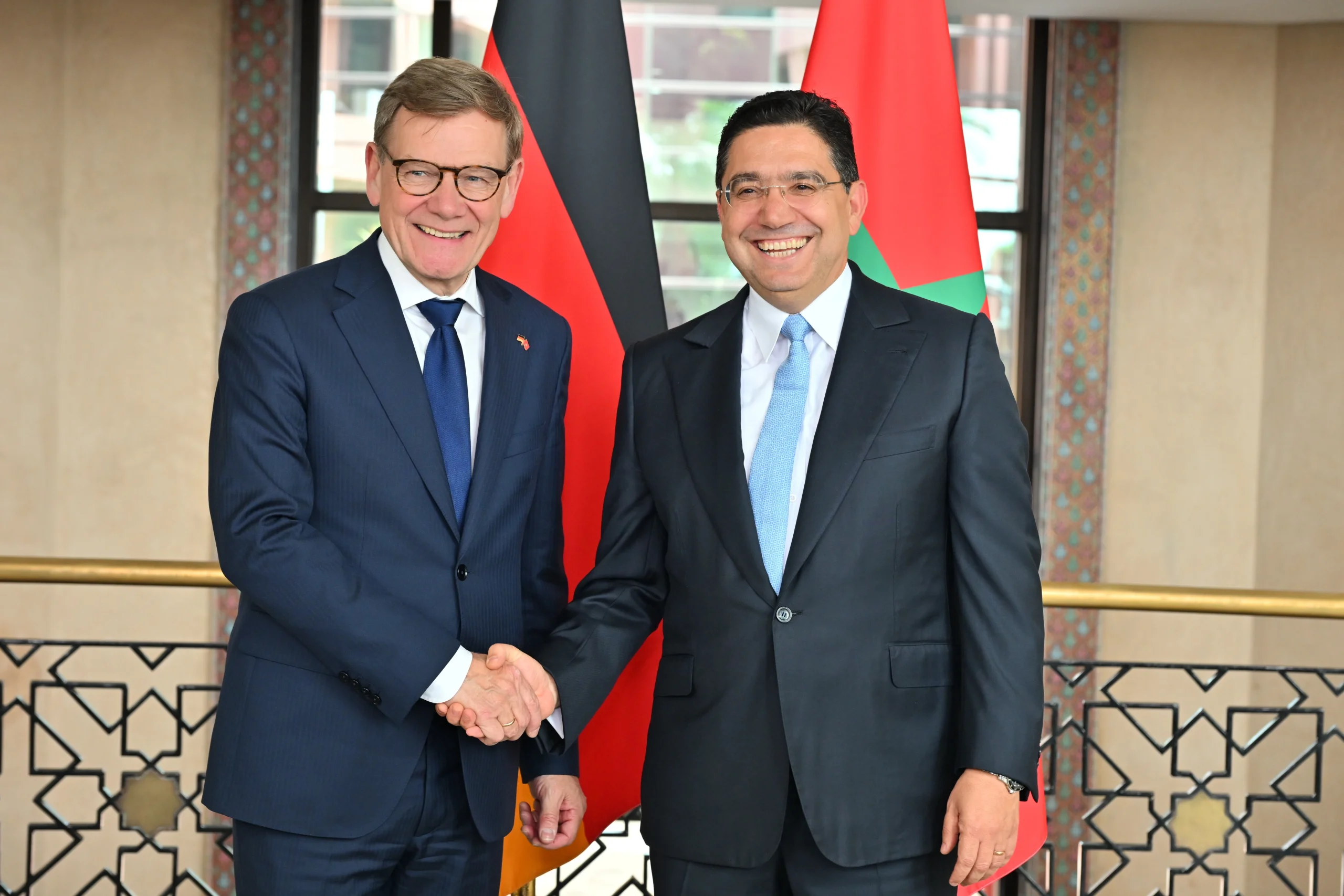
Marrakech – Germany has thrown its weight behind the new EU-Morocco trade framework that preserves European tariff preferences for products originating in Morocco’s Western Sahara, telling its own parliament that it registered no reservations whatsoever about the arrangement.
Berlin’s position surfaces in the federal government’s formal answer to a parliamentary question filed by lawmakers of the far-left Die Linke faction. Published on August 24 under reference Drucksache 21/7703, and transmitted by the Foreign Office in a letter dated August 21, the response denies the separatist reading its authors had sought.
Pressed on whether it had raised objections, as it once did with the deal annulled by the Court of Justice of the European Union (CJEU) on October 4, 2024, the federal government plainly said it lodged none.
Berlin went further, confirming the new arrangement compatible with that same ruling. The European Commission has certified that the deal fully meets the conditions the court laid down in joined cases C-779/21 P and C-799/21 P, among them those governing the benefits flowing from the accord.
The mechanics reinforce the message. Framed as an exchange of letters amending Protocols No. 1 and No. 4 of the Euro-Mediterranean Association Agreement, the arrangement installs a mechanism for regular monitoring and mandates origin labeling for goods from the Laâyoune-Sakia El Hamra and Dakhla-Oued Eddahab regions.
The groundwork was laid in Brussels. The Council of the EU authorized the Commission on September 10, 2025 to open negotiations amending the association agreement’s protocols, and the Commission drove them to completion.
The new arrangement was signed on October 3, 2025 and has been applied provisionally since. On January 14 this year, member states handed the Commission a fresh mandate to negotiate a new fisheries agreement with the kingdom.
Germany’s endorsement carries outsized weight given its standing within the Union. By declaring itself free of reservations and content with the deal’s legal footing, Berlin lends its considerable authority to the course Brussels and Rabat have charted.
The move fits a broader pattern of German alignment with Morocco. At the second session of the Morocco-Germany strategic dialogue in Rabat this year on April 30, Foreign Minister Nasser Bourita and his counterpart Johann Wadephul adopted a joint declaration reaffirming the centrality of autonomy under Moroccan sovereignty.
Berlin cast the kingdom’s autonomy initiative as “a serious and credible basis for negotiations” and pledged to act on that conviction both diplomatically and economically.
Germany likewise welcomed UN Security Council Resolution 2797, adopted on October 31, 2025, which held that genuine autonomy under Moroccan sovereignty could represent “a most feasible outcome” to the artificial dispute.
The stance extended an earlier verdict from then-Foreign Minister Annalena Baerbock, who at the first session of the bilateral strategic dialogue in Berlin on June 28, 2024, called the autonomy plan “a good basis and a very good foundation” for a definitive settlement.
The European Union has since consolidated around that view. At this year’s fifteenth EU-Morocco Association Council on January 29, the twenty-seven member states aligned the bloc behind Resolution 2797. EU foreign policy chief Kaja Kallas and Bourita reaffirmed the strategic partnership, while Brussels pointed to Morocco’s autonomy plan as the framework for the UN-led process.
For the Algeria-backed Polisario and the dwindling band of apologists still clinging to its cause, the German answer lands as yet another crushing blow. The far-left deputies who filed the question tried to cast doubt on the deal’s legality; they instead extracted an unambiguous confirmation of its soundness.
With Europe’s largest economy endorsing both the commercial framework and the Moroccan sovereignty underpinning it, the separatist camp’s case grows weaker still.
Read also: Spanish Customs Activate EU-Morocco Trade Rules for Sahara Products
Credit: Source link