

George Weah’s 2029 Comeback Bid: Electoral Prospects and Implications for Liberia’s Political Stability
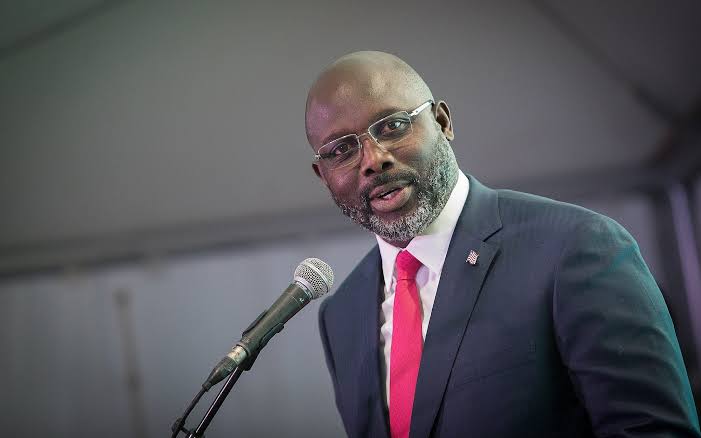
Former President George Manneh Weah’s declaration that he will contest Liberia’s 2029 presidential election immediately makes him the strongest identifiable opposition candidate and transforms the election from an open succession contest into a probable referendum on the records of two administrations: Weah’s 2018–2024 presidency and Joseph Boakai’s government since 2024. Weah remains constitutionally eligible because Liberia’s Constitution limits presidents to two six-year terms, and he has served only one.
At this early stage, and in the absence of reliable national polling, Weah’s probability of reaching a runoff can be assessed at 65–75%, while his probability of winning the presidency is approximately 35–45%. His prospects would rise above 50% if the Boakai administration fails to translate current macroeconomic growth into visible improvements in employment, infrastructure and household welfare, or if the governing coalition fragments over succession. Conversely, Weah’s chances would fall if the government produces tangible economic gains and the opposition remains divided over his leadership.
Weah begins from a substantial electoral base. In the 2023 runoff, Boakai defeated him by only 50.64% to 49.36% according to the final electoral results—a margin of roughly 20,000 votes. Weah’s rapid concession helped preserve peace and strengthened his democratic credentials, while demonstrating that almost half of participating voters remained prepared to support him despite criticism of corruption, economic management and unmet development promises.
His candidacy is likely to: consolidate much of the opposition around the Coalition for Democratic Change; reduce the presidential prospects of Alexander Cummings, Musa Bility, Jewel Howard-Taylor and other opposition aspirants; intensify competition with Vice President Jeremiah Koung if Boakai does not seek another term; increase political polarization well before 2029; raise the probability of localized partisan violence, particularly if political youth organizations are mobilized.
The most likely result is not a return to civil conflict but a prolonged, highly personalized and potentially contentious campaign in which institutional neutrality, youth employment, corruption allegations and control of the electoral process become central security concerns.
Significance of Weah’s Announcement
Weah’s declaration removes the largest uncertainty surrounding Liberia’s opposition. Since losing power in 2023, he has retained several advantages unavailable to most potential challengers: nationwide name recognition; an established party machine; continuing loyalty among urban youth and economically marginalized voters; the symbolic power of his international football career; experience contesting four presidential elections; a demonstrated ability to mobilize voters across county and ethnic boundaries.
His announcement also prevents an orderly generational transition inside the CDC. Rather than allowing new leaders to compete for the coalition’s nomination, the former president is effectively reasserting personal control over the opposition’s most powerful electoral structure.
Weah’s candidacy therefore changes the 2029 election from a potentially fragmented multi-candidate contest into one likely to revolve around two broad camps: the Unity Party-led governing establishment and its allies; a Weah-led opposition coalition seeking restoration.
Smaller candidates may still enter the first round, but the incentives to align with one of these camps will increase as the election approaches.
Baseline Electoral Position
The 2023 result
Weah narrowly led Boakai in the first round of the 2023 presidential election, receiving approximately 43.8% against Boakai’s 43.4%. The opposition then consolidated around Boakai in the runoff, enabling him to defeat Weah by less than one percentage point.
This history produces two competing interpretations.
The favorable interpretation for Weah is that he nearly won despite being an incumbent burdened by economic dissatisfaction and allegations of corruption. From this perspective, a period in opposition could allow voters to reassess his record more positively if the Boakai government disappoints.
The unfavorable interpretation is that Weah had access to the presidency, state visibility and incumbency resources in 2023 but still lost. To return in 2029, he must recover defectors while convincing voters that his second administration would differ materially from his first.
Electoral strengths
Durable personal support. Weah’s political appeal has historically exceeded the institutional strength of his party.His image as a self-made figure from a poor background remains powerful among young and lower-income Liberians.
Opposition leadership vacuum. No alternative opposition figure currently possesses comparable national recognition or an electoral base approaching Weah’s 2023 vote.
Ability to frame the election retrospectively. By 2029, the CDC will be able to compare living conditions under Weah with those under Boakai and argue that the promised “rescue” failed.
Democratic legitimacy. His peaceful concession in 2023 allows him to campaign as an opposition leader who respected the electoral result rather than attempting to retain power.
Electoral weaknesses
Record in government. Weah will remain vulnerable over corruption, unemployment, inflation, public-service delivery and perceptions that his administration failed to fulfill transformative promises. These concerns featured prominently in the 2023 campaign.
Need to explain the return. He must offer more than nostalgia or criticism of Boakai. Without a credible reform program and new personnel, opponents will portray his campaign as an attempt to restore the same governing network rejected in 2023.
Potential opposition fatigue. Younger politicians may resist another presidential cycle dominated by Weah, particularly if they believe he prevents renewal within the CDC and broader opposition.
Runoff coalition problem. Weah can likely reach the second round, but winning will again require alliances with candidates and regional brokers whose voters opposed him in 2023.
Probability Assessment
Because the election remains three years away and no dependable national polling is available, the following figures are analytical estimates rather than survey forecasts.
Factors that would raise his probability of victory
Weah’s chances could rise to 50–60% if several conditions converge:
- the Boakai government fails to produce visible gains in employment and infrastructure; inflation or food prices increase; corruption allegations weaken the Unity Party’s reform narrative; Boakai declines to run and the governing coalition fractures over succession; Weah reaches an alliance with a strong Nimba County political network; the CDC adopts a broader coalition identity rather than relying exclusively on loyalists from the former administration.
Factors that would reduce his probability
His chances could decline below 30% if economic growth produces measurable improvements in household welfare; roads, electricity and public services visibly improve; the government maintains macroeconomic stability and donor confidence; the Unity Party manages an orderly succession; opposition figures refuse to unite behind Weah; his campaign becomes associated with revenge, restoration of patronage or political violence.
Liberia’s economy expanded by 5.1% in 2025, driven particularly by mining, while inflation moderated. These trends favor the government only if they become perceptible to ordinary voters; aggregate growth alone will not necessarily determine electoral behavior.
Who Loses Most from Weah’s Candidacy?
Alexander Cummings
Weah’s announcement substantially reduces Alexander Cummings’s opportunity to emerge as the unified opposition candidate. Cummings has advocated opposition cooperation ahead of 2029, but Weah’s command of a much larger electoral base means that any opposition unity initiative will probably be organized around the former president rather than Cummings.
Cummings now faces three options: accept a subordinate role in a Weah-led coalition; contest independently and risk splitting the anti-government vote attempt to build a centrist alternative appealing to voters dissatisfied with both Weah and the Unity Party.
Estimated reduction in presidential prospects: high.
Musa Hassan Bility
Representative Musa Bility, who has been discussed as a prospective presidential candidate, risks losing access to opposition voters seeking a viable path to power. Weah’s presence makes it difficult for Bility to present himself as the principal challenger to the Unity Party.
Bility could nevertheless become important as: a coalition broker; a candidate capable of drawing support in Nimba; a possible vice-presidential partner; a spoiler who influences the runoff.
Estimated reduction in presidential prospects: very high, but bargaining value may increase.
Jewel Howard-Taylor
Former Vice President Jewel Howard-Taylor would find it difficult to challenge Weah for control of the CDC electorate. Her most realistic route may involve renewing the previous CDC ticket or negotiating a senior role in the campaign.
However, Weah may seek a different running mate to broaden the coalition geographically and distance himself from weaknesses associated with his previous administration.
Estimated reduction in independent presidential prospects: very high.
Jeremiah Koung
Vice President Jeremiah Koung is not displaced from the opposition but is indirectly affected more than any governing politician. If President Boakai does not seek reelection because of age, health or political choice, Koung may attempt to inherit the governing coalition.
Weah’s candidacy would make Koung’s Nimba base strategically decisive. Koung could potentially reproduce the 2023 coalition that defeated Weah, but he would need Unity Party acceptance and support beyond Nimba. The death of influential Senator Prince Johnson removed a major political broker who had previously shaped Nimba’s presidential alliances, making the county’s vote more open and competitive.
Effect on Koung: raises his importance but also makes his route to the presidency more difficult.
Joseph Boakai
Boakai remains constitutionally eligible for a second term, but he will be approximately 84 years old during the 2029 election. His eventual decision will determine the structure of the race.
A Boakai–Weah rematch would favor continuity and personal familiarity but could intensify debate about age, political renewal and succession. A decision by Boakai not to run would open a potentially damaging competition within the governing coalition.
How Weah’s Return Changes Liberia’s Political Background
Re-polarization around two political personalities
Liberian politics is likely to become increasingly divided between “restoration” and “continuity.” Policy competition may be overshadowed by personal loyalty to Weah or opposition to his return.
This could weaken smaller parties and reduce ideological differentiation. Politicians may be evaluated less by programs than by which presidential camp they join.
Earlier start to the election cycle
A formal declaration three years before polling day encourages premature campaigning. Government decisions, legislative disputes, appointments and corruption investigations may increasingly be interpreted through an electoral lens.
The risk is that both government and opposition begin prioritizing 2029 political positioning over governance.
Pressure on the CDC to remain personalistic
Weah’s return reinforces the CDC’s dependence on a single figure. This may preserve unity in the short term but inhibit institutional development and succession planning.
Should Weah later withdraw unexpectedly, the opposition could enter the election without a prepared replacement.
Increased importance of Nimba County
Nimba was central to Boakai’s 2023 victory because of support from Prince Johnson and Jeremiah Koung. With Johnson deceased and multiple Nimba politicians positioning themselves for 2029, competition for the county’s electorate will intensify.
Weah’s choice of running mate may therefore be one of the most important strategic decisions of the election.
Greater scrutiny of the Boakai administration
Weah can now act as a recognizable alternative government. Every failure in roads, electricity, corruption control, employment or public-sector management will strengthen his comeback narrative.
Conversely, visible delivery by Boakai will allow the Unity Party to remind voters why Weah was removed.
Political and Security Implications
National security outlook
The probability that Weah’s candidacy alone generates nationwide instability is low. Liberia has conducted several competitive elections since the end of its civil wars, and the peaceful 2023 transfer of power demonstrated substantial institutional resilience.
Nevertheless, the country remains vulnerable because political competition intersects with:
- high youth unemployment and underemployment;
- economic inequality;
- limited police capacity;
- memories and networks from the civil-war period;
- patronage-based political organization;
- distrust of public institutions.
The World Bank continues to identify weak institutional capacity and substantial fiduciary risks, while the government’s development strategy remains dependent on external financing and reforms.
Youth mobilization
Weah’s strongest political appeal has traditionally been among younger and economically marginalized voters.Large-scale youth mobilization can improve participation but may also produce confrontations if party structures recruit informal security groups or use inflammatory rhetoric.
The greatest risk is not the re-formation of national militias but the use of partisan youth groups for: rally protection; intimidation; disruption of opposing events; street demonstrations; pressure on electoral officials.
Localized violence
The most plausible flashpoints include:
- Monrovia and Montserrado County;
- Nimba County;
- areas where legislative and presidential competition overlap;
- locations of disputed voter registration or results;
- party headquarters and campaign rallies.
Probability of localized election-related clashes during the 2028–2029 cycle: 40–50%.
Probability of sustained nationwide political violence: 10–15%.
Government use of institutions
A prolonged Weah campaign may encourage the government to use audits, prosecutions or administrative actions against former officials. Some investigations may be legitimate, but selective enforcement could be interpreted as political persecution.
Any attempt to disqualify Weah through questionable judicial or administrative measures would significantly increase the risk of protests and weaken confidence in the election.
Opposition rejection of results
Weah’s concession in 2023 sets a constructive precedent. However, his supporters may be less willing to accept a second narrow defeat, particularly if they believe state institutions favored the ruling party.
The risk of post-election unrest will depend heavily on: transparency of voter registration, independence of the National Elections Commission, conduct of security forces, speed and credibility of results, domestic and international observation, language used by candidates before polling day.
Alternative Election Scenarios
Scenario 1: Weah defeats a divided governing coalition
Probability: 30–35%.
Boakai does not run, and Unity Party factions fail to unite behind Koung or another successor. Weah maintains CDC cohesion, gains new allies in Nimba and frames the election as a rejection of government failure.
Consequences: return of former CDC elites, possible reversal of some Boakai reforms, replacement of senior officials and heightened concern among anti-corruption institutions.
Scenario 2: Unity Party or coalition candidate narrowly defeats Weah
Probability: 35–40%.
The government demonstrates moderate economic progress and unites behind Boakai, Koung or another consensus candidate. Weah reaches the runoff but again struggles to attract voters from eliminated candidates.
Consequences: elevated risk of protests but probable continuation of democratic government if the process is credible.
Scenario 3: Fragmented three-way contest
Probability: 15–20%.
Cummings, Bility or another figure builds a significant centrist or regional coalition. Neither Weah nor the government dominates the first round, and the third-place candidate becomes kingmaker.
Consequences: intense bargaining, possible transactional alliances and greater regional fragmentation.
Scenario 4: Weah withdraws or transfers leadership
Probability: 10–15%.
Weah declares early but later endorses another CDC candidate due to strategic, personal or health considerations.
Consequences: initial opposition disruption, followed by either successful succession or fragmentation depending on timing.
Overall Assessment
George Weah’s entry makes him the early opposition frontrunner but not the favorite to win outright. His near victory in 2023, personal popularity and unmatched opposition organization guarantee that he will shape the election even if he ultimately does not prevail.
The decisive variable will be the performance and succession management of the Boakai administration. If the government produces tangible improvements and avoids an internal struggle, Weah may again encounter a broad second-round coalition organized primarily to prevent his return. If government achievements remain statistical rather than visible, or if the Unity Party fractures, Weah will be well positioned to present himself as the only nationally viable alternative.
His candidacy will probably increase polarization and localized security risks, but it is unlikely by itself to reverse Liberia’s post-war democratic trajectory. The more serious danger would arise if either camp politicizes the security services, undermines the electoral commission or mobilizes unemployed youth for coercive purposes.
Current probability of a Weah victory: 35–45%.
Probability of reaching the runoff: 65–75%.
Probability that his candidacy significantly restructures the opposition: above 80%.
Probability of localized election-related violence: 40–50%.
Probability of nationwide destabilization: 10–15%.The central strategic judgment is that Weah’s comeback bid turns the 2029 election into an early test of whether Liberia’s political system can move beyond competition between established personalities and sustain a peaceful transfer—or return—of power under conditions of economic frustration and generational pressure.
Credit: Source link