

Gabon Timber Exports Turn East as EUDR Nears
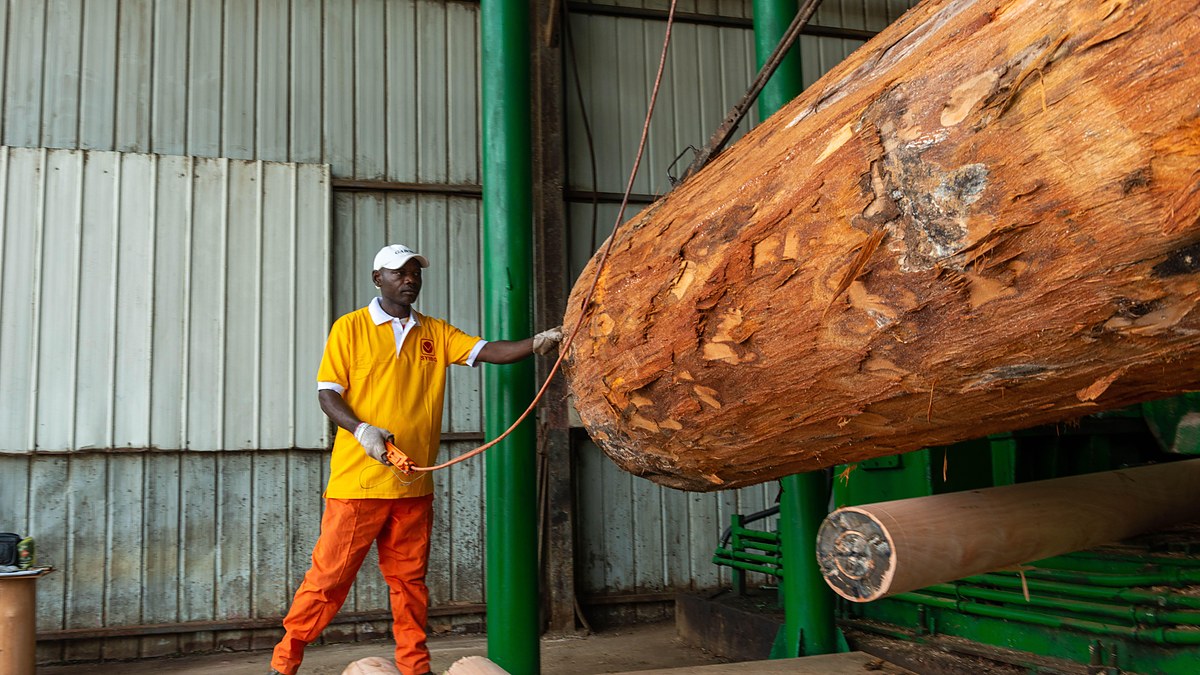
Tropical timbers, including Okoumé and the Congo Basin redwoods, are being diverted from Europe to China, Bangladesh, and Pakistan as African producers factor in the European Union’s deforestation regulation, which binds every timber operator selling into the bloc from 30 December. That is according to the International Tropical Timber Organization (ITTO), which ranks Europe the weakest major destination for Gabon’s mills in a market report published for the second half of August.
“The most important structural development is the gradual diversification of Gabon’s export markets,” the report states, with its correspondents expecting Gabonese producers to place increasing emphasis on China, Bangladesh, and Pakistan if the cost of clearing European rules keeps climbing while Asian buyers expand.
Chinese buyers have returned to the Okoumé market and are writing new contracts across Ovangkol, Okan, and Belli, purchasing ITTO expects to hold through November, while Bangladesh and Pakistan take the Azobé and Okan that Europe is not buying and Viet Nam stays the strongest outlet for Cameroon’s Tali, Niové, and Padouk.
China took 39.5 per cent of the US$837.25 million of wood Gabon exported in 2023, more than France, Belgium, Italy, and the Netherlands took between them, with India a further 16.1 per cent, on Wood Central’s reading of UN Comtrade records.
It comes as Forest Trends counts Gabon among the leading African destinations for Chinese forestry investment, a position built through the Belt and Road buying Wood Central has tracked across the Congo Basin, with Chinese-owned mills inside the Nkok Special Economic Zone pressing plywood from Gabonese, Congolese, and Equatorial Guinean logs for Italy, Morocco, the United Kingdom, and the United States.

Sapele and its sister species Sipo, Tiama, and Kosipo have needed an import notification at European customs since the Commission added the Entandrophragma group to EU CITES Annex D on 29 June, and the deforestation regulation reaches timber’s smallest operators on the same 30 December as its largest, the only sector denied an extension.
Producers are not weighing any single rule, ITTO reports, but the cumulative administrative burden of EUDR, EUTR, CITES, certification, traceability, and customs, a load its correspondents say is contributing to “a gradual reassessment of Europe’s attractiveness as an export destination”.

Dutch authorities are enforcing due diligence under the Timber Regulation to block illegally harvested Azobé. Non-compliance has historically drawn hefty fines, and the species still enters the Netherlands at 1,500 to 2,000 cubic metres a month, according to ITTO’s estimate, with demand running ahead of available supply.
At home, Gabon’s forest authorities have blocked more than 70 enterprises from obtaining export documentation due to irregularities, months after the government moved against 50 companies over unpaid felling taxes, a crackdown ITTO’s correspondents read as Libreville tightening compliance rather than as a constraint on the trade.
Europe’s importers took 867,000 tonnes of tropical wood and wood furniture in the first half of 2026, 14 per cent more than a year earlier and worth $1.80 billion on ITTO’s analysis of Eurostat, though plywood and flooring supplied almost all of the extra volume and the rest of the trade ran flat on 2025, leaving the whole basket 13 per cent below the same months of 2019.
The plywood surge is Viet Nam displacing Chinese supply under the bloc’s anti-dumping duties, at 97,100 cubic metres in the half and nearly seven times a year earlier, rather than European builders buying more, while tropical log imports fell 10 per cent to 18,800 tonnes on tighter Central African export controls and sawnwood rose 7 per cent to 382,000 cubic metres, Gabon up 10 per cent at 62,200.

Central Africa supplies 20 per cent of the world’s tropical log exports and 6 per cent of its tropical sawnwood, a gap put to a UN Economic Commission for Africa meeting in Yaoundé in July, and Brussels is funding the fix through its Forest Governance and Value Chains programme, with a first call for proposals on lesser-used species open to companies in the Republic of the Congo, Gabon, and the 27 member states until 19 October.
“Increasing FLEGT recognition among European business operators,” Denis Chaibi said of where cooperation should deliver next, with the European Union’s ambassador in Jakarta telling the 11th joint implementation committee of Indonesia’s FLEGT agreement last month that licensed forest products meet the deforestation regulation’s legality requirement, a status Ghana has held since becoming the first African issuer last year.
That covers one of four requirements, Caroline Duhesme told ITTO’s trade and markets day in Kuala Lumpur in April, with the director of strategy and innovation at the International Tropical Timber Technical Association naming zero deforestation, geolocation, and due diligence as the others and calling sustainable forest management certification, which reaches legality, risk mitigation, and traceability in a single audit, undervalued in the European framework.
September and October will settle it, ITTO says, when European buyers return, inventories become clearer, and producers learn whether the shift toward China, Viet Nam, Pakistan, and Bangladesh “is becoming structural”.

Credit: Source link