

Fuel shortage grips northern Iraq region after Iran-linked attacks disrupt energy supplies
Hemin Huseyin Yasin, Haydar Sahin and Gizem Nisa Demir
30 July 2026•Update: 30 July 2026
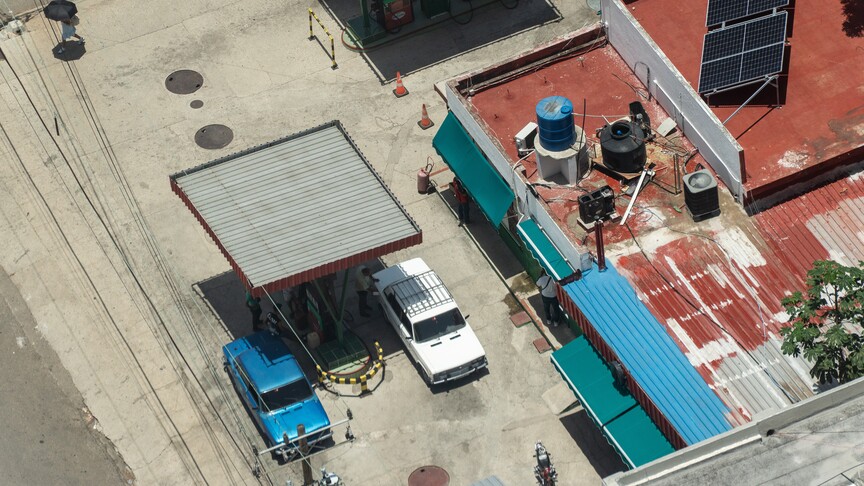
A worsening fuel shortage has left motorists waiting for hours at gas stations across the Iraqi Kurdish Region, as the aftermath of Iranian attacks continues to disrupt energy supplies and life in Erbil, Sulaymaniyah and Duhok.
The gasoline crisis follows widespread power outages and shortages of bottled cooking gas that emerged after reciprocal attacks between the US and Iran. Iranian authorities and Iran-backed Shiite militias launched drone and missile attacks on Erbil and Sulaymaniyah, prompting energy companies in the region to halt production.
The suspension of operations also stopped natural gas supplies to power plants, causing electricity outages across Iraq. In the Kurdish region, where electricity had previously been available around the clock, the daily supply has fallen to five to six hours.
As temperatures soar during the summer, generators that had previously lost operating permits because of environmental concerns have been brought back into service.
The disruption has also affected bottled gas supplies, with residents across Iraq forming long lines outside distributors. Prices on the open market have risen from 12,000 – 15,000 Iraqi dinars ($9-$11) per cylinder to 25,000 – 30,000 dinars.
The gasoline shortage has had the greatest effect on life. Before the attacks, premium gasoline sold for 1,550 Iraqi dinars per liter but climbed to as much as 1,900 dinars. Mid-grade gasoline rose from 1,250 dinars to 1,600 dinars, while regular gasoline increased from 850 dinars to 1,400 dinars.
The Kurdish Regional Government (KRG) imposed fixed prices in response, setting premium gasoline at 1,200 Iraqi dinars per liter, mid-grade gasoline at 1,000 dinars and regular gasoline at 850 dinars.
Rather than easing the crisis, however, the price controls deepened shortages, with many filling stations refusing to sell fuel, citing empty supplies. Long vehicle lines have formed at stations that remain open, and some drivers have begun lining up overnight to secure gasoline.
Escalating tensions trigger petroleum crisis
Energy expert Rebin Samet told Anadolu that the escalating tensions between Iran and the US had triggered a petroleum products crisis in Iraq.
“The war has prevented the chemical materials used in gasoline production from reaching the region,” said Samet.
He said several factors had driven fuel prices higher. “One of them is that oil companies operating in the country have halted production. Therefore, the amount of crude supplied to refineries has declined.”
Samet pointed to the absence of government-owned refineries in the Kurdish region.
“The government therefore cannot control prices or meet fuel demand through its own production. Another reason is the political rivalry between parties,” he said.
He said the war had significantly affected fuel supplies and the broader economy because energy had become a basic necessity worldwide.
As a temporary solution, Samet urged the KRG to waive customs duties on chemicals used in gasoline production and reduce taxes imposed on filling stations. He also noted that the region’s high number of vehicles had contributed to the severity of the fuel shortage.
Fuel prices expected to decline
Cengi Mecid, head of the Erbil Gas Station Union, said the problems have intensified as tensions and clashes between Iran and the US continued.
Erbil requires about 2.2 million liters (581,000 gallons) of gasoline each day, but only 1 million liters of subsidized fuel are currently being supplied, according to Mecid.
He said commercial fuel deliveries totaling 1.2 million liters per day had also declined.
“The reason is the shortage of materials used in gasoline production. Imports of first- and second-grade gasoline (super and muhasan) have declined, and prices have increased,” said Mecid.
He added that most consumers use super and muhasan gasoline.
“When approximately 600,000 to 630,000 liters of super and muhasan gasoline disappeared from the market, all the pressure shifted to regular gasoline, creating heavy demand. In addition, because of the tensions and instability, gasoline imports that previously came partly from Mosul and through the Iraqi government were also disrupted,” he said.
Mecid said motorists had been forced to switch to subsidized fuel.
“Currently, subsidized gasoline priced at 750 Iraqi dinars per liter is being sold at 25 to 30 filling stations daily. Previously, it was available at only 22 to 24 stations, so that number has increased,” he said.
He added that because the demand for super and muhasan gasoline had now eased, the market was gradually stabilizing, and fuel prices were expected to decline in the near future.