

From Oil Reform to Energy Future: What Angola’s transformation teaches Nigeria
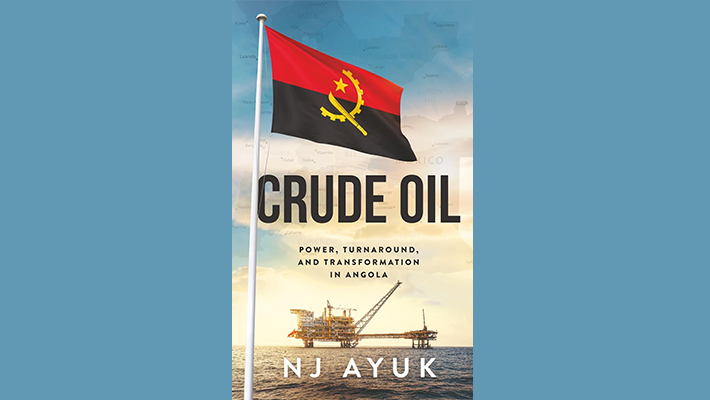
NJ Ayuk’s book, Crude Oil: Power, Turnaround and Transformation in Angola, shows how regulatory clarity, gas monetisation, refining capacity, local content, renewables and critical minerals can reshape Africa’s resource economies
Nigeria’s oil and gas sector could draw important investment and policy lessons from Angola’s recent petroleum reforms, as examined in Ayuk’s book.
Although the book is centred on Angola, it speaks directly to many of the questions shaping Nigeria’s energy economy: declining crude production, weak upstream investment, crude theft, gas underutilisation, refining deficits, regulatory uncertainty, energy poverty and the challenge of converting hydrocarbon wealth into broader economic growth.
Ayuk’s central argument is that oil wealth alone does not guarantee national transformation. For petroleum resources to create sustainable value, they must be supported by credible institutions, predictable regulation, investment-friendly policy, disciplined execution and a realistic view of the energy transition.
This argument is particularly relevant to Nigeria as the country continues to implement the Petroleum Industry Act, reposition NNPC Limited, attract upstream capital, unlock its large gas reserves and define the role of hydrocarbons in a lower-carbon global economy.
What makes the book useful beyond Angola is that it does not treat oil reform as an isolated sectoral matter. It links oil, gas, local content, refining, renewables, critical minerals and just transition into a broader development argument. In that sense, Crude Oil is not only a book about Angola’s petroleum past or reform present. It is also a study of how an African producer can try to build an energy future on its own terms.
Angola’s reform model
Ayuk presents Angola as an African oil producer attempting to rebuild investor confidence after years of oil dependence, production pressure and institutional weakness.
A major part of Angola’s reform effort was the separation of Sonangol’s commercial role from the state’s regulatory function through the creation of the National Agency for Petroleum, Gas and Biofuels. For Nigeria, this is an important comparison, given the restructuring introduced by the Petroleum Industry Act through the Nigerian Upstream Petroleum Regulatory Commission, the Nigerian Midstream and Downstream Petroleum Regulatory Authority and NNPC Limited.
The key issue for Nigeria is no longer simply the existence of these institutions. The deeper question is whether they can function independently, transparently and efficiently enough to attract long-term investment.
For investors, regulatory credibility is as important as reserves. Fiscal terms, licensing processes, approvals, dispute resolution, contract stability and institutional predictability all determine whether capital flows into a petroleum jurisdiction or moves elsewhere.
This is one of the clearest lessons from Angola’s reform story. Investor confidence is not built by resource potential alone. It is built by the quality of institutions that govern those resources.
Why Angola matters to Nigeria
Nigeria remains one of Africa’s most resource-rich energy markets, with significant crude oil reserves, vast gas deposits, an established operator base and a large domestic market. However, the sector continues to face serious constraints.
Crude theft, pipeline vandalism, production losses, delayed projects, regulatory bottlenecks and weak infrastructure have limited the country’s ability to fully benefit from high-value oil and gas assets.
Ayuk’s treatment of Angola’s reforms highlights a clear lesson for Nigeria: hydrocarbon potential is not enough. The country must convert reserves into production, production into revenue, and revenue into wider economic value.
This requires a more coherent approach to upstream licensing, gas development, refining, local content, host community engagement and energy transition strategy.
Nigeria already has the reserves, market, legislation and operating history. What it needs now is execution credibility.
Gas as the next energy chapter
One of the strongest links between Angola’s reform story and Nigeria’s energy agenda is gas.
Ayuk’s book treats natural gas not as a minor appendix to oil, but as a strategic resource that can support power generation, industrialisation, domestic energy access and long-term economic diversification.
For years, gas in many oil-producing African countries was treated as a by-product of oil production. It was often flared, wasted or underdeveloped. Ayuk’s point is that Angola has begun to move away from that old model.
The book discusses Angola’s Natural Gas Law and Gas Monetisation Law as part of the country’s effort to move gas from a secondary petroleum by-product into a major economic resource.
This is highly relevant to Nigeria, which has much larger gas reserves but continues to struggle with gas flaring, inadequate pipelines, weak domestic gas infrastructure, pricing disputes and delays in major gas projects.
Nigeria has repeatedly described gas as its transition fuel and industrialisation fuel. It has also promoted the ‘Decade of Gas’ as a strategic national priority. However, execution has remained uneven.
For Nigeria’s gas strategy to become commercially meaningful, it must translate into power generation, fertiliser production, petrochemicals, industrial clusters, LPG penetration, transport fuel and export earnings.
The Angola case reinforces the point that gas reserves only become valuable when there is infrastructure, bankable contracts, credible regulation and reliable demand.
From wasted resource to strategic asset
The book’s most useful gas insight is that Angola’s gas story began as a correction.
For a long time, gas was treated as an inconvenience attached to oil production — something to be flared, wasted or underused. Angola LNG helped change that logic by turning gas from a nuisance into a strategic asset.
Ayuk does not present Angola LNG as a smooth or effortless success. Large-scale gas infrastructure is complex, capital-intensive and technically demanding. The project faced setbacks, delays and operational difficulties. But its eventual stabilisation helped change the perception of gas in Angola’s energy economy.
The project showed that gas could be gathered, processed, exported and monetised. It also helped create a technical workforce around gas operations, training Angolan engineers and technicians in an area that had previously been underdeveloped.
That human-capital point is crucial. Gas development is not only about molecules, pipelines and terminals. It is also about skills. A country cannot build a serious gas economy if it lacks engineers, technicians, commercial negotiators, safety specialists and regulators who understand the industry.
This lesson matters for Nigeria. If gas is to become the platform for power, industry and cleaner growth, the country must build not only pipelines and processing plants, but also the technical, commercial and regulatory capacity needed to sustain a gas economy.
Moving beyond associated gas
Another important part of the book is its discussion of Angola’s move beyond associated gas.
The New Gas Consortium, formed to develop the Quiluma and Maboqueiro non-associated gas fields off Cabinda, is presented as a strategic step in this direction. Unlike earlier projects that depended on gas produced alongside oil, these fields recognise gas as a primary resource in its own right.
That distinction is important. Associated gas ties gas development to oil production. Non-associated gas allows gas to stand on its own as a dedicated energy resource, with its own investment logic, infrastructure needs and market strategy.
This gives Angola a clearer gas future. It allows the country to think not only about oil exports, but also about gas-to-power, gas-based industry, regional supply and long-term energy security.
For Nigeria, the implication is clear. Gas policy cannot remain secondary to crude oil policy. It must have its own infrastructure plan, pricing framework, investment strategy and industrial vision.
The investment race is tightening
Another important reform area discussed in the book is Angola’s Permanent Offer Regime, which allows oil and gas blocks to remain continuously available for negotiation outside conventional bid rounds.
This type of flexibility matters because African oil producers are competing for a smaller and more selective pool of global upstream capital.
Nigeria is no longer competing only with traditional producers. Namibia has emerged as a major frontier market, Angola is trying to reposition itself, and other petroleum jurisdictions are offering clearer investment pathways.
For Nigeria, this means licensing rounds must be transparent, timely and commercially attractive. Marginal fields must not remain stuck in legal, financial or operational uncertainty. Investors need clarity on fiscal terms, timelines, security risks and regulatory approvals.
The lesson from Angola is that investor confidence must be actively built. It cannot be assumed.
Local content must become capacity, not compliance
Ayuk also examines Angola’s local content policy as part of the country’s broader attempt to increase domestic participation in the petroleum value chain.
This has direct relevance for Nigeria, where local content has become one of the most important features of the oil and gas sector. Through the Nigerian Content Development and Monitoring Board, Nigeria has expanded indigenous participation in engineering, fabrication, services, logistics and upstream operations.
However, the central question remains whether local content is producing globally competitive capacity or simply protected participation.
For local content to support economic growth, Nigerian companies must move beyond contract access into technology acquisition, project execution capacity, financing strength and operational competitiveness.
In investment terms, local content must become a productivity tool, not merely a compliance requirement.
Refining and the battle for value capture
The book’s discussion of Angola’s refining ambition also speaks to Nigeria’s downstream market.
For decades, Nigeria exported crude oil and imported refined petroleum products, losing significant value in the process. The Dangote Refinery has changed the structure of the downstream market, but broader reforms are still needed in distribution, storage, pipeline security, modular refining, transparent pricing and regional product exports.
Angola’s refining push reflects a wider African policy challenge: oil-producing countries lose value when they remain exporters of raw crude and importers of finished products.
For Nigeria, the next phase of downstream reform should focus on value capture. Refining should not only address domestic supply. It should support petrochemicals, industrial linkages, export earnings and regional energy trade.
Renewables widen the energy map
The later sections of Ayuk’s book widen the frame by moving into renewable energy.
This is an important editorial shift because Angola cannot build its future only on hydrocarbons. The country has opportunities in hydropower, solar energy and other renewable options. Ayuk presents this not as a replacement story, but as an expansion story.
The argument is not that Angola should abandon oil and gas. The argument is that oil and gas should support a broader energy transition, one rooted in African realities.
This is a practical view of transition. It recognises that countries with energy poverty, infrastructure deficits and industrialisation needs cannot simply copy the transition pathway of richer economies. They need a sequence that protects development while gradually reducing carbon intensity.
Hydropower offers one pathway. Solar offers another. Together, they can help broaden the power mix and reduce overdependence on hydrocarbons. But renewables also require grid investment, transmission infrastructure, storage solutions, financing and long-term planning.
This is where gas and renewables can be complementary. Gas can provide reliable baseload and flexible generation while renewables expand. Solar and hydropower can reduce emissions and diversify electricity supply, while gas helps stabilise the system when renewable output fluctuates.
The book’s strength is that it does not treat energy transition as a slogan. It treats it as system design.
Critical minerals and the next industrial frontier
Another interesting part of the book is its attention to critical minerals.
This gives Angola’s energy future a wider industrial dimension. As the global energy transition accelerates, minerals linked to batteries, grids, electric vehicles and clean-energy technologies are becoming increasingly strategic. African countries that hold such resources face a familiar question: will they simply export raw materials, or will they build value chains around them?
For Angola, critical minerals could become part of a broader diversification strategy. But the lesson from oil is clear: resources alone are not enough. The country must avoid repeating the old extractive model where wealth leaves the ground but does not sufficiently transform the economy.
The challenge is to use critical minerals differently: with better governance, local processing, skills development, infrastructure investment and stronger domestic participation.
This point is relevant beyond Angola. Nigeria also faces a similar resource-development question. Whether the issue is oil, gas, lithium, solid minerals or agricultural commodities, the core challenge is the same: how to move from extraction to value creation.
Energy transition must be realistic
Ayuk’s book also makes a broader argument about Africa’s place in the global energy transition.
The book argues that African countries should not be forced into a transition pathway that ignores energy poverty, industrialisation needs and the continent’s right to develop its natural resources.
This position is especially relevant to Nigeria, where oil and gas remain central to fiscal revenue, foreign exchange earnings, gas-fired power, fertiliser, petrochemicals and industrial growth.
Nigeria must take energy transition seriously, but it also has to use its current hydrocarbon resources to finance a more diversified and cleaner economy.
The policy challenge is not whether Nigeria should transition, but how it can use gas, cleaner technology, better regulation and investment discipline to transition without undermining energy security and economic growth.
A just transition on African terms
One of the most important ideas in the book is the concept of a just energy transition.
For Ayuk, justice in the energy transition means recognising Africa’s right to develop. It means acknowledging that climate goals must be balanced with electricity access, poverty reduction, industrial growth and job creation.
This is particularly relevant for Angola. The country cannot be expected to abandon hydrocarbons abruptly when oil and gas remain central to revenue, employment, infrastructure funding and national development. But it also cannot ignore the global shift toward lower-carbon energy systems.
The answer, as the book frames it, is not denial or surrender. It is strategy.
Angola must continue to develop its hydrocarbons responsibly, monetise gas, reduce flaring, expand renewables, build energy infrastructure and position itself for future industries linked to critical minerals and green technologies.
That argument also applies to Nigeria. The country’s energy transition will not be credible if it ignores development realities. But it will also not be sustainable if it treats hydrocarbons as an excuse for delay, inefficiency or poor governance.
The most realistic pathway is disciplined transition: cleaner production, reduced flaring, stronger gas utilisation, renewable expansion, better grids, industrial energy access and credible regulation.
A pragmatic transition, not an ideological one
The strongest idea in Ayuk’s book is that Angola’s transition model is pragmatic rather than ideological.
It does not choose between oil and renewables as if the country must live in one world or the other. It proposes a staged pathway: continue developing oil responsibly, monetise gas aggressively, reduce flaring, strengthen local content, expand renewables, develop hydropower, explore green hydrogen and position critical minerals within the future energy economy.
This makes Crude Oil valuable beyond Angola. Many African countries face the same challenge: how to participate in the global energy transition without sacrificing development.
Angola’s answer, as presented by Ayuk, is to reject false choices. The country can pursue lower-carbon growth, but not by pretending that hydrocarbons no longer matter. It can build renewables, but not by abandoning gas that can stabilise the grid. It can talk about green hydrogen and critical minerals, but only if it builds capacity and infrastructure first.
For Nigeria, this is perhaps the most important lesson. Energy policy must move beyond slogans. The real test is whether the country can design a coherent system in which oil generates revenue, gas supports industrialisation, refining captures value, renewables expand access, local content builds capacity and institutions provide confidence.
The central lesson for Nigeria
The main takeaway from Crude Oil: Power, Turnaround and Transformation in Angola is that petroleum reform must be treated as an investment and development strategy, not merely a sectoral policy.
For Nigeria, the implications are clear. Upstream licensing, gas monetisation, refining, local content, regulatory independence, NNPC Limited’s commercial discipline, host community stability, renewable expansion, critical minerals and energy transition must be aligned under one coherent national energy strategy.
Angola’s experience, as presented by Ayuk, does not offer a perfect model for Nigeria. The countries are different in scale, market structure, reserves, domestic demand and political economy. But Angola provides a useful comparison at a time when Nigeria is trying to restore production, attract capital, monetise gas and move from crude oil dependence to broader economic value creation.
For investors and policymakers, the message is direct: Nigeria’s oil and gas sector will not be judged only by the size of its reserves. It will be judged by the quality of the institutions, policies, infrastructure and execution discipline that determine whether those reserves can be converted into sustainable returns.
In that sense, Ayuk’s book is not only about Angola’s oil reforms. It is also a wider African energy argument. It shows that the future will belong not simply to countries with resources, but to countries that know how to govern, monetise, diversify and transition with confidence.
Credit: Source link