

From beverage cans to gyms: Verod’s investment playbook for West Africa
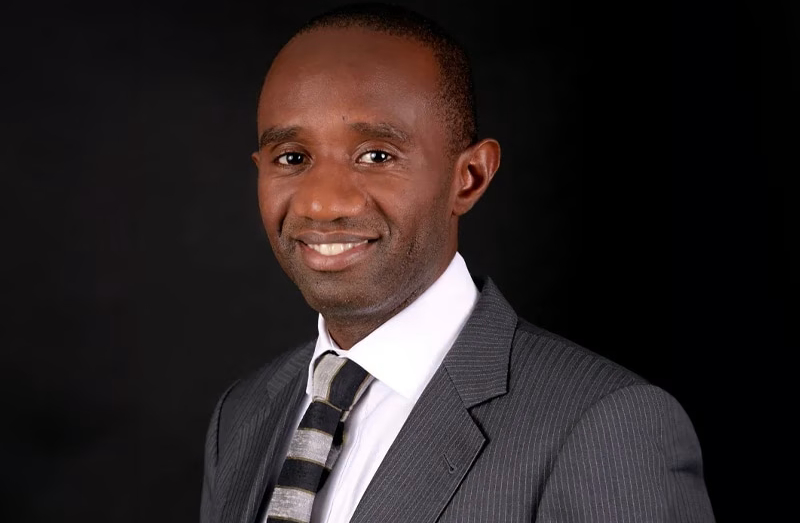
Danladi Verheijen
Interview with Danladi Verheijen
CO-FOUNDER and CEO, VEROD
Lives in: Nigeria
In 2008, Danladi Verheijen co-founded Verod Capital Management, a private equity investment firm focused on West Africa. How we made it in Africa editor-in-chief Jaco Maritz interviewed him about his journey as an investor and the lessons he has learnt along the way.
Topics discussed during the interview include:
- The deal that put Verod on the map
- Backing Moniepoint, an African unicorn
- Why he likes the gym business
- His toughest moments as an investor
- Long-distance running as a metaphor for business
Watch the full interview below:
Interview summary
One of the deals that put Nigeria-based investment firm Verod Capital Management on the map was an investment in beverage cans.
In 2009, Verod acquired a 45.3% stake in GZ Industries (GZI), an aluminium can manufacturer that supplies brewers and soft drink producers. The investment provided GZI with the capital to build its first factory. Until then, beverage cans were imported into Nigeria from as far afield as Latin America and Spain. As Danladi Verheijen, co-founder of Verod, puts it: “You’re shipping air from Latin America.”
GZI commissioned its first factory near Lagos in 2010, followed by a second plant in Aba, in southeastern Nigeria. It expanded beyond Nigeria in 2020 with a facility in South Africa, and most recently opened a factory in Kenya in early 2026.
Verod has reduced its position in GZI over time, including partial sales in 2012 and 2015.
Founding Verod
Verod was started in 2008 by Verheijen and his partner, Eric Idiahi. They had identified a shortage of long-term capital for West African entrepreneurs looking to grow their businesses.
The early years were tough. The private equity industry in West Africa was still young, meaning Verod had to win trust on two fronts. “You had to convince entrepreneurs to trust you, and these entrepreneurs were not used to getting third-party capital into their businesses. We [also] had to convince investors that West Africa was investable, which [was] also a bit of a challenge.”
With no track record to point to, Verod started with real estate investments, knowing it was a sector the investors it hoped to attract were already familiar with. “We did a couple of real estate deals in the early days because we thought we could get money for real estate deals easier,” Verheijen says. As the firm built its credentials, it moved away from property and into the consumer-focused businesses that make up its portfolio today.
Investing in gyms
One of Verheijen’s favourite investments is i-Fitness, a chain of gyms founded in Nigeria in 2015 by entrepreneur Foluso Ogunwale.
Despite operating only around 30 outlets, i-Fitness is already seven times the size of its nearest competitor in West Africa – and Verheijen sees significant room for growth. “Our membership base is basically 1% of 1% of the population of Nigeria. It’s literally nothing. We’re still just scratching the surface,” Verheijen says. “I think [in] the UK, maybe 16 to 18% of the population goes to a gym. In the US, it’s 25 to 30%. So literally, we could be 1,000 times larger.”
Beyond Nigeria, i-Fitness is eyeing expansion into Ghana and Côte d’Ivoire.
Betting on education
Verheijen is also bullish on education. Last year, Verod sold its stake in TAG West Africa, which operates Lancaster University Ghana. The institution offers students a UK degree at a fraction of the cost.
“There’s lots of demand for education,” Verheijen says. “Families will do anything to ensure that their children get a high-quality education. They’ll make all the sacrifices that are necessary to do that.” The trick, he explains, is backing operators who can build strong brands and earn the trust of fee-paying parents.
But traditional education is capital-intensive – campuses, classrooms, staff – and that makes it slow and expensive to expand. For Verheijen, technology offers a way around those constraints. “Most likely the way to meet the students where they are is via technology.”
The case for humility
One of the lessons Verheijen has taken from nearly two decades of investing is the importance of humility. Volatile markets like Nigeria, he says, punish overconfidence.
The firm operates in an environment where it constantly needs to learn. “We need to be very reflective,” he says. When a deal delivers strong returns, the team asks itself whether the outcome was the result of skill or luck. When an investment disappoints, the question is whether the problems could have been foreseen.
“It’s not always us,” Verheijen says. “And if you always think it’s yourself, then there’s a certain amount of hubris, and you don’t learn and you don’t grow. We are only as good as the last fund.”
Long-distance running as a metaphor for business
“There aren’t a lot of times where I’m not working,” Verheijen says. “I find myself working or thinking about work almost around the clock.”
On the occasions he does step away from the office, Verheijen is an avid long-distance runner and has completed marathons around the world, including Tokyo, New York and South Africa’s Comrades ultra-marathon.
For Verheijen, the sport is a metaphor for business. It demands mental fortitude and the courage to even reach the starting line. “Every bone in your body says, this doesn’t make any sense. Let’s just quit now,” he notes. “And you get halfway through, you want to quit. And then you say, hey, look, I’m already halfway. It doesn’t make sense to go back to the starting point. Let’s just get through this.”
He also values the camaraderie – something he sees mirrored in private equity. “It’s really a people business,” he explains. “Even though running sometimes feels like you’re running alone, there’s also this sense of, you know, you’re all in this together.”
“I really enjoy running and just the sense of freedom it gives me and clarity of thought and just really pushing my body,” he says. “It’s not glamorous, but it’s really fun, which feels like what it’s like to build a private equity firm in this region.”
Related articles
Crédito: Link de origem