

From Amazigh Heritage to AI, 24 American Fulbrighters Begin a Year Across Morocco
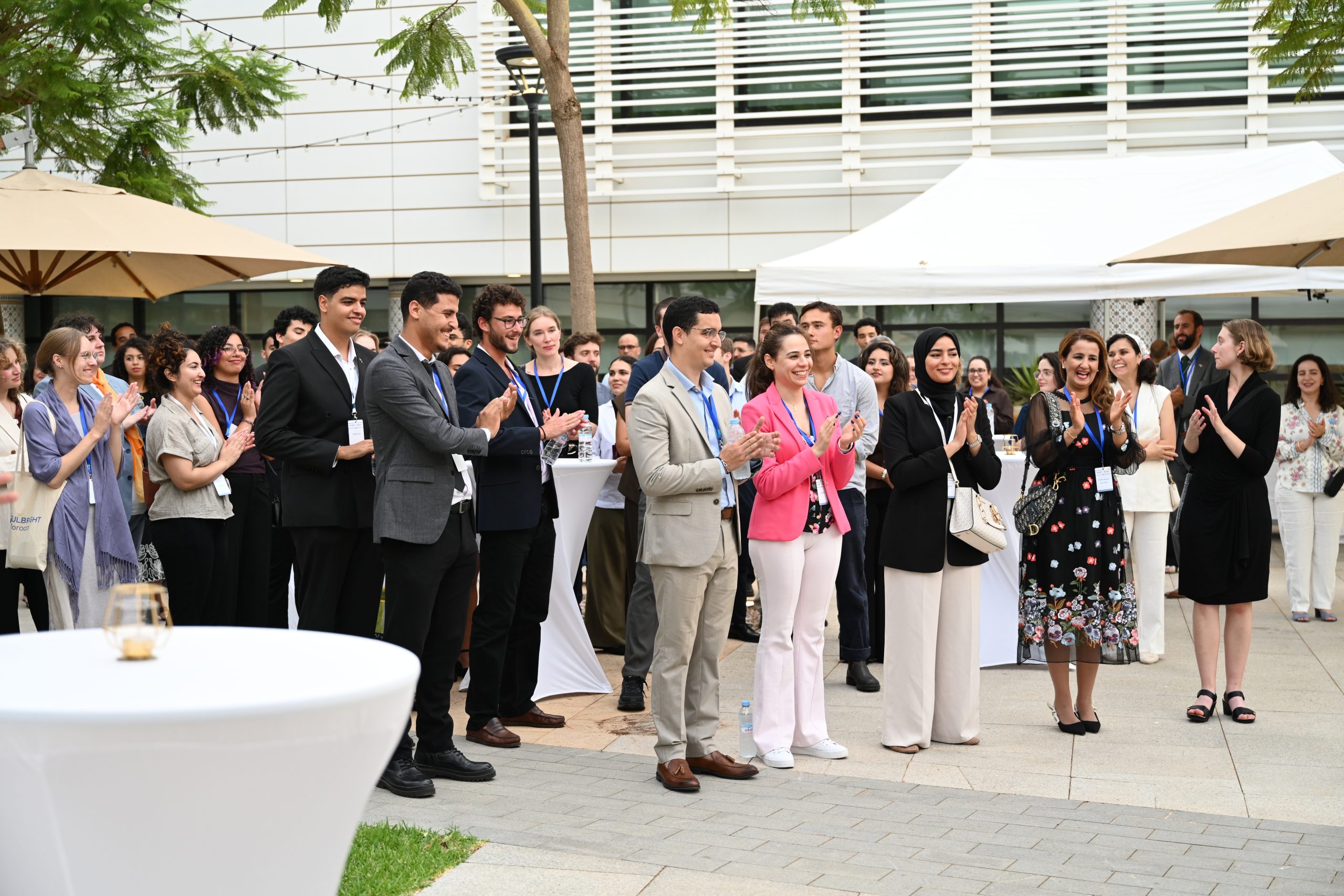
Rabat – From university classrooms and film archives to Amazigh communities and schools across Morocco, 24 American Fulbright grantees will spend the 2026-2027 academic year exploring the country through research, teaching, and cultural exchange.
The new cohort arrived in Morocco this week and began an orientation program in Rabat ahead of a year that will take them well beyond the capital. Their work will bring them into contact with Moroccan students, researchers, educators, artists, and local communities, with projects that touch on artificial intelligence, cultural heritage, education, architecture, cinema, and social change.
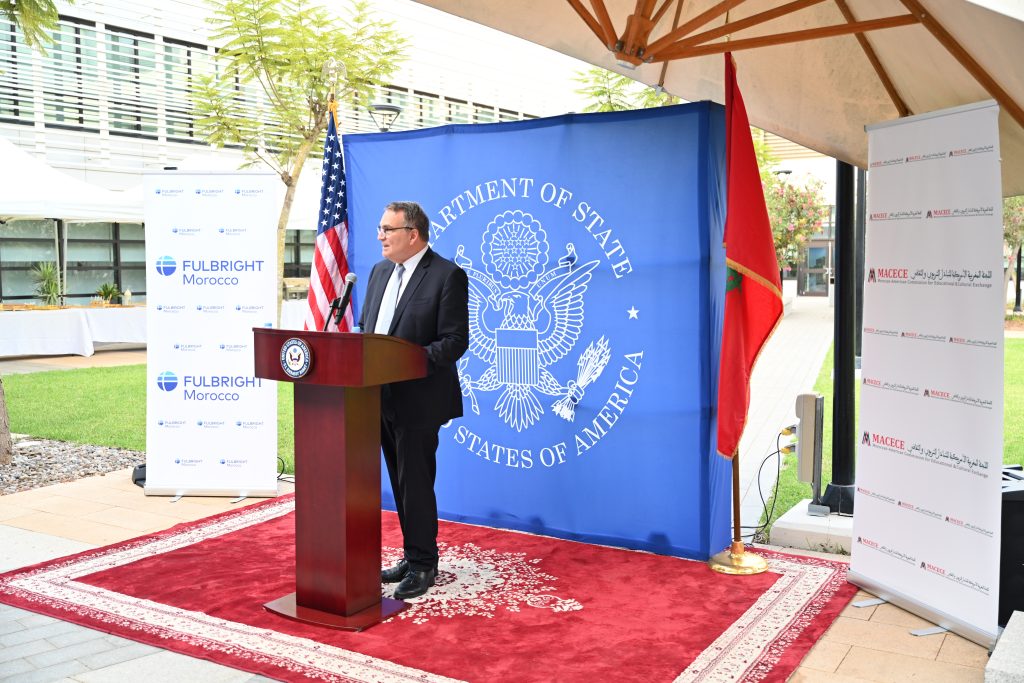
The Moroccan-American Commission for Educational and Cultural Exchange (MACECE) and the US Embassy in Rabat welcomed the grantees at a reception on September 3. The event brought the newcomers together with Moroccan and American Fulbright alumni, MACECE Board members, and diplomats from the US Mission.
The beneficiaries’ arrival carried particular significance in a year of major milestones for the two countries. Morocco and the US are marking 250 years of bilateral friendship, a relationship that dates to Morocco’s recognition of American independence in 1777. The Fulbright Program, meanwhile, celebrates its 80th anniversary in 2026.
From Amazigh cinema to High Atlas heritage
Of the 24 American Fulbrighters, the six Fulbright US Student Researchers will find in Morocco both a place of study and a source of new perspectives.
The student researchers’ projects reflect the country’s diverse cultural and social landscape. One researcher will examine Amazigh representation in Moroccan cinema through fieldwork in Ouarzazate, a city closely associated with Morocco’s film industry.
Another will look at the experiences of French-born Muslim families who have moved to Morocco, with research based in Meknes.
Elsewhere, Fulbright researchers will explore how sustainable tourism could help preserve kasbahs and ksour across the Souss-Massa and Draa-Tafilalet regions. Another project will turn to medieval Maghribi manuscripts and the figure of the calligrapher-sultan.
A project near Taliouine will examine the knowledge traditions of Amazigh women who work within a saffron cooperative, offering a closer look at forms of knowledge that often remain rooted in local communities rather than formal institutions.
Another researcher will work with High Atlas communities affected by the 2023 earthquake to explore participatory AI tools that could help reconstruct and preserve cultural heritage.
The range of these projects gives the program a distinctly Moroccan dimension. Rather than treating the country as a backdrop for academic work, the researchers will engage with specific places, communities, traditions, and questions that shape Moroccan society.
AI, education, and heritage at Moroccan universities
Five Fulbright US Scholars will pursue their work through Moroccan universities, with projects that connect American and Moroccan academic expertise.
At Moulay Ismail University in Meknes, one scholar will study the relationship between the Qur’an and the human senses. At Abdelmalek Essaadi University in Tangier, another will examine agentic artificial intelligence and its possible role in the future of education.
Architecture will be the focus of a project at the National School of Architecture (ENA) in Rabat, where a scholar will use drawings to study urban and landscape spaces along the Bou Regreg.
At Mohammed V University in Rabat, another scholar will focus on physics education for deaf and hard-of-hearing students and examine how AI could make science education more accessible.
The final project will address a different form of preservation. Through the Rabat Genizah Project, a scholar will work on the digital preservation of Moroccan Jewish heritage in partnership with Ibn Zohr University and the Museum of Moroccan Judaism.
These projects place technology alongside history and heritage, while also addressing questions of access and inclusion in education.
A year inside Moroccan classrooms
For the 12 Fulbright English Teaching Assistants, the exchange will take place primarily inside Moroccan classrooms.
The assistants will work with students in cities and towns across the country, including Sale, Casablanca, Mohammedia, Tetouan, Fez, Oujda, El Jadida, Safi, Essaouira, Berrechid, and Ouarzazate. Two will be based in Marrakech.
Before they begin their classroom assignments, the assistants will take part in a dedicated training program designed to help them adapt to their educational roles in Morocco.
The cohort also includes a Fulbright Distinguished Award in Teaching participant, an elementary school educator who will spend the fall examining how Eco Schools programs could support sustainability education in both rural and urban Moroccan schools.
For MACECE Executive Director Rebecca Geffner, the value of the program extends beyond the academic projects themselves.
She noted that the grantees will bring their expertise to communities across Morocco, from Tangier and Tetouan to Marrakech, Essaouira, Ouarzazate, Agadir, Meknes, Oujda, and Taliouine.
Their work, she added, reflects issues that will play an important role in Morocco’s future, including artificial intelligence, education, cultural heritage, urban development, and human capital.
“At its core, Fulbright is about investing in people and advancing cooperation,” Geffner said.
US Embassy Chargé d’Affaires Benjamin Ziff likewise pointed to the personal relationships that emerge from academic exchange.
“Fulbright has been a cornerstone of educational and cultural exchange between the United States and Morocco for decades, creating lasting connections between our people and institutions,” Ziff said.
He described the new cohort as part of a relationship that extends beyond formal diplomatic ties, with their work expected to strengthen academic connections and create new opportunities for the exchange of ideas.
The exchange works both ways
As the American grantees begin their year in Morocco, nearly 50 Moroccan Fulbright recipients have headed in the opposite direction.
The Moroccan cohort will spend the academic year in the US through programs that cover master’s-level study, doctoral and senior-scholar research, Arabic teaching, and professional development.
That two-way movement sits at the heart of the Fulbright tradition. Students, teachers, and researchers cross borders not simply to study another country, but to build relationships that can continue long after their grants end.
For the 2026-2027 cohort, those relationships will take shape in Moroccan schools, universities, cultural institutions, research sites, and communities. In a year that celebrates both the longevity of US-Morocco ties and the eight decades of the Fulbright program, the newest grantees will add another chapter to a people-to-people exchange that has lasted generations.
Credit: Source link