

For Liberia, Industrialization Will Be Measured in Megawatts
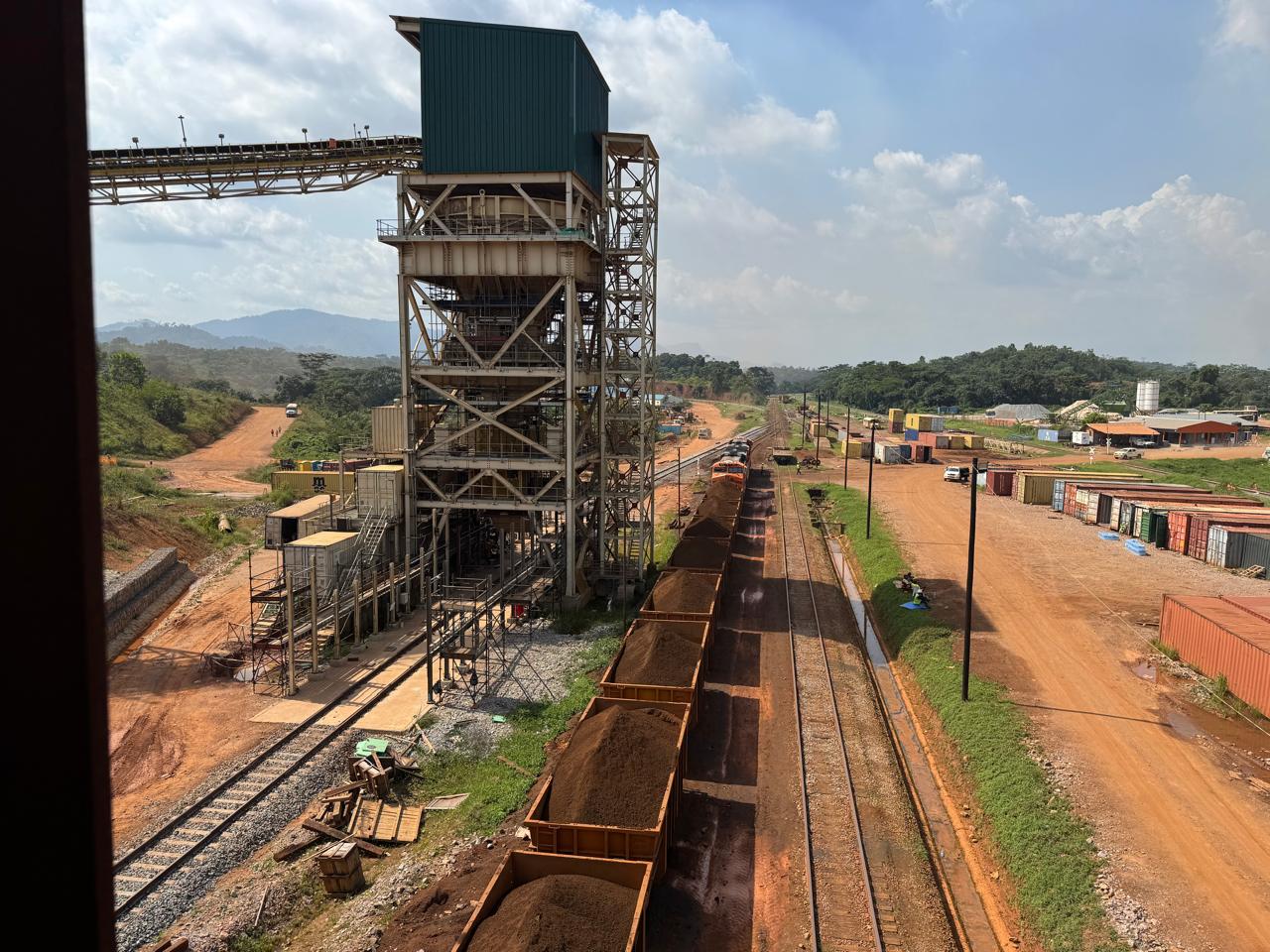
The distinctions between these stages matter and are rarely made clear in policy discussions. A concentrator is primarily a mine optimization asset: it upgrades ore quality and reduces transportation costs, with most of the benefit accruing to the mining company. A pellet plant is an industrial asset: it begins generating spillovers into the wider economy through power demand, technical labor, and logistics. A steel mill is a manufacturing asset. While each stage captures more value domestically and creates broader economic linkages, this is not an argument for Liberia to complete every stage. Our recommendation is for the next phase of iron ore industrialization to target pelletization. But the Government of Liberia must build an energy system capable of making this targeted stage possible.
The energy requirements escalate sharply at each stage. A modern pellet plant processing four million tons annually requires roughly 60 to 80 MW of continuous industrial power. Liberia’s current installed generation capacity is approximately 150 MW — much of it unreliable. Liberia supplements this by importing roughly 50 MW via the Côte d’Ivoire-Liberia-Sierra Leone-Guinea Interconnector, bringing the total available power to an estimated 200 MW. The challenge is therefore not merely attracting investment. It is creating an energy system capable of supporting that investment. As it stands, Liberia’s energy system cannot support the industrial process directly beyond concentrates. Even that process is primarily powered by self-generation: AcelorMittal Liberia has installed 100 MW of heavy fuel oil generation to support its current industry.
Liberia Can Use its Partnership with MCC to Expand Foundational Transmission Infrastructure
Liberia has, at its fingertips, a secret weapon to advance its energy system and meet its industrial ambition. The US Government’s Millennium Challenge Corporation (MCC) provides hundreds of millions of dollars in pure grant funding for large infrastructure investments, coupled with sector reform, in lower-income economies. In 2024, MCC selected Liberia for one of these large investments, and both the Boakai Administration and the MCC have decided that this significant injection of infrastructure money should go to the energy system.
The Government of Liberia and MCC are now in the details of designing exactly what those energy investments and reforms should be and where they should go. This is a huge opportunity to link Liberia’s industrialization ambitions in rubber and iron ore with meaningful, timely, debt-free investments in Liberia’s power sector.
The optimal path for the Government of Liberia is to direct attention where the private sector is least likely to invest: transmission and utility reform. Independent power producers have already shown interest in bringing new generation to Liberia’s power sector; indeed the Liberia Electricity Corporation has signed two major agreements in the last year to deploy an additional 140 MW. These agreements are clear market signals for where the private sector is willing to invest. No such private interest exists on the transmission side. As such, the Government of Liberia should use the public money where it is most needed — transmission and utility reform — to leverage additional private investment in generation.
MCC already has a successful track record working with Liberia in the energy sector. In a previous energy investment from 2016-2021, the Government of Liberia and MCC partnered on a $257 million Compact, $207 million of which joined other donors to rehabilitate the Mt. Coffee Hydropower Plant alongside support for energy utility and regulatory reforms. The investment more than doubled the power generation capacity of the entire country, enabling Mt. Coffee to produce 88 MW. Now it’s time to focus on transmission and grid upgrades and further sector reforms.
MCC’s investment would contribute to closing the gap between current industrial reality and future industrial goals. A Liberian energy sector that can deliver industrial power will require private sector participation and regional power market integration. But that means regulatory predictability, clear rules on tariff setting, cost recovery, and clarification of rules and roles in the sector. Aligning MCC energy investments to identified offtakers and increased export earnings will enable Liberia to meet its clearly articulated industrial goals.
Energy Will Determine Whether Liberia Can Move from Raw Exports to Industrial Value Addition
Liberia’s experience reveals a broader lesson for African industrial policy. Industrialization strategies are often designed as though policy decisions alone can alter economic structure. In reality, industrial transformation is constrained by physical systems.
The progression from raw materials to intermediate products and ultimately to manufactured goods requires a corresponding progression in energy capability. Countries that seek to industrialize must therefore think simultaneously about value chains and power systems. Industrial policy and energy policy are not separate agendas. They are the same agenda.
Having achieved the significant step of establishing political consensus around value addition, Liberia must now take advantage of its forthcoming MCC energy investment to create a reliable, abundant power system that will enable industrial growth. It is rare for the timing to align so perfectly in bilateral engagements. Liberia can use the injection of funds to build out the industrial policy that has endured across past and present administrations.
The future of Liberia’s industrialization will depend less on additional executive orders and more on whether the country can build an energy system capable of supporting increasingly sophisticated production. The path from cup lump to compound rubber, from concentrate to iron pellets, and eventually from commodities to manufacturing is fundamentally a path measured in megawatts.
Credit: Source link