

FAO Warns Somalia of Severe Deyr Flooding as El Niño Strengthens with 90% Rainfall Probability
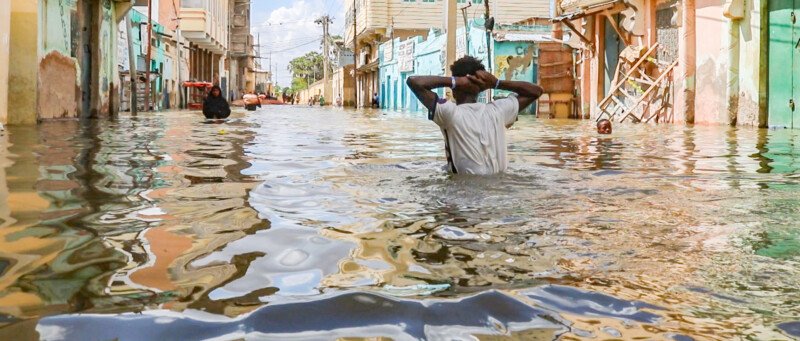
MOGADISHU — A strengthening El Niño weather condition and an exceptionally strong wet-season forecast are raising the risk of significant flooding across Somalia during the October-December (Deyr) 2026 season, the Food and Agriculture Organization of the United Nations (FAO) has warned .
The latest IGAD Climate Prediction and Applications Centre (ICPAC) led Greater Horn of Africa Climate Outlook Forum’s (GHACOF-74) seasonal outlook indicates a strong likelihood of wetter-than-normal conditions across much of Somalia. In the strongest forecast zone, covering large parts of central and southern Somalia, the probability of above-normal seasonal rainfall reaches 90 percent, compared with 5 percent probabilities for near-normal and below-normal rainfall respectively.
“The climate conditions developing ahead of Deyr 2026 bear important similarities to 1997 and 2023, both of which produced severe flooding in Somalia,” said FAO’s Lead Meteorologist Bethwell Mutai . “The 90 percent probability is an exceptionally strong wet signal. It does not mean flooding is certain, but it tells us that we must use the lead time available to act before impacts occur.”
ICPAC identifies 1997 and 2023 as important analogue years for the evolving climate conditions: both years saw severe Deyr flooding . Historical information compiled by the Food Security and Nutrition Working Group (FSNWG) indicates that the 1997 floods caused more than 2,300 deaths in Somalia. While the 2023 Deyr still brought widespread displacement, infrastructure damage, crop and livestock losses and disease outbreaks, extensive loss of life was mitigated by effective Early Warning and Early Action.
Dr Mutai emphasized that while the analogues are not predictions that 2026 will be the same as or similar to 2023 and 1997, they demonstrate the scale of impacts that can occur when strong El Niño conditions coincide with enhanced Deyr rainfall.
October is expected to have a high likelihood of wetter-than-usual conditions, with particularly strong probabilities over parts of Somalia and Ethiopia, including the Juba and Shabelle river catchments. Wetter conditions are expected to persist through November, while the wet signal over Somalia becomes less pronounced by December. An earlier-than-average onset is also forecast over parts of southern and central Somalia where there is more than a 90 percent probability of seasonal rainfall exceeding 300 mm.
“A dry spell within a very wet season should not be viewed as the emergency being over. It may instead be the moment when humanitarian agencies can move. An eight-to-ten-day break could provide a critical window for access, evacuations and delivery of assistance before the next rainfall episode,” Dr Mutai said .
FAO’s Preparedness and Anticipatory Action
FAO cautions that a local dry spell does not necessarily mean river flood risk has subsided. Juba and Shabelle river levels may remain high or continue rising because of earlier or upstream rainfall and the time required for flood waves to move downstream.
FAO, through SWALIM, has already begun translating the seasonal warning into operational flood preparedness information. This includes mapping flood-prone areas and potential safe high grounds, identifying evacuation routes, analysing vulnerable river breakage points along the Juba and Shabelle rivers, updating flood-extent maps and estimating populations potentially exposed to flooding. FAO is disseminating this information broadly amongst stakeholders to support timely anticipatory action under Government leadership.
FAO and IOM have also been working on an innovative new platform known as SAFE converging climate and human mobility data. “By combining flood-extent and river-breakage analysis with information on exposed populations, safe high grounds and evacuation routes, we can identify not only where flooding is likely to occur, but also where people are most at risk and the options available for moving them to safer areas,” said Craig Vonhagen, SWALIM GIS Technical Advisor.
“The value of these products is in turning early warning into practical decisions. As we move closer to the season, increasingly detailed information can help Government and humanitarian partners determine where to prioritize preparedness, pre-position resources and, when necessary, act before communities are affected,” said Ugo Leonardi, SWALIM Technical Advisor .
FAO Somalia will continue monitoring the evolution of Deyr 2026, including rainfall forecasts and observations, upstream catchment conditions and Juba and Shabelle river levels. Seasonal guidance will increasingly be complemented by sub-seasonal, weekly and short-range forecasts to support more targeted preparedness and response.
Critical Note
The FAO warning highlights the urgent need for proactive preparedness as Somalia faces the prospect of severe flooding during the Deyr season. The 90 percent probability of above-normal rainfall in parts of central and southern Somalia, combined with the strengthening El Niño, signals a significant risk that requires immediate attention.
The historical parallels to 1997 and 2023 are sobering. The 1997 floods caused more than 2,300 deaths, while the 2023 floods brought widespread displacement and infrastructure damage. The fact that extensive loss of life was mitigated in 2023 by effective Early Warning and Early Action demonstrates that preparedness works, but only if resources are available and action is taken.
FAO’s operational windows for anticipatory action, including acting before the rains, intensifying action as flood risk emerges, using forecast dry spells as humanitarian access windows, and maximizing the recovery benefits of rainfall, provide a clear framework for response. However, the effectiveness of these measures will depend on the government’s ability to coordinate with humanitarian partners and the willingness of donors to fund preparedness activities.
The international community must recognize that investing in flood preparedness is not just a humanitarian imperative but a strategic necessity to prevent further displacement, instability, and the erosion of fragile governance gains. Without sustained commitment and resources, the cycle of disaster and response is likely to continue.
Recommended Reading On ftlsomalia.com
Credit: Source link