

EXPLAINER – Putin’s 1st Kuril Islands visit: What is the territorial dispute between Japan, Russia?
Burc Eruygur
13 August 2026•Update: 13 August 2026
- Territorial dispute ongoing surrounding 4 southernmost Kuril Islands, including Iturup and Kunashir, which Tokyo calls Etorofu and Kunashiri, respectively
- Unresolved territorial dispute has prevented signing of a peace treaty between Tokyo, Moscow since World War II
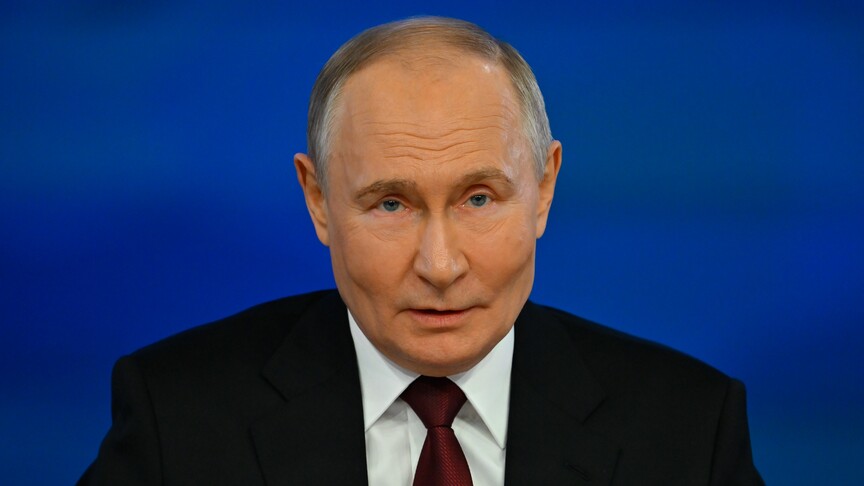
Russian President Vladimir Putin on Thursday made his first in-person visit to the Kuril Islands, which have been the site of an ongoing dispute between Japan and Russia for over 80 years.
According to the Kremlin, Putin visited the island of Iturup while accompanied by Valery Limarenko, governor of Russia’s Sakhalin region in the country’s Far East, where he visited a fish processing complex, as well as a local hospital and school.
While this was Putin’s first visit, Russian government officials have previously visited the islands, most recently Prime Minister Mikhail Mishustin in 2021.
Dmitry Medvedev, deputy head of Russia’s Security Council, was the first Russian president to visit the Kuril Islands back in 2010
Putin’s visit was strongly protested by Japan, with Prime Minister Sanae Takaichi describing the disputed islands as “inherently Japanese territory both historically and under international law.”
What are the Kuril Islands?
The Kuril Islands are an archipelago of numerous volcanic islands and islets that separate the Sea of Okhotsk from the northern Pacific Ocean.
The island chain lies between the southernmost point of the Kamchatka Peninsula in the Russian Far East and the northeastern point of Japan’s northernmost island of Hokkaido, stretching approximately 1,300 kilometers (807 miles).
Along with the island of Sakhalin, the Kuril Islands currently make up Russia’s Sakhalin Oblast, one of the country’s 83 federal subjects.
Why are Russia and Japan fighting?
The territorial dispute surrounding the Kuril Islands emerged during World War II, when the Soviet Union declared war on Japan in August 1945 and then seized the island chain.
Among the territories it seized include the archipelago’s four southernmost islands: Iturup, Kunashir, Shikotan and the Habomai islets, as referred to by Russia.
However, Japan disputes Russia’s sovereignty over the four islands, which it defines as its “Northern Territories.” It also calls the islands of Iturup and Kunashir as Etorofu and Kunashiri, respectively.
Tokyo says that the four disputed islands are an “inherent territory of Japan” under Russian “occupation.” Meanwhile, Moscow says that its sovereignty over the Kuril Islands was determined by the results of World War II
The unresolved territorial dispute has prevented the signing of a peace treaty between the two countries since World War II.
Have there been efforts to resolve the dispute?
Despite Moscow and Tokyo having yet to sign a formal peace treaty, both capitals signed a joint declaration in 1956 that ended their state of war and restored diplomatic relations.
As part of the declaration, the Soviet side agreed to transfer Shikotan and the Habomai Islands to Japan once a formal peace treaty was concluded, though little meaningful developments occurred on the issue during the Cold War era.
Negotiations continued after the Cold War, producing results such as the 1993 Tokyo Declaration and 2001 Irkutsk Statement, the latter of which reaffirmed the 1956 declaration as the baseline legal foundation for peace talks.
Talks intensified under the administration of then-Japanese Prime Minister Shinzo Abe, who agreed with Putin to intensify negotiations to draft a peace treaty, based on the 1956 declaration, back in 2018.
However, the process collapsed with the start of the Ukraine war in 2022, when Russia suspended peace-treaty negotiations due to Tokyo’s sanctions against Moscow.