

Exiled Cuban artist Luis Manuel Otero Alcántara exhibiting in Miami
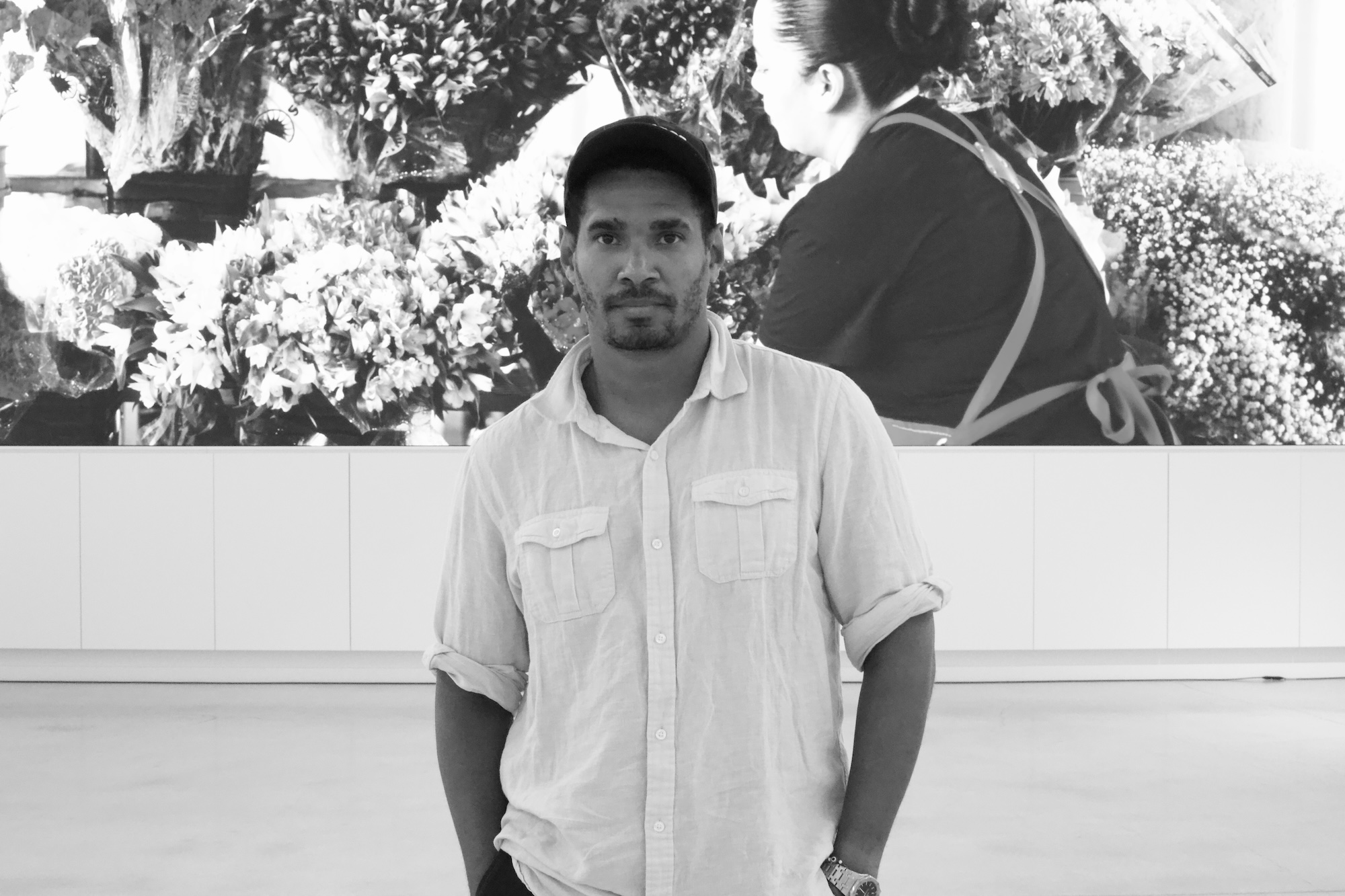
Provided by the Museum of Art and Design at Miami Dade College
Less than one month ago, Luis Manuel Otero Alcántara’s whereabouts were unknown.
The dissident artist, a cofounder of Cuba’s San Isidro Movement, which has protested censorship and artistic repression on the island for the better part of a decade, was awaiting approval of a parole request from the U.S. after spending five years in prison for “defiling” the Cuban flag during the historic July 2021 protests, which broke out in response to worsening economic conditions following the COVID outbreak. Earlier that same year, draped in a Cuban flag, Otero Alcántara appeared in the music video for “Patria y Vida,” a track that subverted the Cuban Revolution motto “Patria o Muerte” (“Homeland or Death”) to protest the country’s government.
On July 18, he went into exile in Miami.
“Luis Manuel should never have spent a single day in prison,” Ana Piquer, Amnesty International’s Americas Director, said upon his release. “What he endured will remain a symbol of how the Cuban government has used the criminal justice system to punish art, dissent and freedom of expression.”
This Friday, Aug. 14, Otero Alcántara will exhibit his latest work in friendlier territory: Downtown Miami’s Freedom Tower. The program comprises a live performance, reception, and conversation between the artist and Ernesto Fundora, who directed a documentary about Otero Alcántara’s life and work. Telemundo’s Gloria Ordaz will moderate.
The setting holds special significance for the artist.
“For me, the Freedom Tower has been — and is — one of the most important opportunities of my career,” the artist tells New Times in an exclusive statement. “For me, the Freedom Tower is the cathedral of the Cuban exile community — all those Cubans who came [here] in the 1960s and 70s. That was the threshold of light. The place where they were welcomed, where there was so much despair, so much sadness, and in that place they found light, love, a welcome to a new country, a new homeland.”
Sometimes referred to as the “Ellis Island of the South,” the Freedom Tower was home to the Cuban Assistance Center from 1962 to 1974. For many Cubans who left the island following the Revolution, the processing center was the first place they saw in the U.S. The structure has lived many lives since then, but in recent years, the Museum of Art and Design, housed inside the Freedom Tower under the stewardship of Miami Dade College, has exhibited shows that nod to its crucial role in Cuban-American history.
Dr. Amy Galpin, MOAD’s executive director and chief curator, says Friday’s event and exhibition are very much in line with the Freedom Tower’s work and mission.
“Our Freedom Tower Archive now includes more than 600 testimonies from people whose lives have been touched by our community,” says Dr. Galpin. “Many of these stories reflect the hope, resilience, and perseverance that define the Cuban exile experience. Our presentation of Luis Manuel Otero Alcántara’s work serves as another powerful form of testimony — one expressed through art. We are proud to share his voice and provide a space for his artistic practice to contribute to this ongoing story of freedom, resilience, and the human experience.”
The show comes at a fraught time for Cuban-American relations. Last week, the New York Times reported that U.S. intelligence agencies are weighing regime change options on the island. That follows a significant escalation in May 2026, when the U.S. Department of Justice announced it had indicted former Cuban President Raúl Castro (brother of Fidel Castro) in the fatal 1996 shootdown of two Brothers to the Rescue planes.
The announcement took place at the Freedom Tower.
Luis Manuel Otero Alcántara: Nos Encontramos. 6 p.m. Friday, August 14, at the Museum of Art and Design (MOAD) at MDC, 600 Biscayne Blvd., Miami; 305-237-7700; moadmdc.org. Admission is free with RSVP via eventbrite.com.