

Eni Gets Exploration Block offshore Gambia
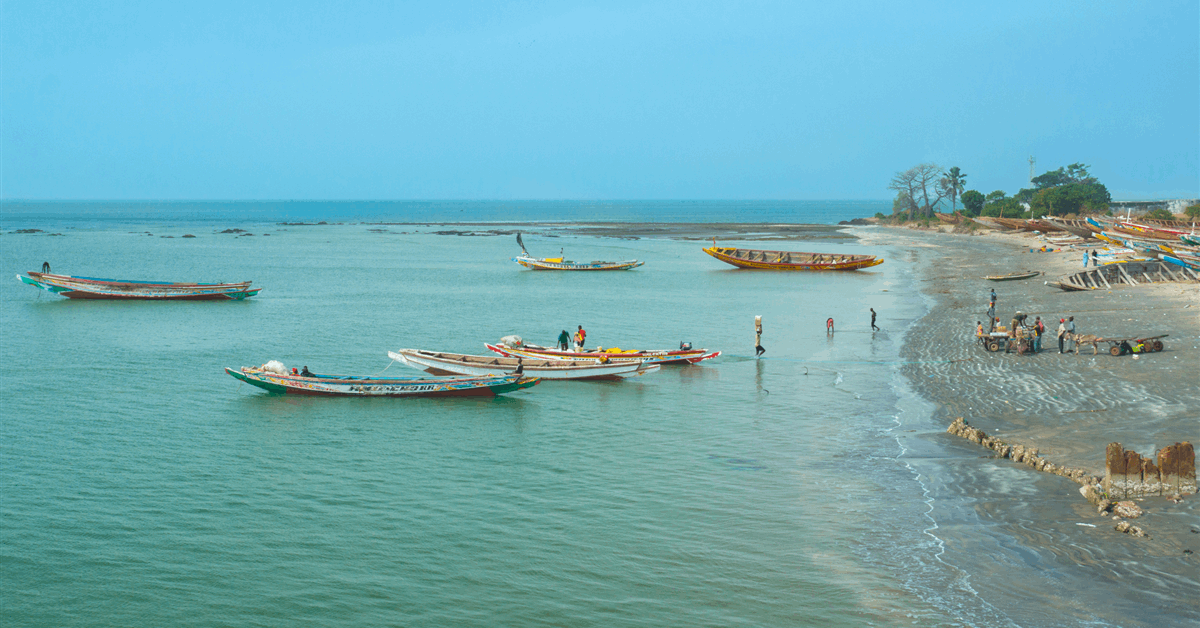
Eni SpA has won an exploration block in Gambian waters, expanding its footprint in the West African segment of the Atlantic margin.
Eni executed a Petroleum Exploration Development and Production License Agreement for Block A1, which spans 1,300 square kilometers (501.93 square miles) in an area with water depths of 1,250-3,300 meters (4101.05-10,826.77 feet).
“The Block is located in a region of the Atlantic margin with proven hydrocarbon discoveries”, Eni said in a press release.
“Eni’s entry into The Gambia is in line with the Company’s exploration strategy focused on building a geographically diversified portfolio which includes opportunities in proven but still underexplored and emerging areas and frontier ones with high potential”.
Elsewhere in West Africa Eni and its partners recently sanctioned the third-phase development of Côte d’Ivoire’s biggest hydrocarbon discovery.
Phase 3 of Baleine, discovered about 5 years ago, will increase the field’s oil production from 60,000 to 150,000 barrels per day and natural gas output from 80 to 200 million cubic feet a day, according to Eni.
“All gas produced will be allocated to the domestic market, contributing to Côte d’Ivoire’s energy needs, expanding electricity generation and supporting the country’s industrial development”, Eni said in a media release May 25.
Baleine, which in 2021 became the Ivory Coast’s first commercial fossil fuel discovery since 2001, currently produces over 62,000 barrels a day of oil and more than 75 million cubic feet per day of gas, according to Eni.
Currently Eni owns 47.2 percent in Baleine, which will be reduced to 37.2 percent after the completion of a 10 percent sale to the State Oil Company of the Azerbaijan Republic. Vitol holds 30 percent. Ivory Coast’s state-owned Petroci has 22.75 percent.
Also this year Eni made a “significant” gas and condensate discovery under a separate license off the Ivorian coast, Block CI-501.
Calao South, or the Murene South-1X well, reinforces the Calao channel complex as the Ivory Coast’s second-biggest proven hydrocarbon site after Baleine, according to Eni. In the adjacent CI-205 block, Eni discovered Calao (Murene-1X) in 2024, declaring it the second-largest fossil fuel discovery in the Ivory Coast with preliminary estimates of 1-1.5 billion boe.
“The discovery, named Calao South, confirms the potential of the Calao channel complex that includes also the Calao discovery and represents the second largest in the country after Baleine, with estimated volumes of up to 5.0 Tcf [trillion cubic feet] of gas and 450 million barrels of condensate (approximately 1.4 billion barrels of oil)”, Eni said in an online statement February 16. “The discovery was made in high-quality Cenomanian sands”.
Eni operates Block CI-501 with a 90 percent stake. Petroci owns 10 percent.
At the end of last year Eni had 6.89 billion boe in net proven reserves, according to its annual report for 2025.
Under its 2026-30 plan Eni expects to average over 140 percent in reserve replacement ratio. The plan aims to grow annual production by 3-4 percent over the 5 years. Eni reported a production of 1.73 million boe per day for 2025.
To contact the author, email jov.onsat@rigzone.com
Generated by readers, the comments included herein do not reflect the views and opinions of Rigzone. All comments are subject to editorial review. Off-topic, inappropriate or insulting comments will be removed.
Credit: Source link