

Emerging Houthi–Al-Shabaab co-operation and the growing threat to Red Sea shipping

In a region crucial to global trade, ideological rivals may now be working together. United Nations and American intelligence reports suggest that Yemen’s Houthi insurgents and the Somali group Al-Shabaab — considered Al-Qaeda’s strongest affiliate — are exchanging logistical and military resources, despite having no formal alliance.
These reported exchanges involve military technology, potentially expanding Al-Shabaab’s operational reach beyond Somalia and further destabilizing an already fragile region.
The Ansar Allah movement (whose supporters are known as the “Houthis”) controls part of northern Yemen and has the military capacity to disrupt shipping in the Red Sea. Al-Shabaab controls large swaths of Somali territory and continues to wage an armed insurgency against the central government.
As part of my doctoral research in political science at the University of Montréal, I have focused on security dynamics in the Horn of Africa and, more broadly, the Red Sea basin, one of the world’s most important maritime trade corridors linking Asia and Europe through the Suez Canal.
Opportunistic ties
The first reports of co-operation between the two groups emerged in 2024. The UN Panel of Experts on Yemen was the first to warn about growing arms trafficking between the coasts of Somalia and Yemen, both of which have been affected by conflict since 1991 and 2014 respectively.
The same panel has also raised concerns about growing logistical and operational ties between the two organizations.
(AP Photo/Farah Abdi Warsameh)
Houthi leaders are believed to have travelled to Somalia to establish direct ties with Al-Shabaab. It’s also possible that intermediaries linked to criminal networks connected to both groups have facilitated these contacts. Smuggling — including arms trafficking — has long flourished along the coasts of the Horn of Africa and Yemen.
At first glance, co-operation between the two groups may appear counter-intuitive. The Houthis are affiliated with Zaydi Shiism, whereas Al-Shabaab adheres to a hard-line Sunni ideology that is strongly anti-Shia.
Yet shared material interests between ideologically opposed forces are nothing new. The Houthi movement seeks to expand its regional influence and diversify its sources of revenue, while Al-Shabaab aims to strengthen its military arsenal.
Al-Shabaab’s search for drones
According to the UN, Al-Shabaab militants have reportedly received training in Yemen in drone operations and the manufacture of sophisticated explosive devices. The group hopes these capabilities will make its attacks against Somali government forces and their international backers more effective and deadly.
The Houthis are also believed to have supplied armed drones to Al-Shabaab militants, who have reportedly requested guided missiles as well. Widely used in Houthi attacks on ships in the Red Sea and Gulf of Aden between 2023 and 2025, such weapons would significantly expand Al-Shabaab’s operational capabilities both inside Somalia and beyond.
So far, the organization has used drones mainly for surveillance and intelligence gathering. The acquisition of offensive drones would provide a major advantage against a Somali army already struggling to contain the insurgency.
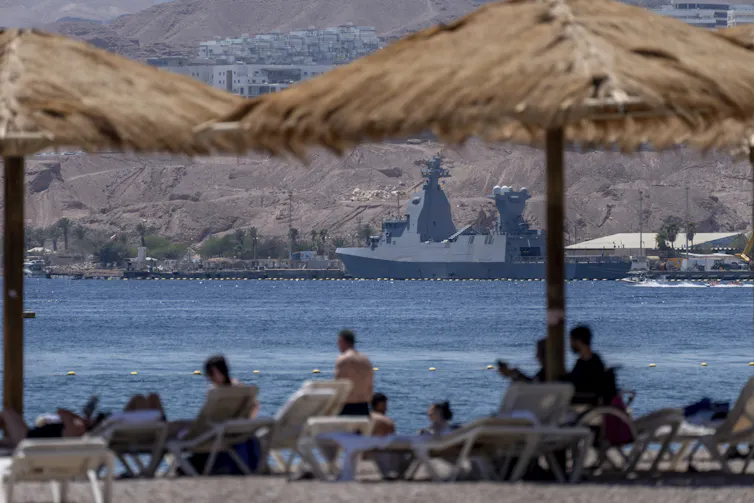
(AP Photo/Ohad Zwigenberg)
Steady territorial expansion
Since emerging in the mid-2000s, Al-Shabaab has become the most powerful Al-Qaeda affiliate in the world. It now controls large swaths of territory across central and southern Somalia. Its resilience stems largely from the military, political and economic failures of the Somali government and its foreign backers.
Al-Shabaab has thrived amid the faltering effort to rebuild the Somali state along federal lines. In particular, the group exploits often-violent rivalries between the federal army and regional forces seeking greater autonomy. Its militants have capitalized on these deepening divisions as the central government in Mogadishu attempts to consolidate political and economic power.
International forces deployed alongside the Somali army since the mid-2000s — particularly those of the African Union — have also struggled to contain the group.
The United States has faced similar difficulties. In 2025, the number of American airstrikes in Somalia reached a record high. While these strikes have weakened the Islamic State group in northern Somalia — which is also suspected of maintaining links to the Houthis — they have had little effect on Al-Shabaab’s territorial hold.
Risks of growing regional instability
Following Operation Hilaac (“Lightning”) — carried out with American support against the Islamic State in the autonomous northern region of Puntland — a new offensive, Operation Onkod (“Thunder”), is being prepared against Al-Shabaab in a coastal area west of Puntland.
The group’s militants are therefore reinforcing their presence there. Although still limited for now, their activities could eventually spill over into the Gulf of Aden, a corridor through which nearly 30 per cent of global container traffic passes.
Between 2023 and 2025, this maritime route had already experienced severe instability due to Houthi attacks in the Red Sea carried out in support of Palestinians. These operations diverted the attention and resources of international forces in the region, contributing to a resurgence of pirate attacks off the Somali coast. Although these attacks have since declined, renewed instability cannot be ruled out.
A stronger Al-Shabaab presence in northern Somalia could further aggravate the situation. At the same time, the Houthis could also fuel instability across this maritime corridor amid the open conflict involving Iran, the United States and Israel since February. The global economy, already vulnerable to disruptions in the Strait of Hormuz, would become even more fragile.
Credit: Source link