

ELTEL Drags Ngafuan to Court Over US$355K Payment | Legal
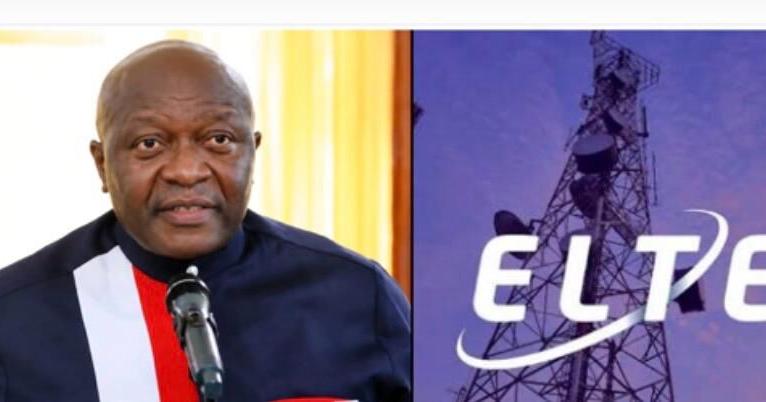
ELTEL Network Liberia has taken its decade-long debt dispute with the Liberia Electricity Corporation (LEC) to the Supreme Court, asking the Supreme Court to compel Finance and Development Planning Minister Augustine Kpehe Ngafuan to pay a remaining US$355,106 judgment balance.
The Swedish engineering company filed a Petition for a Writ of Mandamus after the Debt Court for Montserrado County denied its attempt to enforce a shutdown of LEC over the unpaid judgment. Ngafuan is first respondent and LEC second respondent.
ELTEL alleges President Joseph N. Boakai instructed the finance minister to settle the judgment, but Ngafuan failed to execute the directive.
“The 1st Respondent has flatly refused, failed and neglected to give full effect to the Mandate of the President of this Republic,” ELTEL’s lawyers, led by Attorney-in-Fact Hans Armstrong, a British national, told the Supreme Court.
Debt Court Ruling
Debt Court Judge James E. Jones’ August 25, 2026 ruling denied ELTEL’s Bill of Information seeking enforcement of an order that could have resulted in LEC closure.
Jones disclosed that President Boakai had, on July 3, 2026, written Ngafuan concerning payment of judgment debts in two cases, including ELTEL’s.
Jones said it would be inappropriate to order LEC to pay the same judgment again when the President had directed the Finance Ministry to settle it.
“This Court says, that with the Order having already been made to the Minister of Finance and Development Planning to pay the balance of the Judgment Sum in this Court, it would be out of order for this Court to revert to the LEC for payment thereof,” Jones ruled.
US$355,106 remains unpaid from the US$415,327.08 judgment.
Decade-Long Dispute
The case dates to a 2016 agreement under which ELTEL Networks supplied low-voltage electrical materials to LEC for last-mile electrification.
An arbitration panel appointed by the Debt Court found LEC liable for US$309,929.40, later increased to US$364,929.40.
The approved Bill of Cost dated December 18, 2025, brought the judgment to US$415,327.08. LEC acknowledged the debt.
When payment was not made in full, the Debt Court issued a writ of execution on January 5, 2026, leading sheriffs to seal LEC’s Waterside headquarters.
On January 20, Chamber Justice Jamesetta Wolokollie lifted a stay order, and on January 23, the full Supreme Court affirmed the closure order authorizing enforcement against LEC.
LEC paid US$51,915.89 on March 3, 2026, followed by US$8,306 two days later, bringing total payments to US$60,221.89. ELTEL claims US$355,106 remains.
National Security Argument
The dispute intensified after Solicitor General Cllr. Augustine Fayiah entered the case and argued enforcement could disrupt national power services.
On February 13, 2026, Fayiah urged the court to suspend garnishment, citing the impact on electricity services.
Jones referenced the national security argument, describing electricity provision as a national security concern and noting LEC could not pay the judgment in bulk while maintaining operations.
The court ordered LEC to pay the remaining amount by May 30, 2026, and submit a payment plan. ELTEL says those requirements were not fulfilled.
The Mandamus Question
Mandamus generally compels a public official or institution to perform a clear legal duty that is not discretionary.
ELTEL is expected to argue that, following the President’s July 3 directive and court judgments, payment has become a ministerial obligation.
The Finance Ministry could challenge it over availability of appropriated funds and whether a presidential directive alone constitutes sufficient legal authority to disburse public funds.
It also raises whether the Executive can assume responsibility for a judgment against a state-owned corporation without additional legislative or statutory action.
Investor Confidence at Stake
The case has implications for Liberia’s investment climate.
ELTEL has secured decisions through arbitration and Liberian courts and obtained enforcement measures. The company says it remains without full payment.
Foreign contractors and investors doing business with state-owned enterprises could closely watch the outcome.
The Supreme Court must decide whether to grant the writ and compel Ngafuan to act.
If granted, the decision could force the Finance Ministry to disburse US$355,106. If denied, ELTEL could be left with a final judgment, a presidential directive acknowledging the need for payment, and an unresolved balance.
The case places the Supreme Court at the center of a dispute involving judicial enforcement, executive authority, public finances, national security and investor confidence.
Credit: Source link