

Egypt’s water dispute with Ethiopia overshadowed by rising Horn of Africa tension, experts say
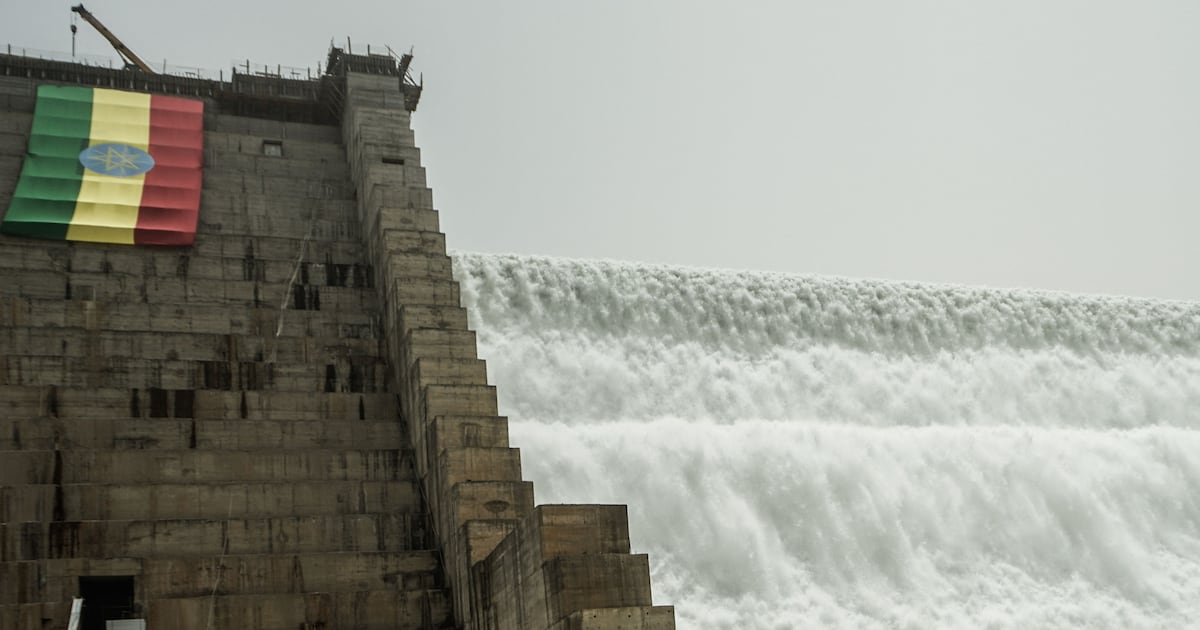
Egypt’s water dispute with Ethiopia has been overshadowed by growing tensions in the Horn of Africa, relegating what Cairo sees as an existential issue to just one strand in a complex web of rivalries in the region, according to experts.
However, sources familiar with Egypt’s thinking say its high-octane drive to pressure Ethiopia into showing flexibility on the 15-year-old dispute has not waned, with Cairo broadening its military footprint in the Horn of Africa and stymying attempts by the landlocked country to gain access to the Red Sea coast.
Egypt, one of the world’s driest countries, insists that the giant hydroelectric dam Ethiopia has built on the Nile will reduce its share of the river’s water, threatening millions of agricultural jobs and its delicate food balance.
The Grand Ethiopian Renaissance Dam, completed last year, has not yet affected the flow of water into downstream Egypt, thanks to bountiful rains on the Ethiopian Highlands, the source of the Nile’s main tributary, the Blue Nile.
But Cairo remains alarmed that Ethiopia might not allow sufficient water to flow downstream to Egypt, the most populous Arab nation with 110 million people, and Sudan, its ally and fellow downstream nation, in the event of a persistent drought.
President Abdel Fattah El Sisi, Egypt’s leader of 12 years, has ruled out military action to resolve the dispute, but his government has been flexing its military muscle in the Red Sea and the Gulf of Aden off the coast of the Horn of Africa and securing port and supply facilities for its southern fleet in Eritrea, Somalia and Djibouti – all neighbours of Ethiopia.
Egypt has also been seeking to isolate Ethiopia by reaching military co-operation agreements with other nations in the region. It has deployed a large military contingent in Somalia and secured naval facilities or contracts to upgrade ports in the area with the intention of participating in their future management.
On a parallel track, it has been looking to the US President Donald Trump to make good on a promise made in the early days of his second term to mediate a resolution of the dispute with Ethiopia, something that has been eclipsed by Washington’s war with Iran.
But the experts contend that the Egypt-Ethiopia dispute has evolved away from the dam and its likely impact on Egypt’s water share and into a much more complex, broader phase of regional tensions with the potential to morph into open hostilities.
“The current situation in the Horn of Africa has created new conditions in which the issue of the dam, while still a central one, is linked to a broader and more important geostrategic situation,” said Mohammed Hegazi, a retired career diplomat from Egypt who is now an expert on Nile politics.
The broader Horn of Africa picture, he explained, includes the risks posed to freedom of navigation and security in the Red Sea, Ethiopia’s ambition to have a military and trading foothold there and its overtures towards the breakaway region of Somaliland, where it wants a permanent outlet on the Red Sea.
Tension between old enemies Eritrea and Ethiopia is another layer, together with the civil war in Sudan, the potential of which to draw in regional states has grown significantly.
Already, Sudan’s military-aligned government accuses Ethiopia of aiding its adversary, the paramilitary Rapid Support Forces (RSF), which, in turn, accuses Egypt of supporting the military. The military-backed government also accuses Kenya and factions in Libya of aiding the RSF.
“The issue of water must be viewed beyond just the Ethiopian dam,” said Mr Hegazi. “It should be part of a larger vision in which the security of the Red Sea and the fair distribution of the Nile water are integrated.”
All this leaves Egypt to fend for itself against what it considers an existential threat posed by Ethiopia’s dam.
According to the sources, suggestions by Ethiopian officials that their country plans to build more dams on the Blue Nile have added to Cairo’s alarm.
They said Egypt has been left with no choice but to try to squeeze Ethiopia harder, to continue to lobby strongly on the international and regional stage against allowing Addis Ababa a permanent foothold on the Red Sea coast, and to intimidate it with a growing military presence in a region where it has long viewed itself as the dominant power.
Egypt has long sought a legally binding agreement with Ethiopia in which its experts and those of Sudan could be active partners with Addis Ababa in operating the dam. It has also been campaigning for a high level of co-operation on Nile water distribution and Nile-linked development projects with its 10 fellow Nile Basin nations.
Ethiopia has baulked at foreign participation in running the dam while trying to reassure Egypt and Sudan that they would not be affected. It refused to sign a US-mediated agreement on the dam during President Trump’s first term.
“Egypt now wants an Ethiopia that either enters an agreement on the dam, collapses internally or suffers a meltdown,” said Michael Hanna, director of the US programme at the International Crisis Group.
“It’s very difficult to see how the United States can force Ethiopia’s hand over the issue of the dam at present,” said Mr Hanna
He cited Washington’s preoccupation with Iran, Mr Trump’s focus on midterm elections later this year, and the likelihood of a strong pushback by Addis Ababa’s own regional backers.
“Besides, a lot of people are concerned that the general state of the Horn of Africa and the reorganisation of alliances there could result in war breaking out again, possibly between Ethiopia and Eritrea,” Mr Hanna said.
“Those new Horn of Africa alliances, of which Egypt has become a part, have left a mark on every part of that region.”
Credit: Source link