

Egypt’s Red Sea problems mount as Houthis take territory
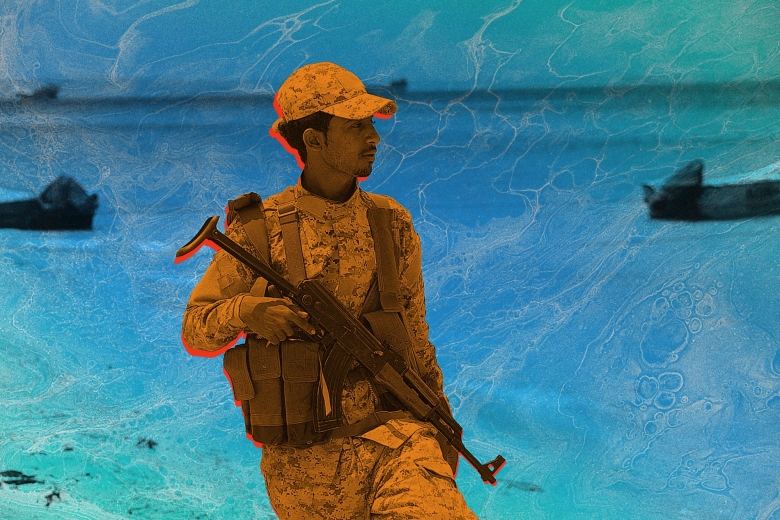
The Houthi militia’s advances along the western coast of Yemen in recent days pose a serious strategic challenge for Egypt. These gains mean the Iran-backed group can disrupt or even close the Bab al-Mandab Strait, effectively cutting off Egypt’s Suez Canal as a global shipping transit route.
Houthi territorial seizures along the crucial waterway are the latest Red Sea setback for Cairo. Before the start of the US-Israeli war on Iran on 28 February, Red Sea shipping was slowly beginning to return to something resembling normal levels after Houthi attacks in support of Gaza in 2023-24 led to operators choosing longer but safer routes around Africa.
Egypt was not the Houthis’ primary target, but it still felt the impact, losing billions of dollars in Suez Canal transit fees. Together with other factors, this strained Egypt’s economy and forced a bailout from international financial institutions.
Since Iran closed the Strait of Hormuz in March, which prevented much of the Gulf states’ oil and gas from being exported, producers have been searching for alternative outlets. Egypt offered to take oil from Saudi Arabia’s prolific eastern fields, pumped across the country via the East-West Pipeline to the Red Sea port of Yanbu on Saudi Arabia’s western coast. That oil would then be shipped to the Egyptian Red Sea coast on the opposite side, where it would be pumped via the SUMED pipeline to the port of Sidi Kerir on Egypt’s safer Mediterranean coast, and from there, onwards to international markets.
In this way, Egypt positioned itself as an alternative energy route amid the Hormuz turmoil, in line with its aspiration to become a regional energy hub, but extended Houthi control of the narrow Bab al-Mandab is bad news for Egyptian plans and for Red Sea shipping, the global energy market, and the movement of goods between China and the West.
Converging threats
It seems like a long time since Cairo had any good news from the Red Sea. Foreign actors have been arriving on the Red Sea coast one after another in recent years, turning this crucial maritime corridor into a more contested and high-risk environment. Landlocked Ethiopia, Egypt’s arch-rival in the Nile Basin, wants a foothold on the Red Sea and has been eyeing an opportunity through its weaker neighbour, Somalia.
The Red Sea is a crucial economic lifeline for Egypt, given its importance to the Suez Canal, where transit fees are a vital source of foreign currency (dollars). The canal also affords Egypt geostrategic relevance as a route through which up to 15% of global trade would normally move. Ethiopia already controls Egypt’s freshwater supplies, having dammed the Nile River, and Cairo would be loath to let it control the Red Sea, too.
Israel’s recognition of the breakaway Somali region of Somaliland (on the Red Sea coast) and its reported deployment of troops and military assets there has complicated the risks for Egypt. Israeli commentators do not hide the real reason for their Somali venture: to subdue Egypt by controlling the southern entrance to the Red Sea.
Credit: Source link