

Egyptian strawberry acreage set to shrink next season

Egypt’s strawberry growers are entering preparations for the next season in an uncertain atmosphere, with growers still recovering from the heavy losses of the last campaign, according to El Sayed El Gohary, an Egyptian strawberry grower. “A lot of Growers came out of last season very disappointed; many of them reduced their strawberry acreage or left the sector altogether,” El Gohary says.
According to the grower, last season combined every risk factor a grower could face at once. He explains, “We encountered all kinds of problems: poor seedling quality, yield losses, oversupply, rising costs across every item of production budget, low prices on the international market, and difficult weather conditions. I can give the example of my own farm, where yield losses of 15 per cent were compounded by a 20 per cent increase in costs.”
The difficulties of last season followed a boom period for Egyptian strawberries, driven by record exports in 2025. The industry has been particularly propelled by processing, with Egypt ranking first globally in frozen strawberry export volumes. Shipments generated around $672 million in 2025, an 81 per cent increase over the $370 million recorded in 2024, according to PEI.
Many growers and exporters said that an across-the-country acreage cut was needed. El Gohary agrees: “From the very start of last season, we knew that a reduction in acreage was crucial and urgent. Despite the drop in yields, volumes and the number of players remained too high. Today, as we enter the preparation phase for next season, we are already seeing a significant reduction in acreage across Egypt. Many new entrants who were attracted by the profits are pulling out and leaving the sector this year. Many established growers, who had expanded their surface area last season, are returning to their original production levels for next season.”
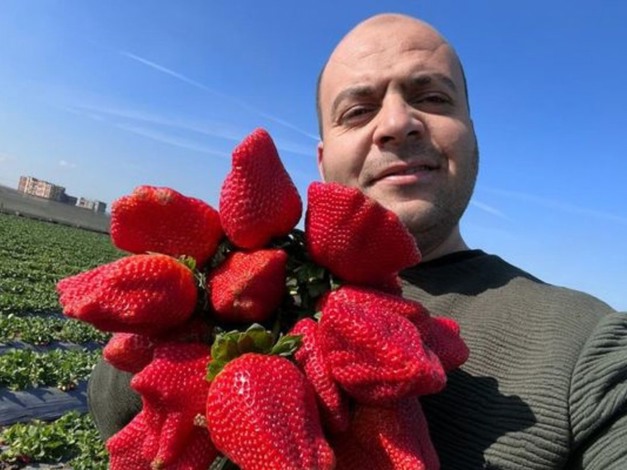
El Gohary points to another consequence of the rapid expansion in production and the arrival of inexperienced new operators last season, which is the damage to the image of Egyptian origin. The European Union added fresh strawberries to its enhanced official controls list for pesticide residues as of February 18, 2026. “Established growers and exporters who take good care of their MRL targets don’t need to worry,” the grower says, though he acknowledges the measure complicates export flows.
With Egypt sitting atop the podium of global export volumes, El Gohary believes the priority for Egyptian growers now needs to shift toward capturing value rather than chasing further volume growth. He points to his own operation as an example.
“While maintaining exports in the fresh strawberry segment, I am shifting from next season toward producing FDA-approved strawberries for the dried strawberry segment. Strawberry drying is a very interesting new segment, newly introduced in Egypt and rapidly growing. On top of that, producing to FDA standards fetches better prices than those grown to European standards, with the price difference reaching up to $100 per ton.”
 © Marvel Farm
Beyond the acreage adjustments already underway, El Gohary points to one factor that growers have no control over, and that could still shape how next season plays out. “Climate remains the primary risk factor for next season. It’s the one variable we can’t control, and no one can predict how it will unfold,” he concludes.
For more information:
El Sayed El Gohary
Marvel Farm
Tel: +20 10024 96633
Email: [email protected]
Credit: Source link