

Egypt suffered its first attack of the regional war after a drone hit two gas ships near the Suez Canal
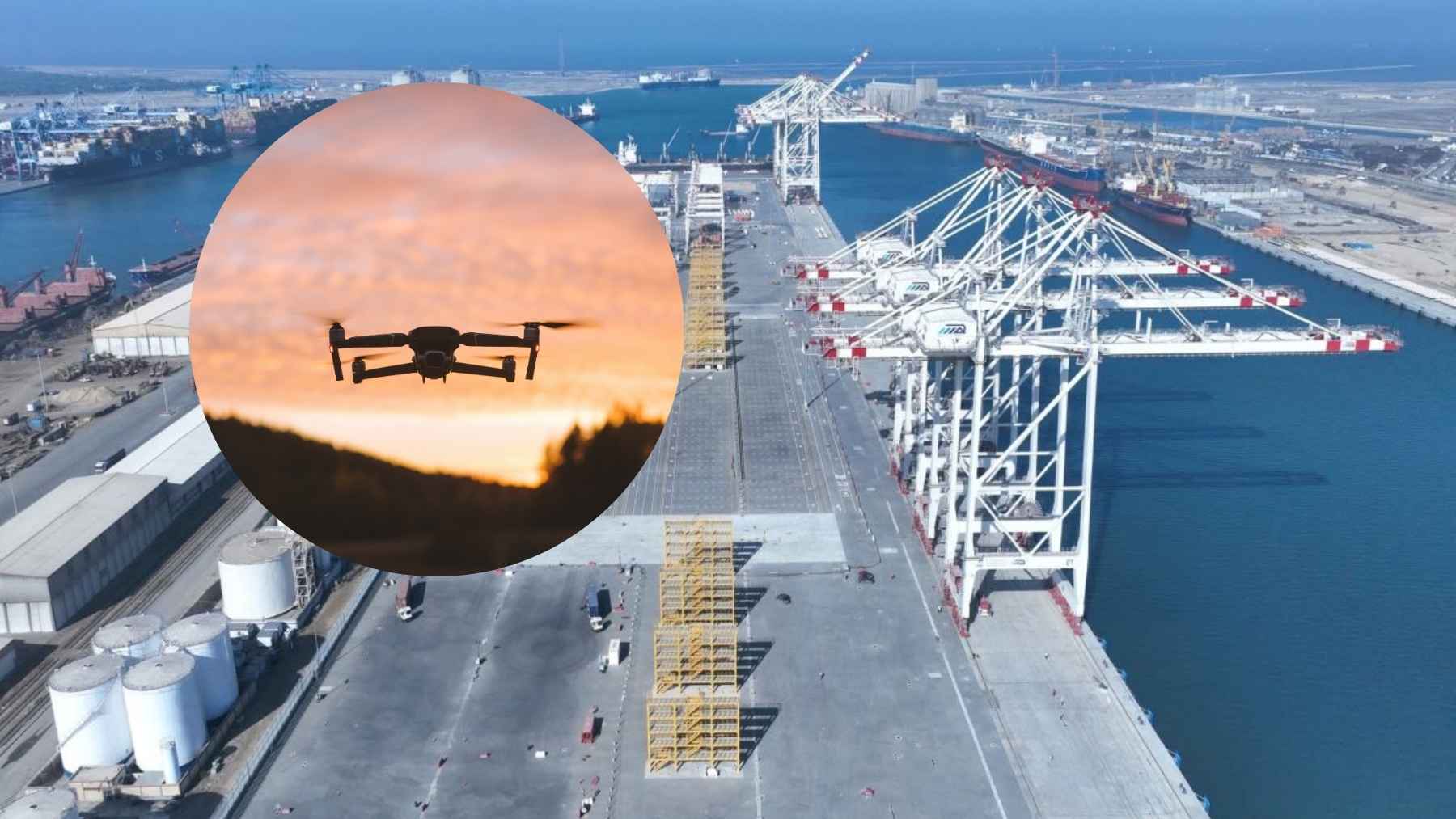
Egypt has confirmed that a drone caused the July 29 fire involving two gas vessels at Damietta Port, bringing the region’s widening conflict to a strategic Mediterranean energy hub.
The Energos Winter floating storage and regasification unit and the GasLog Salem carrier were caught in the emergency, but crews reported no deaths or injuries. As of the latest public updates, no group had claimed responsibility.
That outcome was fortunate. The incident showed how a drone attack can threaten power supplies, shipping, public safety, and the coastal environment at the same time. For Egypt, the bigger story is not only who launched the drone, but how quickly the country can make its energy system harder to disrupt.
A fire beside a vital port
Prime Minister Mostafa Madbouly said his office was alerted at 2:20 p.m. local time. Responders separated the vessels and towed the damaged unit nearly 1.9 miles from the port because officials feared an explosion could damage the harbor and surrounding facilities.
Technical teams later recovered drone debris, and security agencies began analyzing it to determine the aircraft’s origin. “There are speculations and opinions, but the state does not rely on speculation or unverified claims,” Madbouly said. Port operations and the national gas network continued during the response.
Why the Energos Winter matters
An FSRU is essentially a floating gas terminal. It receives LNG chilled to liquid form, stores it, converts it back into gas, and feeds it into the national grid. Energos Winter can process around 450 million cubic feet per day, equal to roughly 7% of Egypt’s daily gas use and 16% of its total LNG receiving and regasification capacity.
That makes the ship closer to a power plant component than an ordinary tanker. Egypt once exported LNG after developing the Zohr field, but falling domestic production and rising consumption have turned it back into a major importer, just as summer electricity demand reached 37 to 39 gigawatts.
The environmental danger was real
The immediate official statements focused on fire control, crew safety, and fuel continuity rather than offering a detailed public pollution assessment. LNG does not behave like crude oil on water. It rapidly vaporizes, creating a cold gas cloud that can travel downwind and ignite if concentrations remain within the flammable range.
A large LNG fire can also expose a vessel’s hull and nearby equipment to extreme heat, with the potential to weaken structural steel. That helps explain the urgent decision to pull the ships away from the port. The quick response appears to have prevented a localized attack from becoming a much larger industrial and coastal emergency.
Backup fuel carries a climate price
Egypt moved quickly to activate other regasification units and an emergency vessel at Jordan’s Aqaba port. Officials also said power plants held more than 468,000 U.S. short tons of fuel oil, giving the grid another fallback if gas supplies tightened.
Natural gas is not emissions-free, but a prolonged shift to fuel oil would raise the carbon burden. U.S. Energy Information Administration combustion coefficients show residual fuel oil releases about 42% more carbon dioxide per unit of energy than natural gas, although actual power plant emissions also depend on efficiency and operating conditions.
A long outage could therefore keep the lights on while pushing the power system’s emissions in the wrong direction.
Drones change port security
The strike also exposes a design problem. FSRUs are large, remain stationary for long periods, and connect to fixed berths and pipelines, which makes them efficient energy assets but visible targets. A drone does not need to sink one to disrupt schedules, trigger costly security reviews, or push a government toward backup fuel.
The same technology can help defenders. Egyptian teams reportedly used aircraft and drones to monitor the fire, while tugboats and rapid separation procedures reduced the risk around the port.
Future protection will likely depend on better low-altitude detection, counter-drone systems, hardened firefighting equipment, and more redundancy across ports and power supplies.
Cairo avoids the blame game
Timing sharpened suspicions. The strike followed an Iranian missile attack on U.S. forces in Jordan and U.S.-Saudi strikes on Iran-backed groups in Iraq, but no organization or government has claimed responsibility for Damietta. Iran’s foreign minister suggested without evidence that it was an Israeli “false flag” operation, while Yemen’s Houthis denied any role.
Instead, President Abdel Fattah el-Sisi warned about the danger of regional escalation and called for international efforts to stop it. That cautious approach helps preserve Egypt’s role as a mediator, but it also leaves Cairo under pressure to show that its ports and energy network can withstand another attempt.
Energy security now includes climate security
The lesson from Damietta is uncomfortable but clear. Military resilience, energy planning, and environmental policy are becoming the same conversation.
More import routes can reduce the impact of one damaged ship, while renewable power, storage, and demand management can reduce the amount of fuel that must move through exposed ports in the first place.
For now, Egypt says gas and fuel supplies remain secure, and the national network is stable. The immediate crisis ended without casualties or a nationwide blackout, but the next test is whether the country can add protection without locking itself into dirtier emergency fuels.
The latest official statement was published by Egypt’s Ministry of Petroleum and Mineral Resources.
Credit: Source link