

Egypt says it has right to defend water security over new Ethiopian dams on Nile River
By Hussien Elkabany and Tarek Chouiref
20 August 2026•Update: 20 August 2026
Egypt warned Wednesday against the construction of new Ethiopian dams on the Nile River, with Foreign Minister Badr Abdelatty saying Cairo has the right to defend its water security.
“Egypt will not allow additional dams to be built on the Nile,” Abdelatty said in an interview with Saudi broadcaster Al Arabiya.
He said Egypt has a “legitimate right to defend its interests and water security.”
The remarks marked Cairo’s third public warning in about two weeks over reported Ethiopian plans to build additional dams on the river.
There was no immediate comment from Ethiopia on Abdelatty’s remarks.
On Aug. 16, an Egyptian official said Cairo would not accept or allow any party to control Nile water flows to downstream countries, Egypt and Sudan, responding to remarks attributed to Ethiopian Water and Energy Minister Habtamu Itefa about building additional dams.
The official, cited by Egypt’s state-run MENA news agency, said Cairo had “multiple and wide-ranging tools” to defend its interests in the Nile and would not allow control over water flows to be imposed as a fait accompli.
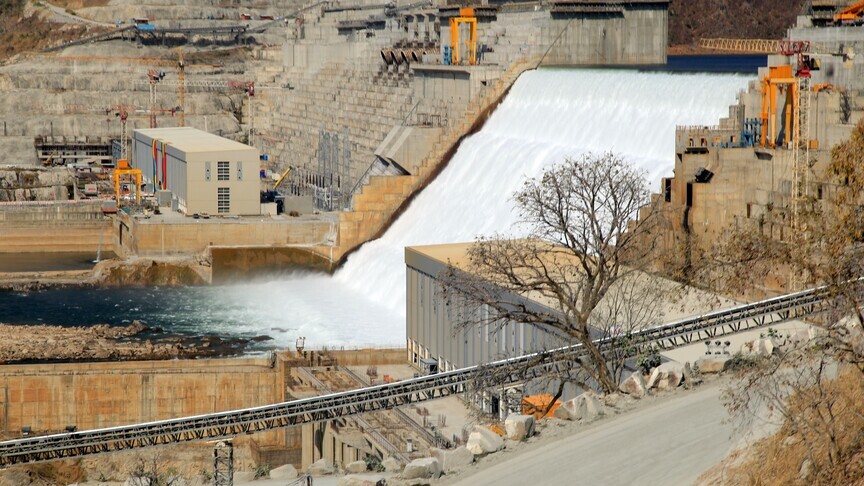
Earlier, on Aug. 4, Irrigation Minister Hani Sewilam said Egypt would not allow Ethiopia to build new dams on the Nile following reports that Addis Ababa was planning three additional projects alongside the Grand Ethiopian Renaissance Dam (GERD).
Egypt and Sudan have long been at odds with Ethiopia over the filling and operation of the GERD, whose construction began in 2011. Cairo and Khartoum insist on a legally binding trilateral agreement before the project becomes fully operational.
Ethiopia, however, maintains that such an agreement is unnecessary and says the dam will not harm downstream countries. The dispute led to a three-year suspension of negotiations before talks resumed in 2023, only to stall again in 2024.
The Nile River, which stretches about 6,650 kilometers (4,132 miles), is shared by 11 countries: Burundi, Rwanda, the Democratic Republic of the Congo, Kenya, Uganda, Tanzania, Ethiopia, Eritrea, South Sudan, Sudan and Egypt.
Credit: Source link