
Economic and social crisis in Cuba: Cats are also victims of shortages that affect practically every aspect of life
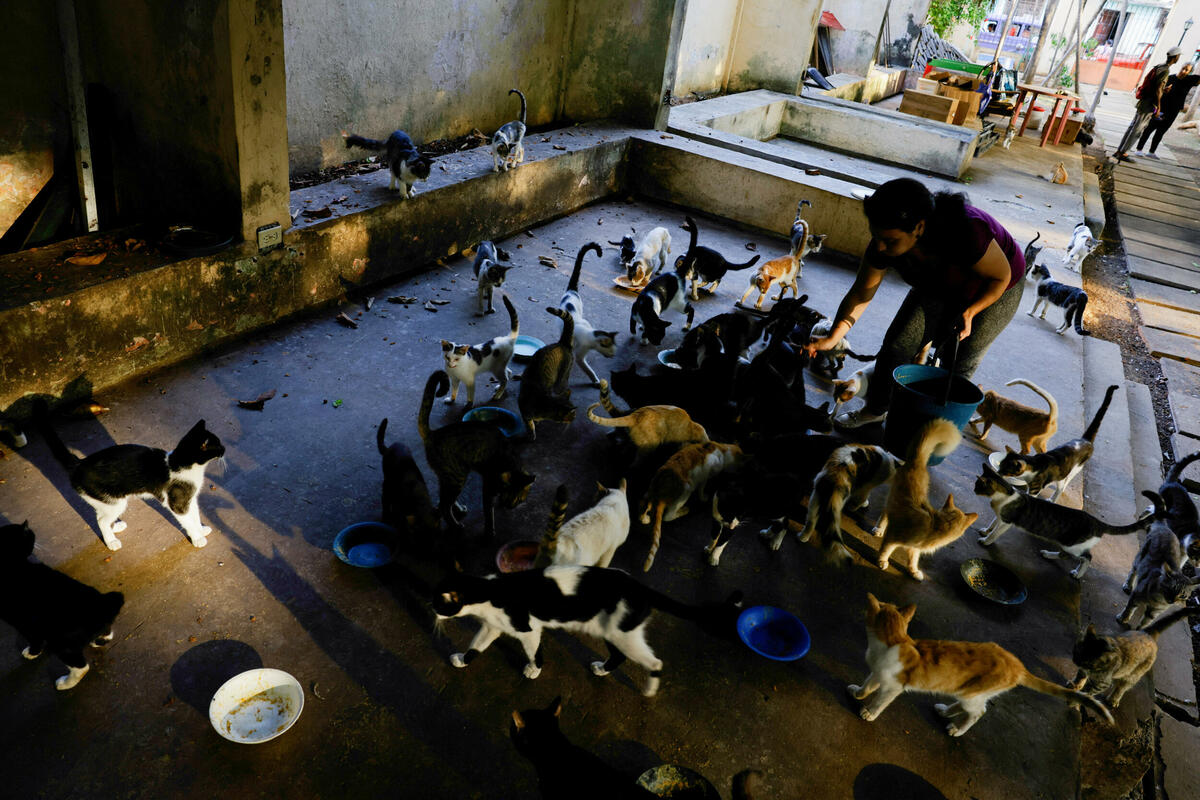
Detail from the Aldameros center, Photo: Reuters
Cuban Gabriela Lopez runs an animal rescue center called Aldameros that would make any cat lover melt. Cats of all shapes and sizes scurry around, purr after being fed and cuddle up to the feet of employees, Reuters news agency reports today.
But all is not well here.
Cuba, an island under communist rule, fell into an unprecedented economic and social crisis earlier this year, as US sanctions and a fuel blockade imposed by the administration of US President Donald Trump tightened, pushing its nine million inhabitants to the brink.
The center, like the population as a whole, now has little water, despite being in the center of Havana, electricity only a few hours a day, and costs are rising in line with inflation, Lopez says.
“We used to be able to store food for a few days, but now we live day by day because we don’t have refrigeration. As for water, we have to maintain good hygiene, but there are supply problems,” she says, exhausted by the seemingly endless problems she lists during the interview, according to Reuters.
“These are small problems that, when you look at them as a whole, grow into a big problem,” Lopez says.
The animals, he says, are just the latest victims of the growing shortages that have begun to affect virtually every aspect of life in Cuba.
Yet the cats strolling through the center seem unmoved by the problems around them. At lunchtime they meow and push themselves towards plastic bowls of leftover chicken, fish and vegetables. After their midday meal, they roll over onto their backs, belly up, and rub their backs on the floor.
However, Havana veterinarian Daniel Hernandez says the problems are much more serious than they seem at first glance, as clinics across the country are struggling to provide medicines and vaccines due to increasing shortages.
“The biggest problem we face is a stable supply of electricity, so that we can provide refrigeration for medicines like vaccines and other preparations that need a cold chain to work properly. This is really very stressful,” said Hernandez.
Rising costs, meanwhile, have forced volunteer centers like Lopez’s Aldameros to look for alternative sources of food, often without success. Businesses that used to donate leftover food are now trying to sell it, she said.
“They realized there was a market for it,” Lopez said.
To make matters worse, prices are rising, while donations have dried up along with the country’s tourism sector, says Claudia Diaz, volunteer coordinator for Cubans in Defense of Animals (CEDA), a non-governmental animal rights activist group.
“With fewer tourists coming to Cuba, we have lost a significant source of income, both in terms of supplies and money,” said Diaz.
Those donations, she says, once funded pest control campaigns, helped centers like Aldameros survive, and supported animal rescue and vaccination efforts.
“We’re doing everything we can to stay open. But it’s hard in these conditions, without any help,” Lopez said.
Download the app and follow the news


FOLLOW US ON

News