

Ebola outbreak in DRC: What to know and how to help
Reading summary:
- Nearly 15 million people in urgent humanitarian need
- 26.7 million people facing crisis-level food insecurity
- 120+ armed groups operating in eastern DRC
- 305,000+ people reached with IRC services in 2024
Support our response
The Democratic Republic of Congo (DRC) was already one of the world’s most severe humanitarian emergencies before a new Ebola outbreak began spreading across its conflict-ravaged east. The IRC’s 2026 Emergency Watchlist—which ranks the countries most at risk of humanitarian catastrophe each year—placed the DRC in its top ten, warning that collapsing health services, record hunger, and drastic aid cuts were pushing millions of people toward the brink. Now, a rare strain of Ebola with no licensed vaccine is spreading in the same communities, in the same overstretched health facilities, that the Watchlist flagged as critically vulnerable. Here’s what you need to know.
What is the DRC’s 2026 Emergency Watchlist ranking—and what did it predict?
The IRC’s Emergency Watchlist identifies the countries where humanitarian needs are most likely to deteriorate in the coming year. The DRC returned to the top ten in 2026 as a fragile peace agreement failed to end violence in the east, with the report warning of four converging crises:
Armed conflict with no end in sight. Despite a June 2025 peace deal between the DRC and Rwanda, armed clashes have intensified between government forces and the Rwanda-backed M23 armed group. More than 2,100 people have been killed since the agreement was signed. Over 120 armed groups operate in eastern DRC, competing for control of minerals and resources while civilians are forced to flee repeatedly.
Record hunger. Nearly 27 million people in the DRC which is about a quarter of the population now face crisis or worse levels of food insecurity (IPC 3+), including 3.9 million in emergency conditions. Seventy-three percent of the population lives in extreme poverty. Conflict has disrupted agriculture, markets, and trade, causing hunger to spike earlier than normal. Over 8.2 million children and pregnant women need nutritional assistance.
Collapsing health services. The DRC recorded its 16th Ebola outbreak in 2025. One of the worst cholera outbreaks in a decade is spreading, with over 58,000 suspected cases and 1,700 deaths by October 2025. Eighty-five percent of clinics in conflict-affected North and South Kivu report severe medicine shortages; nearly 40% have lost critical staff. In North Kivu, 70% of health facilities were non-functional by mid-2025. The Watchlist warned explicitly that weakened health infrastructure would leave communities ill-equipped to face new outbreaks and that warning has now come true.
Drastic aid cuts. The DRC was the African country most affected by USAID funding cuts, and the third-most impacted globally. Security incidents against aid workers rose 33% in the first nine months of 2025 compared to the same period in 2024. Shrinking funding has hollowed out humanitarian operations in eastern DRC precisely as needs are rising.
What is happening now with Ebola?
An outbreak of the Bundibugyo strain of Ebola, a rare form of the virus for which there are currently no licensed vaccines or targeted treatments is spreading across eastern DRC..
The World Health Organization (WHO) has declared the outbreak a “Public Health Emergency of International Concern” which is an extraordinary designation reserved for events that require a vigorous international response. The Africa Centres for Disease Control and Prevention (Africa CDC) has also declared it a “Public Health Emergency of Continental Security.”
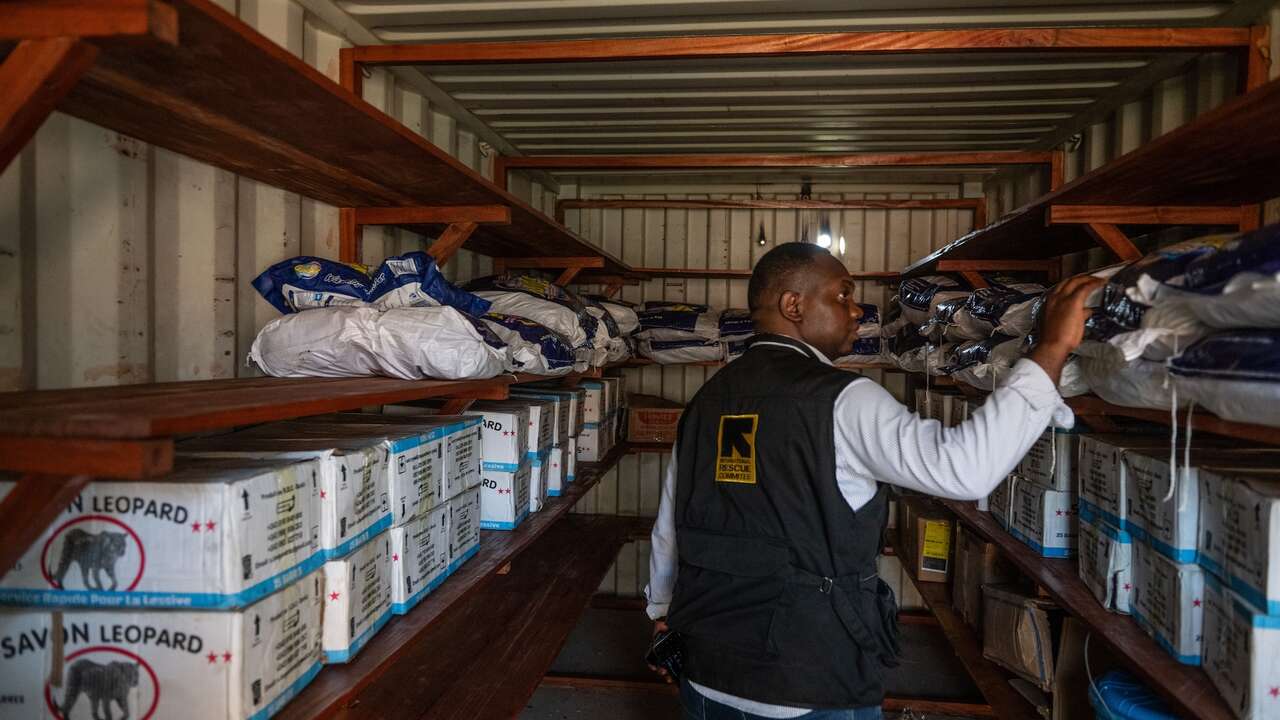
IRC staff prepare Infection Prevention and Control (IPC) kits for the Ebola response in Bunia, DRC.
The outbreak is centered in Ituri Province in northeastern DRC, but the confirmation of cases in Goma, a densely populated transport hub, raises serious alarm about the potential for faster, wider spread.
Why is this Ebola outbreak especially dangerous?
Most people are familiar with Ebola from the devastating 2014–2016 West Africa outbreak and the 2018–2020 outbreak in North Kivu, DRC, both caused by the Zaire strain, for which a vaccine exists. Together, those outbreaks resulted in more than 32,000 cases and over 13,600 deaths.
This outbreak is different. The Bundibugyo strain has no licensed vaccine and no targeted treatment. The tools that helped contain previous outbreaks such as widespread vaccination campaigns are simply not available this time. Everything depends on early detection, infection prevention, community trust, and speed of response.
Four healthcare workers are among the confirmed deaths. When health workers are infected, already overstretched systems weaken further, and fear can discourage people from seeking the care they need.
What is making the outbreak so hard to contain?
The Watchlist warned that eastern DRC’s fragile conditions would make any new disease outbreak far harder to control. That warning is playing out in real time.
- Funding cuts created blind spots. U.S. government funding for health surveillance and outbreak preparedness in eastern DRC—including in Ituri, the epicenter—ended in March 2025. When surveillance networks break down, Ebola spreads before anyone can respond.
- Conflict blocks access. Ongoing insecurity restricts health workers and supplies, while attacks on health infrastructure have left communities without care.
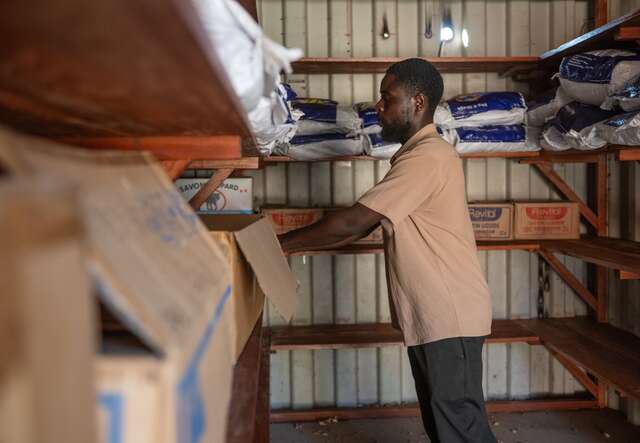
An IRC day laborer stocks IPC kits for the Ebola/Bundibugyo virus response in Centenaire, Bunia, DRC.
- Displacement makes tracing nearly impossible. With millions on the move, contact tracing, one of the most essential tools for containing Ebola, becomes enormously difficult.
- Mistrust runs deep. Decades of violence and broken promises have eroded community trust. Fear and misinformation have derailed previous Ebola responses, and rebuilding that trust takes time this outbreak doesn’t allow.
Who is most at risk?
Women and children suffered the most during previous Ebola outbreaks. Pregnant women with complications were often unable to access care. Children faced increased risk of abuse and exploitation as family structures broke down under the strain of previous outbreaks.
Healthcare workers face direct exposure and are essential to any response. Four have already died in this outbreak.
Displaced communities living in overcrowded settlements with limited access to clean water, sanitation, and health care face heightened transmission risk.
The broader region is also at risk, and neighboring countries are increasing surveillance and preparedness measures in response.
How is the IRC responding?
The IRC has worked in the DRC since 1996, including responding to Ebola outbreaks in North Kivu between 2018 and 2022 across more than 70 health facilities. The IRC also supported response efforts during the 2014–2016 West Africa outbreak in Liberia and Sierra Leone.
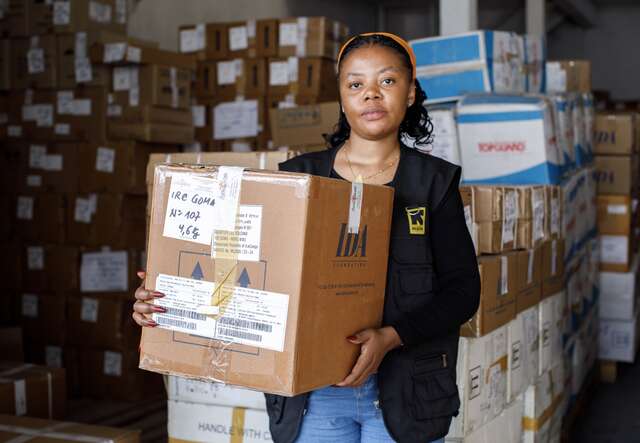
An IRC staff member packs IPC kits at the ASRAMES warehouse in Goma for delivery to Bunia to support health facilities in the prevention and control of Ebola infections.
In response to the current outbreak, the IRC has launched an emergency response in coordination with DRC government health authorities, aiming to reach over 500,000 people across three pillars:
Infection prevention and control: The IRC is distributing personal protective equipment (PPE), rehabilitating triage and isolation areas, and improving water, sanitation, and hygiene infrastructure in health facilities and high-traffic public spaces such as markets and schools. Community members are also being trained on case detection, contact tracing, and alert reporting.
Risk communication and community engagement: Community health workers are conducting door-to-door outreach using participatory approaches centered on two-way communication and cultural sensitivity. Outreach also uses local radio, social media, and community gatherings to counter misinformation and build public understanding of prevention measures.
Protection: The IRC’s protection response focuses on safeguarding women, children, and marginalized groups, and addressing the psychosocial impacts of the outbreak. This includes psychological first aid, case management for survivors of gender-based violence, cash assistance for vulnerable households, and mental health services.
What needs to happen now?
Every delay has a human cost. Rapid international support, coordination, and sustained funding are critical to preventing this outbreak from escalating further. All actors must implement WHO-recommended measures and ensure the unimpeded movement of critical supplies, including PPE, to affected communities.
Regional coordination between the DRC, neighboring countries, WHO, Africa CDC, and humanitarian organizations is essential for strengthening surveillance, cross-border screening, and emergency preparedness.
Communities must have access to clear, accurate public health information and safe healthcare. And the needs of women and girls who are consistently the hardest hit in any Ebola outbreak must be centered in every aspect of the response.
How can I help people affected by the Ebola outbreak in DRC?
Your support helps the IRC reach more people with lifesaving care. Donations fund emergency health response, infection prevention, community outreach, and protection for women and children affected by the outbreak in DRC.
Credit: Source link