

Ebola in DRC: More than 6,000 confirmed cases in 3 1/2 months
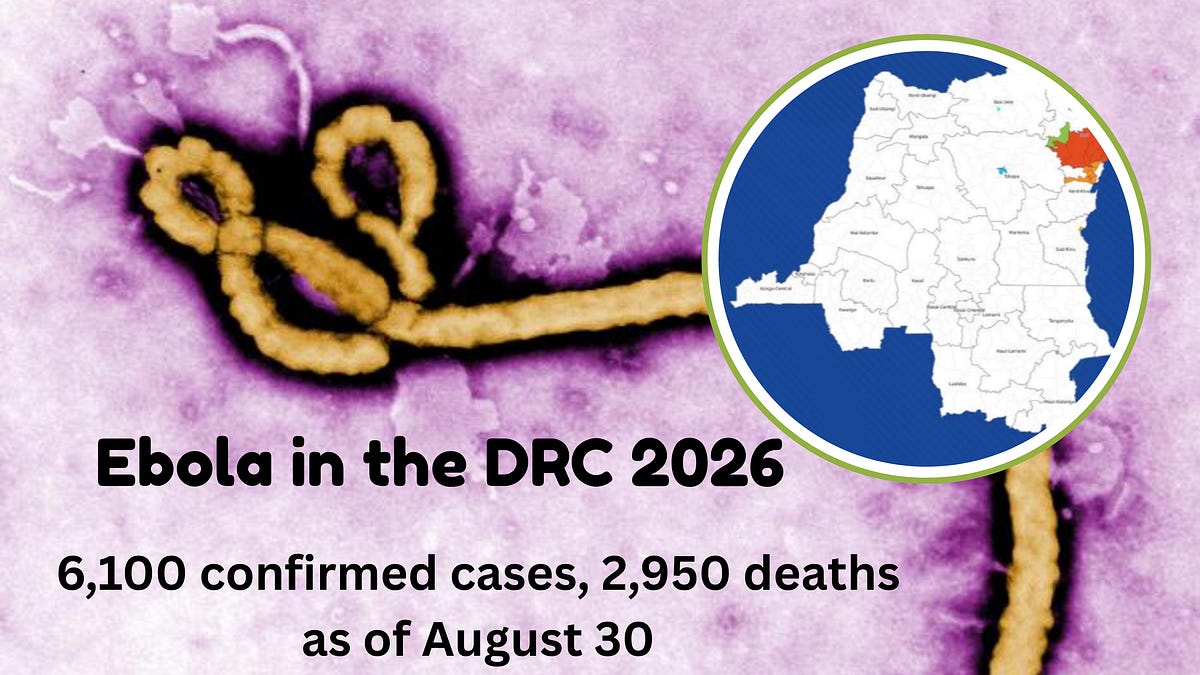
By the end of the day on August 30, 2026, 59 new confirmed cases of Ebola Virus Disease (EVD)—including 19 community deaths—had been reported across the provinces of Ituri (44 cases), North Kivu (8), Haut-Uélé (6), and Bas-Uélé (1), according to the Democratic Republic of the Congo (DRC) Ministry of Health (MOH).
Additionally, 17 patients were declared recovered after testing negative for EVD twice (13 in Ituri, 3 in North Kivu, and 1 in Tshopo). However, 20 deaths within Ebola Treatment Centers (ETCs) were unfortunately reported—15 in Ituri, 2 in Haut-Uélé, 2 in North Kivu, and 1 in Tshopo—bringing the total number of deaths for the day to 39.
As of August 30, 2026, 6,100 confirmed cases and 2,950 deaths had been reported in the DRC, representing a case fatality rate of 48.4%. Approximately 82.3% of confirmed cases are concentrated in Ituri, making it the epicenter.
Furthermore, 60 of the 151 (39.7%) health zones across the six provinces have remained affected since the start of the epidemic in the DRC.
Bacterial vaginosis (BV) and the increased risk of sexually transmitted infection (STI) coinfections
Ebola virus disease (EVD) spreads almost exclusively through direct contact with the blood, vomit, feces, urine, saliva, semen, or other bodily fluids of a symptomatic or deceased person, or with objects and surfaces contaminated by those fluids. It is not a respiratory virus like influenza or measles; casual proximity without contact does not transmit it. Fruit bats are the suspected natural reservoir. Human outbreaks typically begin with a zoonotic spillover and then propagate through person-to-person chains.
Incubation is usually 2–21 days (average ~6.3 days for Bundibugyo virus). People are not infectious until symptoms appear. Viral load, and therefore infectiousness, rises sharply in the later stages of illness and remains high after death, which is why unsafe funeral practices historically drive large clusters. Serial interval is typically 10–15 days. Basic reproduction number (R0) for Ebola species generally falls in the 1.3–3 range in community settings (estimates for the 2026 Bundibugyo outbreak cluster around 1.7–2.5). Higher values appear when healthcare facilities lack adequate infection-prevention controls.
Bundibugyo virus (BDBV) has historically produced lower case-fatality ratios (~34–48 %) than Zaire ebolavirus. The current eastern DRC outbreak, however, is the largest BDBV epidemic on record and has shown unusually rapid geographic expansion. Modeling indicates a silent transmission window of several weeks before laboratory confirmation in May 2026, allowing chains to accumulate in Ituri and then North Kivu. Overcrowded treatment centers, delayed isolation, conflict-related access constraints, high population mobility (including mining corridors and informal border crossings), and incomplete contact tracing (recently ~82 %) have sustained transmission even after response measures began.
Credit: Source link