

DRC President Tshisekedi Hints at Third Term Amid Electoral Delays
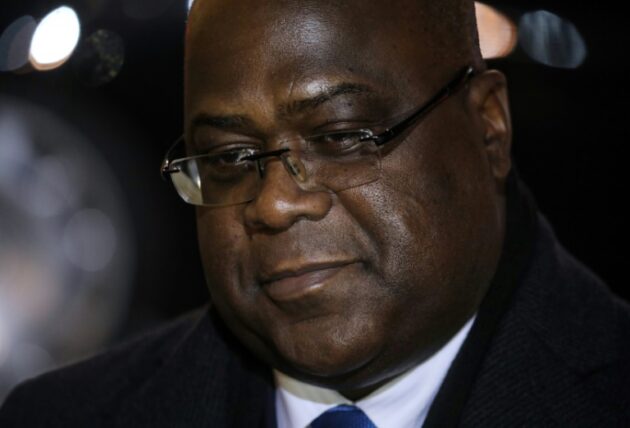
Democratic Republic of Congo President Félix Tshisekedi has openly signaled his willingness to pursue a highly controversial third term in office when his current mandate expires in 2028. The declaration, delivered during a rare national address, has ignited a fierce political firestorm across the volatile Central African nation.
The prospect of constitutional amendments to abolish presidential term limits threatens to severely destabilize a country already grappling with a catastrophic armed rebellion in its eastern provinces. At stake is the democratic integrity of the DRC and the potential disenfranchisement of millions trapped in conflict zones.
The Referendum Proposition
Addressing a massive press conference in the capital city of Kinshasa on Wednesday—only his second such engagement since securing re-election in 2023—Tshisekedi addressed the swirling rumors regarding his political future. The current constitution strictly limits the presidency to a maximum of two terms. However, the President carefully left the door open for an extension, contingent upon public demand.
Tshisekedi stated emphatically that he had not actively solicited a third term, but added a crucial caveat: if the Congolese people desired an extension, he would willingly accept the mandate. He clarified that any such structural change to the presidency would fundamentally require consulting the populace through a national referendum. This calculated rhetoric mirrors the strategies historically utilized by other African heads of state to consolidate long-term power.
A Nation Fractured by War
Beyond the constitutional debate, Tshisekedi delivered a sobering assessment of the nation’s immediate electoral viability. He bluntly warned that the scheduled 2028 general elections might face indefinite delays due to the spiraling violence in the eastern territories. The ongoing conflict has rendered vast swathes of the country entirely ungovernable, severely complicating any logistical preparations for a nationwide democratic exercise.
The President categorically ruled out the possibility of organizing voting processes without the inclusion of the embattled North and South Kivu regions. He asserted that the precise timing of the upcoming elections would inherently depend on the speed and success of military efforts to pacify the east. The stark admission effectively links the survival of the democratic calendar to a deeply entrenched military crisis that has defied resolution for decades.
The M23 Insurgency
The primary catalyst for the electoral uncertainty is the aggressive resurgence of the March 23 Movement (M23) rebel group. Over the past year, the heavily armed militia has systematically dismantled state authority across the eastern frontier. The conflict has triggered one of the world’s most severe humanitarian catastrophes, characterized by:
- The seizure and occupation of expansive territories within the mineral-rich North and South Kivu provinces.
- The systematic encirclement of key strategic economic hubs, including the major regional cities of Goma and Bukavu.
- The internal displacement of millions of Congolese civilians who are currently residing in squalid, makeshift refugee camps.
- The total collapse of civil infrastructure, making voter registration and polling station deployment a logistical impossibility.
- Intense, daily combat operations between the Congolese armed forces (FARDC) and the sophisticated rebel battalions.
Accusations of a Constitutional Coup
Tshisekedi’s remarks have provoked intense outrage from opposition coalitions and civil society organizations. Critics argue that the President is cynically weaponizing the eastern conflict to justify maintaining an indefinite grip on executive power. In March 2026, a controversial bill was officially submitted to parliament outlining the legislative framework for organizing a national referendum, escalating fears of an impending constitutional overhaul.
While the ruling party frames the referendum bill as a necessary mechanism for strengthening direct democracy, opposition leaders view it as a calculated, premeditated strategy to dismantle the two-term limit. Legal scholars have forcefully warned that any unilateral attempt to amend the foundational constitution under the shadow of a national security crisis would amount to a civilian constitutional coup, reversing the hard-won democratic transitions of the past decade.
The Regional Geopolitical Fallout
The crisis within the DRC cannot be viewed in isolation. The Congolese government, alongside independent United Nations investigators, has consistently accused neighboring Rwanda of providing advanced military hardware and logistical backing to the M23 rebels. Although Kigali vehemently denies these allegations—framing its military posture as strictly defensive—the international community has begun to intervene.
In March, the United States Treasury Department levied targeted sanctions against several high-ranking Rwandan army commanders, explicitly accusing them of fueling the catastrophic Congolese conflict. Despite a high-profile peace deal brokered by American diplomats, brutal fighting persists unabated. The combination of a potential constitutional crisis in Kinshasa and a grinding proxy war in the east ensures that the Democratic Republic of Congo remains the most volatile geopolitical flashpoint on the African continent.
Credit: Source link