

DRC approves Musompo battery precursor zone as Zimbabwe forces lithium processing onshore
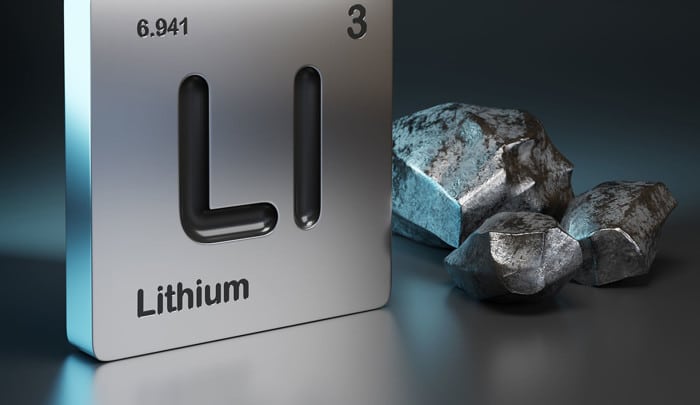
The Democratic Republic of Congo has approved a 900-hectare special economic zone in Lualaba province to manufacture battery cathode precursor materials, while Zimbabwe’s escalating export restrictions on raw lithium are compelling miners to build processing capacity inside the country — two moves that are beginning to reshape Africa’s role in the global battery supply chain.
The DRC’s council of ministers cleared the Musompo Special Economic Zone as a priority project on 20 February, with construction launched the following month under then-Industry Minister Louis Watum Kabamba.
The site targets around $2 billion in private investment, carries a construction cost of over $200 million, and is projected to generate 25,000 direct and 60,000 indirect jobs. Arise IIP, a developer active across several Congolese special economic zones (SEZs — designated areas offering infrastructure and regulatory incentives to attract industrial investment), is involved in the project.
The zone is designed to produce nickel-manganese-cobalt (NMC) precursor powders, the chemical input used to manufacture battery cathodes. That positions Musompo one step above the raw mining and concentrate stage, though the cathode and cell manufacturing stages — where the bulk of the margin sits — remain unbuilt anywhere on the continent.
The African Development Bank (AfDB) has noted that the DRC holds 51% of global cobalt reserves and that the country’s hydropower capacity makes it a credible low-emissions producer of precursor materials. The DRC and Zambia have also been working since 2023 on a joint precursor plant originally envisaged at around 100,000 tonnes a year of NMC 622 material — a scale that would be significant by global standards — though the location remains disputed between the two governments.
Romain Deniel, chief executive of Arise IIP, told the Makutano forum in November that the Musompo project appeared to have slowed after the industry minister’s departure in August. Deniel has also noted that establishing a zone of this kind draws in four to six ministries and demands a matching capacity to co-ordinate them. In February, Prime Minister Judith Suminwa Tuluka received the Congolese Battery Council and the International Trade Centre to discuss technical support and market access.
Zimbabwe’s approach has been more coercive. The country banned exports of unprocessed lithium ore in December 2022, then suspended exports of all raw minerals and lithium concentrates with immediate effect on 25 February this year. In an April letter to the Chamber of Mines, the government set conditions for resumption that included written commitments on timelines for lithium sulphate plants, with a deadline of 1 January 2027. A 10% export tax on concentrate remains in place until that ban takes effect.
The policy is already producing results. Prospect Lithium Zimbabwe, owned by Chinese chemicals group Zhejiang Huayou Cobalt, has completed a $400 million lithium sulphate plant at the Arcadia mine — the first such facility on the continent. A $500 million plant being built by Sinomine at Bikita and a further facility by Yahua at Kamativi are both still under construction.
The commercial environment both countries are building into is demanding. BloombergNEF recorded lithium-ion pack prices at $108 per kilowatt-hour in December 2024, down from $139 in 2023, a decline driven largely by Chinese manufacturing capacity operating at scale. Any plant approved now enters a market that has already been compressed twice over.
The Natural Resource Governance Institute has described the DRC-Zambia joint precursor initiative as the proof of concept that the African Green Minerals Strategy — a continental framework for capturing more value from critical mineral extraction — calls for, testing whether two governments can share the benefits of an industrial facility that only one of them can physically host.
Together, the Musompo zone and Zimbabwe’s processing mandates illustrate a broader continental push: to move African mineral wealth further along the value chain before it leaves the continent.
Credit: Source link