

DR Congo reports 956 confirmed Ebola cases, 247 deaths
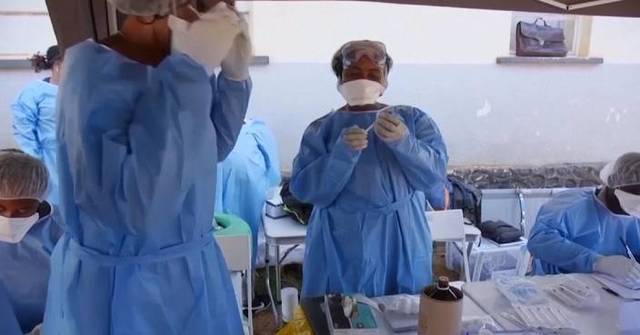
The number of confirmed Ebola cases in the Democratic Republic of the Congo (DRC) has risen to 956, including 247 deaths, according to the latest situation report released Saturday by the country’s health authorities.
Twenty-three new confirmed cases, including two deaths, were reported Friday in the provinces of Ituri and North Kivu. Ituri remains the epicenter of the outbreak, with 874 confirmed cases and 201 deaths, accounting for more than 91 percent of the country’s confirmed cases.
A total of 92 patients have recovered, while 361 patients were in isolation or hospitalized.
The report also said 162 suspected cases were identified during the day, while the contact-tracing rate stood at 69.3 percent, below the 95-percent target set by health authorities.
At a press briefing Friday evening, DRC Health Minister Roger Kamba said the outbreak remained in an upward phase, with more confirmed cases expected as response teams expanded active case-finding and moved deeper into affected communities.
Kamba added that the authorities will only be able to say that the outbreak has reached its peak, plateaued, or begun to decline once the weekly figures have stabilized or begun to fall. For now, he said, efforts to detect cases, isolate and treat patients, and strengthen community engagement must continue.
The outbreak, caused by the Bundibugyo Ebola virus, was declared by the DRC authorities on May 15.
DR Congo reports 956 confirmed Ebola cases, 247 deaths
Multiple areas in southwest China’s Guizhou Province and south China’s Guangxi Zhuang Autonomous Region on Saturday experienced intense downpours, with residents trapped and transportation networks disrupted.
In Mawei Town, Dushan County, Qiannan Buyi and Miao Autonomous Prefecture, Guizhou Province, sudden heavy rainfall struck on Saturday.
Monitoring data showed that from 06:00 to 22:00, cumulative rainfall at five meteorological stations in Mawei Town exceeded 200 millimeters. The torrential rain caused river water levels to surge rapidly, resulting in widespread road flooding and numerous fallen trees blocking passages.
In response to the flooding, local authorities immediately mobilized personnel to clear fallen trees, mud, and debris, quickly reopening blocked rural roads. Meanwhile, rescue teams used inflatable boats to conduct door-to-door hazard inspections and safely evacuating 600 residents in an orderly manner.
Heavy rainfall has persisted for several days across northern Guangxi, forcing numerous ferries to suspend operations.
As of 21:00 on Sunday, 120 river crossings and 192 ferry boats across Guangxi’s inland waterways had been shut down. Water buses and nighttime cruise routes in Guangxi’s Liuzhou City have been halted, and all tourist raft services on the Li River in Guilin City have been completely suspended.
On Saturday evening, a farmers’ market in Jinchengjiang District of Guangxi’s Hechi City was severely flooded due to river water backflow. Merchants had received advance warnings and had already urgently relocated their goods to safe areas. Hechi City issued a yellow flood warning on the day, with some rivers exceeding alert water levels.
The Guangxi Maritime Safety Administration upgraded its inland river flood emergency response to Level III at 20:30 on Saturday.
China has a four-tier emergency response system, with Level I being the most severe response.

Rescue operations underway in flood-hit regions in China’s Guizhou, Guangxi
Credit: Source link