

Djibouti: a key player in migration governance
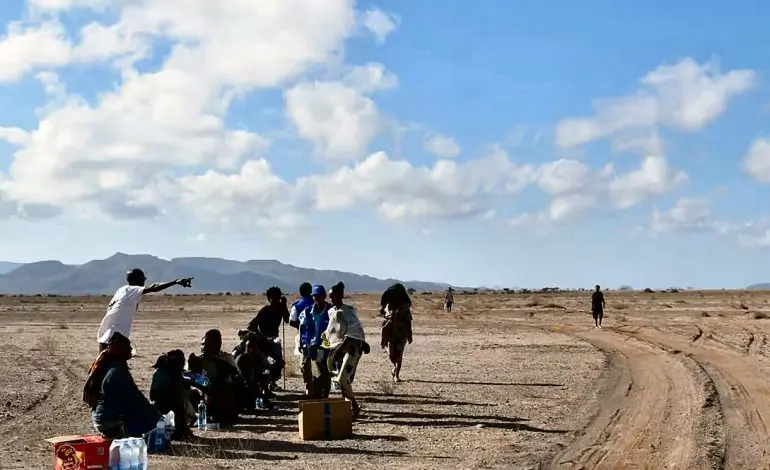
Migration is not merely a humanitarian or security challenge for the Djiboutian authorities; it is a matter of public policy.
In the Horn of Africa, Djibouti is not merely a passive transit point for migration, but a ‘strategic actor’ in regional migration governance.
This governance is in a state of ‘constant tension’ between the logic of sovereignty, international obligations, security pressures and economic incentives.
This is the conclusion of a study published by Ifri -the French Institute of International Relations- titled Mobility Governance: The Djibouti Hub between Strategies of Influence and Sovereignty. The aim of the authors, Tristan Coloma and Yoan Cadic, is to challenge the notion of ‘transit migration’ which often underpins border management policies.
Border control policies, technological tools and training programmes for security forces are struggling to tackle the root causes of migration or to guarantee effective protection for migrants.
In 2025, the Horn of Africa was home to around 5.6 million refugees and asylum seekers, according to the UNHCR, not to mention some 20.7 million internally displaced persons. Ongoing conflicts, as well as climate change, only serve to exacerbate migration.
In this context, Djibouti occupies ‘a unique strategic position’: neighbouring Ethiopia relies on the port of Djibouti for 95 per cent of its maritime trade. In 2024, 212,000 migrants entered Djibouti from Ethiopia. This is why this small country is the focus of increased attention from international actors, particularly in Europe.
Initially, the study analyses Djibouti primarily as a transit point. It notes in passing that the country is not a country of emigration: less than 2 per cent of the population, or around 10,000 people, live abroad.
Djibouti’s uniqueness is primarily geographical: migration flows from East Africa originate mainly in Ethiopia and Somalia, passing through Somaliland and Djibouti to reach the Arabian Peninsula via Yemen. It should be noted that many migrants, whether by choice or by force, often travel in the opposite direction.
Djibouti is also a transit point for migrants heading towards South Africa via Kenya, Tanzania, Mozambique and Zimbabwe. To the north, migrants pass through Djibouti to reach Libya, a major transit zone for those heading to Europe, where living conditions are particularly harsh.
An ambiguous position

In this context, Djibouti serves as a transit zone, as well as a temporary host country before migrants reach the Gulf states, or even, in some cases, a different final destination. This migration brings with it its share of illicit trafficking, which the Djiboutian authorities are sometimes accused of turning a blind eye to, the authors point out. Such trafficking can sometimes involve the trade in arms.
Nevertheless, in Djibouti, “migration is not merely a humanitarian or security challenge; it has also become a strategic lever in the conduct of public policy”, according to the Ifri study.
The country’s authorities are stepping up reform initiatives to establish a ‘hybrid migration governance’ framework, which oscillates between ‘a stated developmentalist ambition, a rigorous security approach and the outsourced management of migration flows in the interests of international agendas’.
Behind this framework, ‘more ambiguous’ uses are emerging: migration policy is becoming a tool for diplomatic negotiation, an instrument for mobilising aid, a factor in state legitimisation, and even a sphere of illicit appropriation by certain circles of power.
“This growing instrumentalisation of migration reveals the deep-seated tensions between sovereignty, international cooperation and governance practices characterised by a drive to derive political and economic gain from the phenomenon of migration,” Coloma and Cadi write in the study.
The study focuses in particular on the political and diplomatic issues surrounding the deportations of Ethiopian migrants in 2025. It also describes the pernicious role of certain politicians, particularly in trafficking, whilst the authorities flaunt their cooperation with the IOM (International Organisation for Migration) and the European Union.
This serves to emphasise ‘the structural limitations’ of the cooperation mechanisms put in place. Whilst border control policies, technological tools and training programmes for security forces are on the increase, ‘they struggle to address the root causes of migration or to guarantee effective protection’ for migrants.
In this context, the growing externalisation of European policies “further undermines” already precarious regimes of sovereignty, by enabling “opportunistic alignment” that runs counter to the interests of the people.
The study concludes that “inter-institutional coordination” must be strengthened, whilst a “holistic” approach is required: migration is not merely a “crisis” or a “threat” but a multifaceted phenomenon.
This article was first published in French in Le Magazine de l’Afrique
Crédito: Link de origem