

Deep Partial Lunar Eclipse to Darken Moroccan Skies Before Dawn on Friday
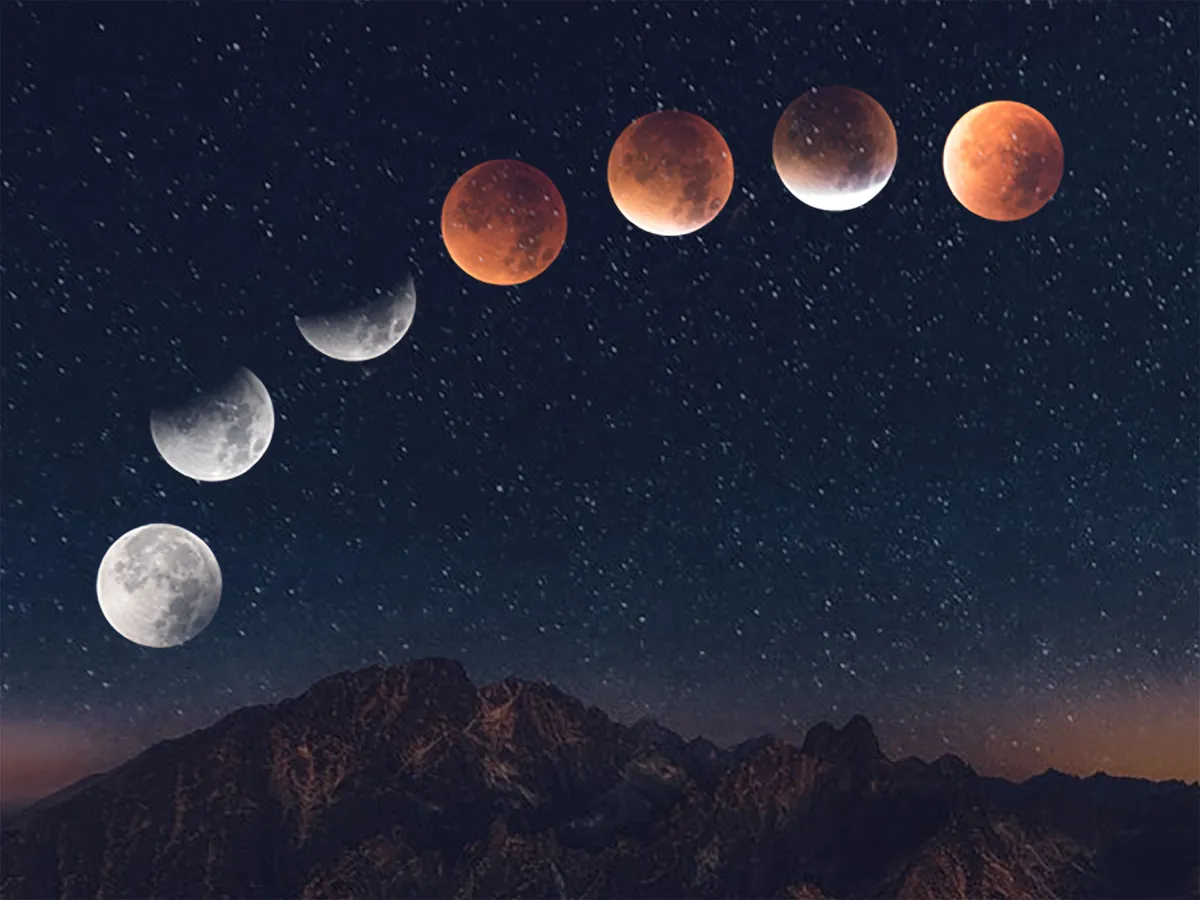
Marrakech – Morocco will be among the regions able to see a deep partial lunar eclipse in the early hours of Friday, when Earth’s shadow moves across nearly the entire face of the full moon.
The event unfolds overnight on August 27-28. In Morocco, the penumbral phase begins at 02:23 GMT+1 on Friday, as the moon enters Earth’s faint outer shadow. The partial phase, when the darker umbra takes a visible bite out of the lunar disk, starts at 04:12 GMT+1.
The eclipse reaches its maximum around 05:12 GMT+1. At that point, observers across Morocco will see about 93.91% of the moon’s disk covered by Earth’s umbra. The partial phase ends at 06:13 GMT+1, and the penumbral phase closes at 07:59 GMT+1.
Because a thin sliver of the moon stays in direct sunlight, this is not a total eclipse or a true blood moon. Even so, much of the lunar surface is expected to turn a reddish or copper color. That hue comes from sunlight bending through Earth’s atmosphere and scattering before it reaches the moon.
Weather will decide who gets the clearest look. Marrakech has the lowest forecast cloud cover in the country at 11%, followed by Fez at 14% and Agadir at 18%. Conditions look less favorable elsewhere, with Casablanca at 40%, Rabat at 41%, El Jadida at 50%, and Tangier at 52%.
No special equipment is needed. Unlike a solar eclipse, a lunar eclipse is safe to watch with the naked eye. Binoculars or a telescope will sharpen the view of Earth’s shadow crossing the craters and dark plains of the moon.
The eclipse belongs to a wider pattern. It follows the total solar eclipse of August 12, which was visible from Morocco, Spain, Portugal, Iceland, Greenland, and Siberia. Solar and lunar eclipses arrive in pairs during what astronomers call an eclipse season, a twice-yearly stretch when the sun, Earth, and moon line up closely enough for both to occur.
Friday’s full moon carries its own seasonal name. It is the Sturgeon Moon, named after the large fish once caught in the Great Lakes region of North America at this time of year.
The reach of the event is broad. About 3.34 billion people across the Americas, Europe, and Africa are positioned to see at least part of the partial phase.
A lunar eclipse can only be seen from the night side of Earth at the moment it happens. Because Earth is rotating and the moon is setting at different times in different places, not everyone catches the same portion of the event.
The Americas see the full eclipse high in the night sky, where the moon sits well above the horizon, and nothing blocks the view from start to finish.
Morocco, along with the rest of western Europe and Africa, sits on the other side of the event. There, the eclipse plays out in the pre-dawn hours of August 28, when the moon has already dropped low toward the western horizon and is nearing its setting time.
As the eclipse deepens and sunrise approaches, the moon keeps sinking, so Moroccans watch the shadow cross a moon that hangs close to the horizon rather than high overhead. Depending on local set times, the moon may slip out of view before the final stages finish.
This eclipse also stands out for its depth. Globally, roughly 96% of the moon falls within Earth’s umbra at greatest eclipse, around 04:12 GMT on August 28. That makes it the deepest partial lunar eclipse visible anywhere until December 31, 2028.
For Moroccans willing to rise early, viewing is simple. Step outside, look toward the western horizon, and watch Earth’s shadow cross the moon.
Credit: Source link