

De la Espriella and Rubio boost bilateral relations
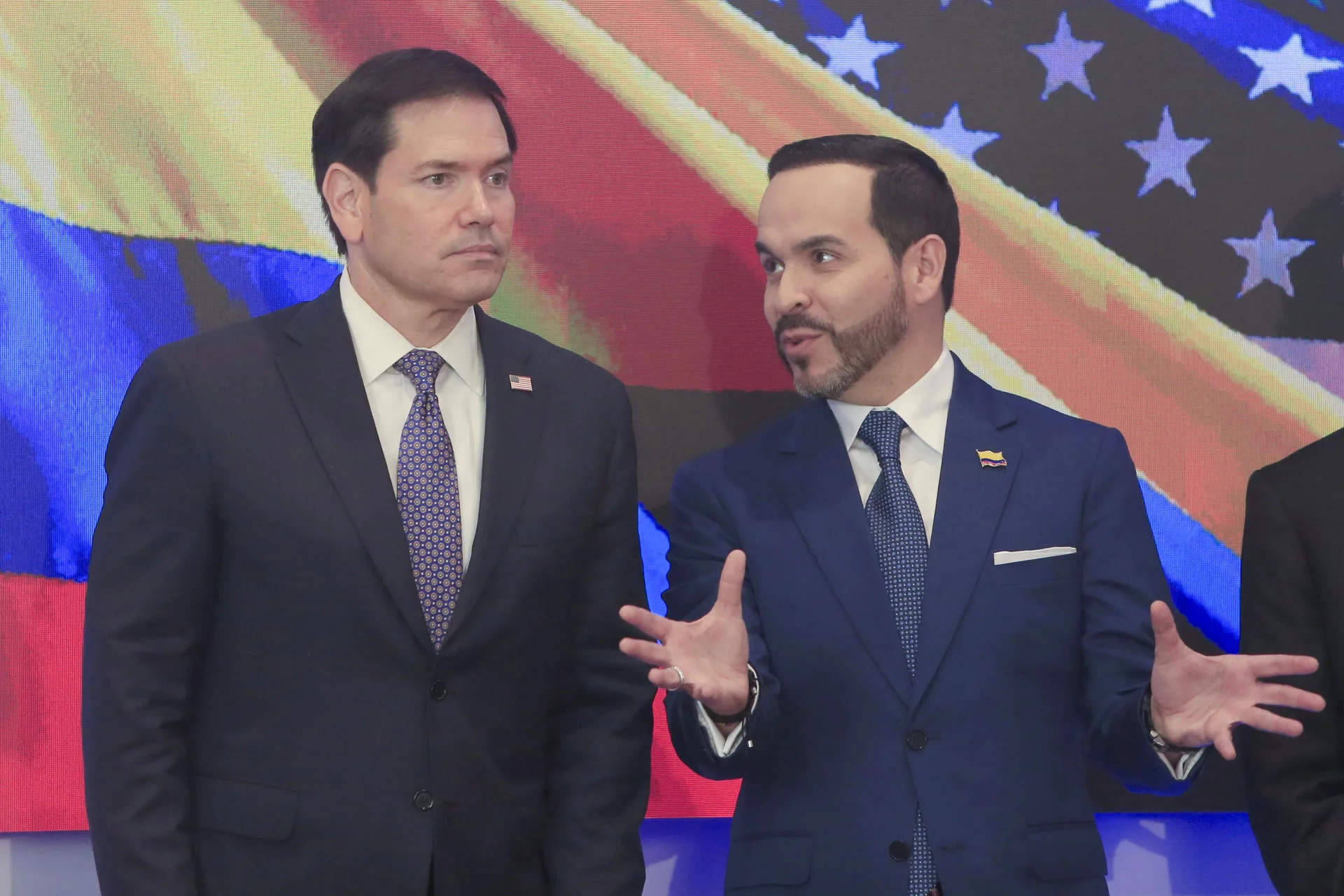
Barranquilla, Colombia (EFE).- Colombian president Abelardo de la Espriella and the United States Secretary of State Marco Rubio gave fresh momentum to bilateral relations on Tuesday. Their talks focused on combating narcoterrorism and rebuilding the country after last month’s earthquake.
The meeting took place in the Caribbean city of Barranquilla, the alternate seat of the Colombian presidency. It marked the first visit by a senior official from President Donald Trump’s administration since De la Espriella took office on August 7.
The visit symbolizes renewed harmony between both capitals and alignment on key issues.
In a statement, Rubio said the meeting bodes well for a «golden age» between both nations, calling it an «unprecedented new phase of cooperation.»

The Secretary of State advocated «restoring natural relations» between the US and Colombia following four years of «distance» under left-wing former President Gustavo Petro, a tenure he described as a «disaster» for the South American country.
During the visit, Colombia and the United States signed two memorandums of understanding expressing their commitment to cooperate on strictly civil nuclear energy development and the processing of critical minerals and rare earths.
Both agreements align with a strategy by the Trump administration to foster a «renaissance» in civil nuclear energy and secure Washington’s critical mineral reserves amid fierce competition with China.
‘Barranquilla Accords’
During his appearance, the Colombian president announced the «Barranquilla Accords.» This bilateral roadmap aims, with US support, to rebuild the country following the August 10 earthquake and recover the economy.
«This meeting produced a roadmap we have called the ‘Barranquilla Accords.’ It covers three key areas vital to our country and the hemisphere: rebuilding the nation, recovering the economy, and securing the hemisphere,» De la Espriella stated.

The initiative addresses «enormous challenges in housing, hospitals, schools, roads, bridges, public services, and productive capacity» caused by the earthquake. The disaster has so far left 331 dead and 4,505 injured.
For this reason, De la Espriella proposed collaborating with Rubio on «mechanisms for cooperation, investment, and financing, involving the US International Development Finance Corporation, other agencies, and the private sector.»
In addition to earthquake damages, the new Colombian government inherited an economy with a fiscal deficit equal to 6.4% of GDP in 2025. Public debt reached a record 1.167 trillion pesos (roughly 369 billion dollars) by the end of the first half of the year, representing 60.5% of GDP.
«We want to attract investment into infrastructure, energy, housing, technology, and economic rebuilding. Colombia will also do its part by practicing fiscal discipline, spending efficiency, legal certainty, and creating better conditions for investment,» De la Espriella said.
Colombia’s Role in Venezuela
The Colombian president also promised Rubio that his administration would participate «responsibly» in regional stability efforts and deepen border cooperation regarding Venezuela.
This marks the president’s first statement on Venezuela since taking office on August 7. However, during his campaign, he told EFE that his administration would not contact Venezuelan authorities directly, choosing instead to handle all matters related to Venezuela through the United States.
«Colombia will work responsibly alongside the United States to ensure regional stability. We will deepen cooperation on border security, migration, and safety,» De la Espriella said on Tuesday.
The president noted that the situation in Venezuela is «not a distant matter» for Colombia, highlighting that both nations share a border spanning more than 2,000 kilometers.
«Of course, everything that happens in Venezuela directly affects Colombia in terms of security, migration, drug trafficking, smuggling, armed groups, and energy,» the president concluded. EFE
jga/dmv